Pionephrosis
 Pionephrosis is the terminal stage of a nonspecific or specific purulent-destructive kidney process that developed as a result of pyelonephritis. With this disease, the kidney turns into a kind of bag that is filled with products of tissue decay, urine and pus. The wall of the pelvis is infiltrated and markedly thickened. Surgical treatment
pyonephrosis difficult because perirenal tissue in this disease is subjected scar-sclerotic changes and thus tightly soldered to the kidney and its surrounding organs.
Most often, penephrosis occurs between the ages of 30 and 50 years and is always accompanied by a pair( re) jade. In most cases pyonephrosis arises as a consequence of chronic pyelonephritis secondary , which developed due urolithiasis .
Equally important in the development of the disease plays a disturbed flow of urine from a diseased kidney, which leads to the progression of purulent - destructive changes and accumulation of pus in the body
Symptoms
- A dull aching pain in the lumbar region, which increases during the exacerbation
disease - low-grade feverBody
- Permanent noticeable weakness and possible weight loss
During periods of exacerbation( occur periodically), pain increases, body temperature rises significantlydstvie which arise chills
Diagnostics
Palpation detectable dense increased kidney with reduced mobility and a smooth surface. In laboratory conditions, pronounced pyuria, leukocytosis, hypoproteinemia and anemia are revealed.
Chromocystoscopy is performed, which reveals the injection of vessels of the mucous membrane of the ureteral orifice.
In excretory urography, the affected kidney radiopaque substance does not excrete. When
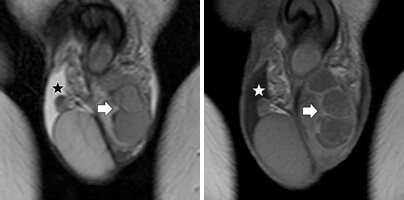
ultrasonograph kidney looks like a multi-cavity forming a thinned parenchyma, which is filled with non-uniform contents, often comprising concrements
Treatment Treatment only operative when pyonephrosis. Most often resort to nephroureterectomy and nephrectomy( with a satisfactory patient's condition).After carrying out these types of surgical treatment prescribed anti-inflammatory, detoxification, and antibacterial therapy
forecast
Following the surgery prognosis is quite favorable, although in some cases, the remaining healthy kidney may develop nephrolithiasis and chronic inflammation.
In case of refusal of the patient from surgical treatment prognosis is much worse, as long proceeding chronic purulent process in the kidney necessarily lead to very serious complications such as hepatopathy, kidney amyloidosis second, urosepsis and pus breakthrough in the perirenal fat.
More articles on the topic:
1. Cystitis 2. Renal colic