Food allergy
 Food allergy - a fairly common disease, manifested by increased sensitivity of the body to certain foods, when harmless common in appearance food leads to the development of an allergic reaction. Almost all people have heard about food allergy, but most of them do not classify it as dangerous diseases, and in vain, since the allergy is not as harmless as at first glance it seems. A particular kind of food can contain a fairly large number of allergens, usually proteins and, much less often, carbohydrates and fats. With food allergies, the immune defense produces a significantly higher amount of antibodies, thereby making the body more reactive, which puts a completely innocuous protein on one level with an infectious agent. In the case of not involving the immune system in the process, this is not a food allergy, but a mere intolerance to food. Strangely enough, but the true food allergy is found in only about 2% of the population, its cause is often heredity.
Food allergy in children
appears usually in the first years of life, and the most common allergen is egg white. Then most of her children "outgrow".Food allergy in adults in 80% of cases is a condition that researchers called "food pseudoallergia".This condition is symptomatic of a true food allergy, whereas the real reason lies in the usual intolerance of certain foods. In addition, some people develop psychosomatic reactions to food, and as a result they begin to consider some food as an allergen to themselves.
. Food allergies - causes of
. Nowadays, food allergy is more common than several decades ago. Many researchers associate this with the use of pesticides, environmental pollution, numerous chemical drugs that people face or enjoy throughout life. It was estimated that during the year a person is exposed to the order of three thousand various chemical substances, so it is not surprising that the number of allergic reactions increases every year. Every day, our immune system is exposed to the effects of various chemicals obtained from beverages and food, as well as potentially toxic inhaled molecules. This incessant battle significantly overloads the liver, resulting in an increase in allergic reactions.
Food allergy to cereals, or to be more precise, an allergy to gluten, is the most dangerous form of allergy and is caused by barley, oats, rye and wheat. Subjected celiac people, can not tolerate any form of cereal. Sometimes a food allergy to gluten can directly threaten a person's life, due to the fact that gluten in such people leads to erosion of the internal walls of the digestive tract, thus preventing the absorption of necessary nutrients.
In some ways, the concepts of food allergy and food intolerance are a certain mixture and if they are similar in their manifestations, the causes of their development are completely different. Food allergy is the immediate reaction of the immune system to any stimulus that manifests itself in the production of antibodies against foreign agents in its opinion. Food intolerance is a slowed reaction of the body to certain foods, usually developing after a few days and manifested as various unrelated symptoms. Most of the symptoms with food intolerance in general are very difficult to relate, so they are often confused with the symptoms of completely different diseases.
The most common food allergy develops under the influence of hereditary predisposition. The risk of developing this disease is doubled if one of the parents is allergic, and if it is observed in both, the risk is doubled. However, substances that are allergens to a child may differ from parental allergens. Food allergy has no priority and can develop absolutely for any kind of food, however, the most common allergens include nuts( especially peanuts), wheat, soy, shellfish, fish, eggs and milk. There is also a so-called cross-allergy, which usually develops after a reaction to a certain allergen. For example, people who are allergic to peanuts are often allergic to other legumes( lentils, soybeans, peas, etc.).
Often people develop allergies to chemicals such as sulfites, which are used to preserve the color of food( vegetables, dried fruits).Allergic reaction to sulfites is manifested by intermittent breathing and allergic shock after eating food with their content. Often sulphites cause severe seizures of such a serious illness as asthma
Food allergy - symptoms
From the moment of food allergy provoking food allergies to the immediate allergic reaction to it, the organism can pass from a few minutes to hours. In the case of severe allergies, the smell or simple touch of food causes an acute allergic response.
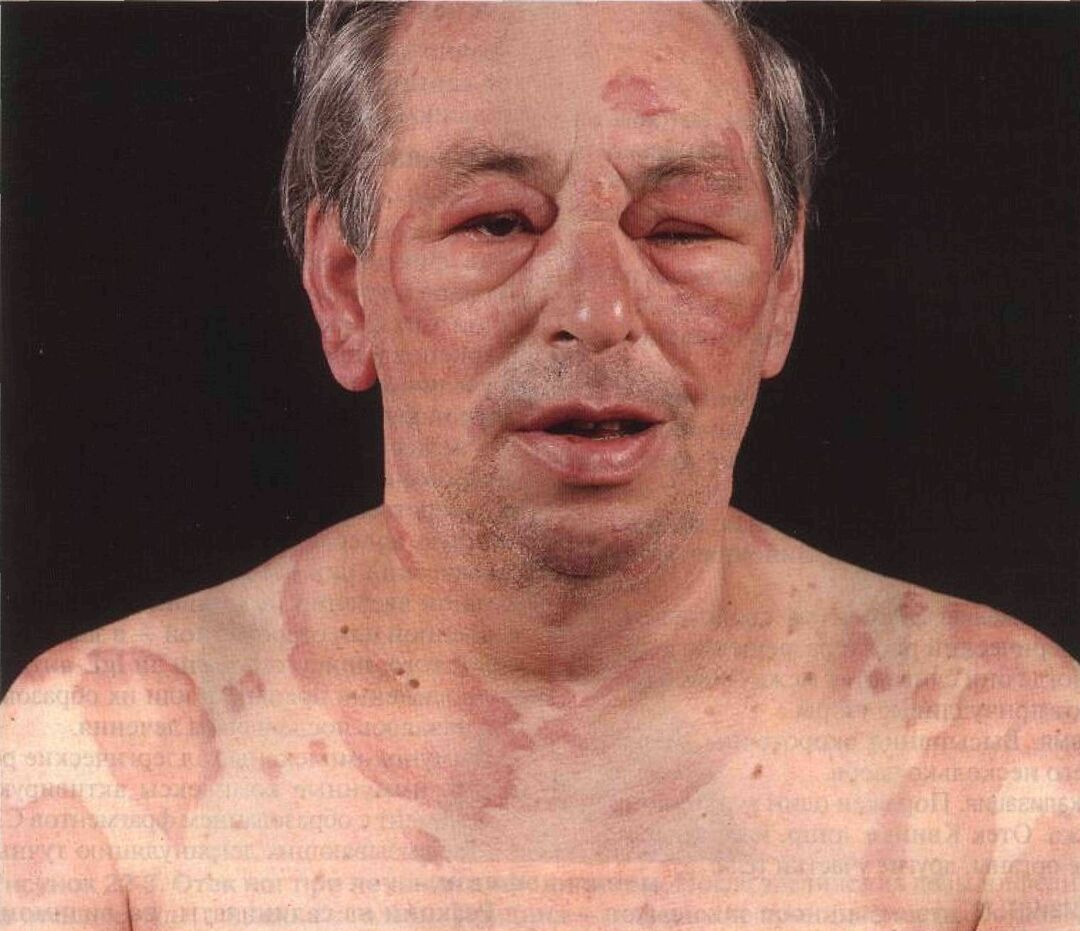
Symptoms of food allergies include itching and swelling of the throat, mouth and lips. Irritant food when ingested in the digestive system causes symptoms such as diarrhea, nausea, vomiting, and renal colic. There is often redness of the skin, hives, eczema, skin itching. Some patients are susceptible to the development of allergic rhinitis, which is characterized by such manifestations as shallow breathing, coughing and runny nose.
In some cases, there may be a so-called delayed allergic reaction, when symptoms from the moment of ingestion begin to appear after hours or even days. Compared to an immediate allergic response, the symptoms of a delayed allergic reaction are less pronounced and may include asthma, hives and eczema.
The most dangerous, but fortunately very rare condition with food allergy is anaphylactic shock. This condition covers the allergic reaction of several systems and organs of the human body. Symptoms of anaphylactic shock - low blood pressure, shortness of breath, swelling of the mucous membrane of the pharynx, sweating, urticaria, intense itching. In the event that anaphylactic shock is not treated correctly and quickly, the condition progresses very quickly, leading usually to loss of consciousness, and sometimes to death.
In case of repeated allergic symptoms, you should carefully analyze your daily diet and write down everything you eat during the day, without forgetting to note the method of cooking and the amount of food you eat. Also, the time of appearance and the nature of the symptoms of allergy( nausea, urticaria, migraine, skin itching, etc.) should be recorded. After resorting to an allergist, having studied the data of the record for the last two or three weeks together with it, it is highly probable to identify the dangerous products of
. Foods most commonly causing food allergy
One of the most powerful allergens is nuts. For people prone to food allergies, a small consolation may be that usually a food allergy is selective and an allergic reaction can only be to one kind of nuts. Sometimes the sensitivity to nuts is so strong that even their insignificant presence in chocolate or cake can cause an acute reaction.
Potential allergens are berries, fruits and vegetables. The most active of them: black currants, blackberries, raspberries, strawberries, lemons, mandarins, peaches, melons, onions, peas, tomatoes.
Meat, even despite the high protein content in it, rarely causes an allergic reaction, with lamb and beef somewhat rarer, but horse meat, chicken and pork are more often. Due to the different protein composition, patients with food allergy to pork and lamb can safely eat beef.
Also, food allergies can be caused by fish and seafood, which is especially common among people living in coastal areas. Some patients thus have increased sensitivity, when even from the smell of fish they develop suffocation. To sea fish, the allergy develops much more often. There are cases of intolerance to crayfish, shrimp, caviar and products from them cooked.
Very often the food allergy leads to the consumption of chicken eggs, and the sensitivity of the organism to the allergen is so high that sometimes ordinary buns or cookies, in the test of which there is an egg, can cause bright allergic symptoms. Soft-boiled eggs cause food allergy more often than omelet and hard-boiled eggs. In some cases, the food allergy to the egg can be combined with an allergic reaction to chicken meat.
The most common cause of food allergy in children is - cow's milk. With age, there is a decrease in sensitivity to milk as an allergen. Sensitizing properties of milk weakens boiling
Food allergy - treatment of
If treatment of food allergies does not begin in time, the strongest phenomena of allergic dermatitis may occur in the course of time. In addition, the range of allergens will be constantly expanded. In two or three years, a food allergy may involve pollen allergies, and then household( for cosmetics, animal hair, dust, etc.).Often the disease affects the respiratory system, leads to bronchial asthma, affects other systems and organs.
Treatment of food allergy is primarily to reduce the body's intoxication, which uses sorbents( eubicor, lactofiltrum, filter, enterosgel) and anti-allergic( antihistamine) drugs that do not cause side effects( telphrast, claritin, kestin).These medications should be taken strictly according to the doctor's prescription.
Food allergy implies a complete elimination of the dangerous allergen from the diet. If this is not possible, then it is possible to adapt to the allergen. So, for example, for a year and a half, it is advisable for a child not to give allergenic foods known at all( seafood, honey, nuts, chocolate, chicken eggs, cow's milk).After reaching this age, you can use them, but you should start with minimal doses( incomplete teaspoon).As a result, the body begins to gradually become accustomed to potentially dangerous food for it and not to react to the presence of allergens.
Unfortunately, the allergic mood remains in the body for the rest of your life, and whether food allergy will subsequently manifest itself, depends directly on nutrition, lifestyle, immune protection, and place of residence. Up to three years, allergy sufferers should be fed exclusively with natural products. With the timely increase of immunity and proper nutrition, allergic reactions can be eliminated.
Used for food allergy non-prescription drugs: Fenistil 24, Fenistil, Erius syrup, Erius, Parlazin, Lomilan, Clarotadine, Claritin, Zodak, Zirtek, Allertec.