Allergic vasculitis
 Allergic vasculitis - pathological damage and inflammation of the blood vessels of the skin of an allergic nature, leading to ischemia of tissues and organs. Ischemic manifestations directly depend on the location and magnitude of the pathologically altered vessel. Allergic vasculitis is divided into primary( manifestations of the disease are limited to inflammation of the vessels) and secondary( the cause of the disease is any internal disease).Most often, allergic vasculitis affects people in the age range from 30 to 45 years, more often men.
The disease is conventionally divided into three periods:
1. The so-called prodromal period, which lasts about ten years and manifesting various allergic reactions( . Asthma, hay fever, rhinitis, etc.)
2. This period is characterized by the release of eosinophils in the tissue. Also, this stage is characterized by the development of the syndrome Leffler
3. For the third stage of the disease is characterized by all the symptoms of systemic vasculitis
clinically allergic vasculitis is divided into four basic forms:
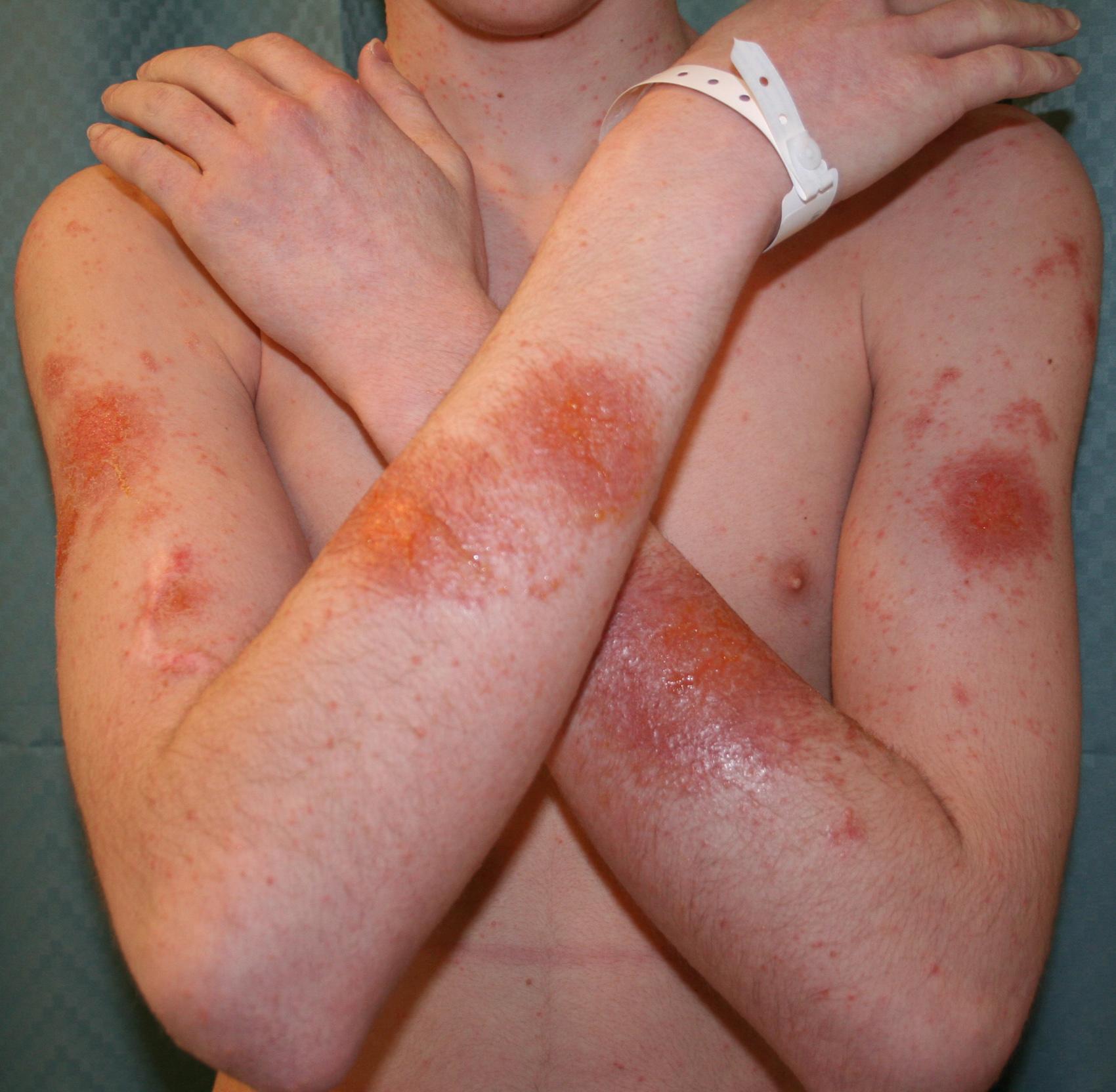
• Hemorrhagic spotted .This form is characterized by erythematous-swollen spots with obvious hemorrhagic shades and fine-lamellar scaling
• Polymorphic-nodular .This form is manifested by various morphological elements of the skin rash - from vesicle-bullous and urticaria nodules to hemorrhagic spots. Usually striped elements comprise serosanguineous exudate flowing after opening of the cavity and forming a hemorrhagic or serous-serous cover under which visible erosion, some of which are covered by necrotic coating. With further ulcer formation, quite extensive foci of necrosis are formed, which are accompanied by the formation of petechial and purple spots. Usually, rashes are located symmetrically and are predominantly observed on the skin of the trunk, buttocks and thighs.
• Nodular necrotic .This form of vasculitis manifests a red-yellow brownish hue scaly knots, in the center of some of them is the process of necrosis. As a result, the nodule covers the hemorrhagic crusts
• Unclassified vasculitis .For this form is characterized by the absence of severe clinical symptoms( erythematous, swollen, flaky foci, purpurotic, petechial rashes).Because of this, its quite difficult to attribute to any of the above forms
Allergic vasculitis - Causes
By their nature, allergic vasculitis refers to polietiologichesky disease, not the wearer is strictly specific. The main mechanism for the development of this pathology is considered to be allergic reactions, in which immune complexes with positive assays for various allergens are found in the skin.
In addition, the leading pathogenetic factor leading to the development of the disease is an infectious mechanism due to increased sensitivity to staphylococci and streptococci. In this case, microbacteria of tuberculosis, pathogenic fungi and viral infection are important.
The reasons for the development of allergic vasculitis include domestic and pollen allergens, as well as some medicines( analgesics, antibiotics, etc.).In addition, the development of the disease contributes to diseases of internal organs;Endocrine, neurocirculatory and neurotrophic disorders;Adverse environmental effects.
Some researchers argue that the development of the disease may contribute to hypovitaminosis, trauma, cardiovascular disease and coagulation properties of blood
Allergic vasculitis -
symptoms There are many clinical manifestations of vasculitis, the vast majority of which depends on the system process, the nature of the histological changes of depthDefeat and caliber of a pathologically modified vessel.
main symptoms of allergic vasculitis include: slight fever, general malaise, painful skin rashes, blisters on the skin, burning, itching, purple skin spots, sores surrounded by necrotic tissue.
Elements of the rash have the appearance of nodular polymorphous formations with hemorrhagic contents. Most often, rashes are observed on the legs and hands, however, the skin of the trunk may be involved in the pathological process.
allergic vasculitis Diagnosis begins with a careful history and a visual inspection, after which the doctor prescribes necessary in its opinion research: angiography of the affected organs;X-ray examination;Biopsy of affected organs;Laboratory diagnostics( general urine analysis, biochemical analysis of blood serum, general blood test, etc.);ECG
Allergic vasculitis - treatment of allergic vasculitis Treatment
carried calcium preparations, antihistaminic and desensitizing agents. To decrease vascular permeability and to improve vascular tone widely used drugs such as the vascular Eksuzan, aminocaproic acid, prodektina, Ascorutin, Dicynonum, etc. Venoruton.
In case of severe allergic vasculitis flow shows the use of cytotoxic drugs and corticosteroids, and extracorporeal hemocorrection. In case of presence of infectious foci, their sanation and antibacterial systemic therapy are indicated. External means
treatment of allergic vasculitis usually produced in the form of ointments and creams( Solkokseril, Iruksol, Troxevasin etc.).With the case of joining the concomitant syndrome of articular inflammatory shown topical application of ointments, magnetotherapy, phonophoresis and dressings with Dimexidum.