Prostate cancer: stage of disease and prognosis
stage prostate cancer, its symptoms, treatments and prognoses

Malignant neoplasm, formed in the male genital area - prostate cancer. Medical statistics show conclusively that the disease is rapidly "younger". And if before the abnormality was considered a lot of men after 65-75 years, at the moment it is diagnosed in people 45-50 years of age.
Many people, faced with a similar situation - the identification of malignant node in prostate tissue, primarily concerned with the question of survival prognosis.
Oncologists take into account many factors, but special care is taken at any stage of prostate cancer is onkoprotsessa. Thus, high chances of cure are those with 1-2 stage cancer. Less rosy prospects for people with stage 2-3 metaplasia.
And it must take into account the prevalence of the primary tumor and the presence of metastases, and the severity of negative symptoms.
Classification by the TNM system
As a rule, experts around the world are guided by the generally accepted system of gradation oncological «tumor-node-metastasis», which needs to be specified:
- symbol «T» the prevalence of tumor process - from zero when the center itself is not yet was formed to 4 - neoplasia spread not only to the neighboring tissues and organs, but also to the upper structure;
- symbol «N» describes regional lymph nodes - the severity of their involvement in the cancer process, as the Typically, 1 denotes the absence of metastases, number 2 - diagnosing lesions regional limfostruktur;
- symbol «M» are indicated distant metastases, 0 - absence of lymphatic, hematogenous metastasis to 1C onkoprotsessa involvement in even the most distant organs.
Gleason classification system
Stage prostate cancer are generally determined based on biopsy. In this case, a certain amount is calculated on a scale developed by Gleason. The higher the number is, the more aggressive the tumor is recognized hearth. After all, the differences atypical cells from healthy prostate tissue is much greater.
So if onkokletki virtually indistinguishable from healthy, tumor foci is assigned the number 1. Maximum mutated cells of the prostate is estimated by five points.
However, the tumor can capture multiple areas of the body.
If as a result of diagnostic procedures were detected 2 nodes, and both proved to be malignant, so total Gleason score can reach 7 points.
Less threatening for the health of the man recognized tumor foci with the number of 6 or less. While the balls 8-10 allow maximally poor prognosis of survival.
But in this case, to give up is not necessary, in any case. The achievements of modern anticancer medicine allow many times to prolong patients' lives, and sometimes achieve recovery even at medium-high and high Gleason score.
Classification system Dzhyuit-Whittemora
As in the other systems of classification, in this case guided by differentiation onkokletok severity, incidence of tumor, lesion adjacent tissue and organs.
The earliest stage of formation of focal atypia is called "A". When A1 there is good differentiation onkoelementov, but when cancer cells A2 are not so similar in different areas of the prostate tissue.
The stage when the cancer center is still not beyond the body, but it is palpated expert on physical examination and PSA parameters are already elevated, called stage "B". Numbers from 0 to 2 is designated severity onkoprotsessa - from a minimum when the focus is diagnosed in only one lobe body to capture the entire prostate tissue.
In prostate cancer stage "C" metaplasia extends beyond the body of the capsule with a lesion as a spermatic cord and adjacent organs. When C1 hearth atypia had just gone beyond the prostate. But at C2 has been overlap urethral lumen or exit into the bladder.
Diagnosis of metastasis indicates the transition to onkoprotsessa «D» stage. Figures 0-3 indicated by the severity of lesions limfostruktur regional and distant organs. The higher it is, the more negative outlook.
A source: https://pro-rak.ru/organy/prostata/stadii-raka-predstatelnoj-zhelezy.html
Prostate cancer: survival prognosis in various stages

The prostate gland - an essential element of the reproductive function in men. The prostate gland is an endocrine gland, Small, under the bladder and surrounding the ureter.
The prostate gland plays a fairly important role for healthy living men. It not only adjusts the delay or the passage of urine through the urethra, through being in her muscles, but also develops male hormones, as well as the seminal fluid that enables the sperm to survive outside the body of the man responsible for a stable erection and male productivity.
It's important to know
The singularity of prostate cancer lies in its rather slow development and virtually no detectable symptoms and, therefore, difficult diagnosis in the early stages development.
In this case, there is no doubt the fact that the earlier the diagnosis revealed the presence of Cancer disease, and treatment is started, the more favorable the prognosis of survival for prostate gland.
Unfortunately, prostate cancer is the most common tumors of poor quality in men. And if before prostate cancer was diagnosed typically in the region of 55-60 years, then in the last few years, he rapidly became younger, and it becomes increasingly susceptible to men over 40 years old. The peak of the disease accounts for 65 - 70 years.
The same is characterized prostate cancer at different stages of the disease?
- The first stage of prostate cancer - the cancer is very small, its structure is not determinable at a palpation and does not go beyond the prostate gland.
- The second stage of prostate cancer - the patient still does not feel any symptoms of cancer, but the tumor has grown to such an extent that it can be seen on ultrasound, although the tumor is still in the boundaries of the prostate gland.
- The third stage of prostate cancer - onkoobrazovanie get more spread and now it has gone beyond the boundaries of the prostate gland, causing a change in the surrounding organs. In most cases, the first to suffer with the seminal vesicles, vas deferens, inguinal lymph nodes and other nearby pelvic organs.
- The fourth stage of prostate cancer - cancerous tumor radically distorted the prostate boundary. Due to the bloodstream aggressive tumors cells spread throughout the body of the patient, infiltration germinating in various tissues of the body. They can detect almost anywhere, but most often the cancer metastasized prostate cancer found in the liver tissue, lungs, pelvis, ribs and spine, as well as lymph nodes.
What is prostate cancer survival prognosis and life expectancy?
To a large extent it depends on:
- At what stage of disease diagnosed tumor.
- The presence or absence of metastasis.
- Similarly, if the patient adheres to the recommendations of the treating physician and treatment.
- Comorbidities.
- The will to live and the desire to beat cancer.
Determining the degree of development of the disease it is essential to develop optimal treatment, so patients at the first suspicion of prostate cancer should be screened intensively. This will help, based on the clinical picture, determine the survival prognosis of prostate cancer for the individual patient.
So, let us see what is the survival prognosis in prostate cancer:
- The first stage of prostate cancer. The detection of the disease at the beginning of its development - it is a great success. At this stage, it is characterized by the most favorable course. In full compliance with the rules of treatment, a doctor's appointment at this stage of the disease, five-year survival rate is equal to one hundred percent. A survival prediction for ten years with regard to the treatment is 75-90 percent.
- The second stage of prostate cancer. Upon detection of the disease at this stage, treatment is still very effective, and in most cases give a positive prognosis. Provided prostate cancer therapy at this stage survival over five years reaches 90-100 percent. Ten-year survival prognosis for prostate cancer is 60-65 percent. At this stage, the disease is often performed radical prostatectomy - prostate removal wholly and some adjoining organs - that is common method operable prostate cancer, when a malignant cancerous tumor has not yet gone beyond prostate.
- The third stage of prostate cancer. Starting from the third stage for a cure is no longer forecast to be positive and without radiation and hormone therapy is not enough. Gamma irradiation, such as remote and interstitial, in this case directed at destroying metastatic onkokletok. Also, occasionally, to reduce the compression of the enlarged prostate urethra of the patient, and thus to alleviate symptoms, the patient may be carried prostatectomy. Surgical intervention is not promising to get rid of one hundred percent onkoobrazovaniya, but it helps greatly improve the quality of life of the patient. Prediction of survival for five years in this case is 50-55 percent.
- The fourth stage of prostate cancer. Once diagnosed at such a late stage of the disease, modern medicine gives disappointing forecast, and all medical procedures in this case will be directed only to improve the quality and extend the life of patient. During the gentle and hormone dosages of chemotherapeutic agents five year survival prognosis is about 30 percent. If left untreated at this stage of the disease, due to the combination of negative factors, the lifetime of the patient is reduced to the year - two.
A source: https://impotencija.net/rak-predstatelnoj-zhelezy/rak-prostaty-prognoz-vijivaemosti/
Stage prostate cancer

Oncological diseases genitals in men occupy in the WHO statistics third after malignant tumors of the stomach and lungs.
The most common disease in this category is considered in men prostate cancer - he diagnosed in 7 men out of 100.
See also:Traditional methods of treatment of prostatitis Propolis
Experts note that this type of cancer is rapidly getting younger - 50 years ago he was diagnosed in men over 55 years, but today Prostate Oncology found in men aged 40-45 years, and even earlier.
What is prostate cancer?
Prostate cancer is among the slowly progressing diseaseAnd because man is a long time to hurt them, unaware of the disease. It is virtually the only type of cancer that is 99% of a hormone dependent - tumor grows under the action of testosterone.
Matter how high his level is directly risk for prostate cancer depends. However, the high status of testosterone is not a major cause of prostate cancer.
Pathology can occur due to:
- adverse effects on the various toxins;
- in the presence of benign prostate;
- prostate infectious diseases in history;
- chronic pathologies of the genitourinary system;
- age-related changes.
A major role in the occurrence of prostate cancer heredity plays.
Considerable influence and regular intake of alcohol, nicotine and drugs. Start the process of neoplastic transformation in the prostate benign tumors can and ultraviolet radiation.
Risk of prostate cancer is that in the early stages of tumor development man can not feel the change in their condition. There are cases when the first stage of a cancer lasted up to 10 years, without giving any signs of its presence.
Suspect the presence of cancer can be symptomatic manifestations of the following:
- change in urination process - the weakening of the jet, the need for enhanced straining;
- urinary incontinence and / or frequent urination;
- suprapubic pain in part, radiating to the waist or crotch;
- pain in the joints and spine;
- swelling in the legs;
- the presence of blood in urine.
Evidence of prostate cancer can and the general deterioration of health, weight loss, lack of appetite.
stage cancer symptoms and diagnostic methods
prostate cancer, as mentioned earlier, is progressing very slowly. Nevertheless, swelling under the action of various factors and relentlessly grows grows into the surrounding tissue. According to the current clinical picture, even if the symptoms are almost imperceptible, the doctor may suggest what stage the cancer is present in the patient.
The first stage of prostate cancer
Initial signs of a lesion of the prostate are not clearly visible. They consist in the appearance of a weak stream when urinating. Erection problems is not observed, the man generally feels fine.
The tumor in the first stage is small, but more often it is a collection of pathologically altered cells scattered disposed within the prostate gland. At this stage one can only detect cancer by screening for blood prostate specific antigen (PSA). At this stage it indicators comprise 2-3.5 mg / L.
Upon detection of prostate cancer in the first step a favorable prognosis. In compliance with doctor recommendations and applying modern therapies the five-year survival rate of patients is from 96 to 99%. In most cases it is possible to achieve long-term remission with preservation of reproductive functions.
Video: "Stages of Cancer"
The second stage of prostate cancer
In the second stage of prostate cancer is localized withinBut it can already be detected by transrectal examination. Clinically, this stage manifests discomfort in the perineum, lower abdomen and urogenital organs of varying intensity.
Strengthening the discomfort until the appearance of acute pain occurs during urination time, sexual intercourse or ejaculation.
Pre-diagnosis can already at the stage of external examinationRather, after palpation of the prostate through the rectum. To clarify the diagnosis resorting to PSA analysis - for the second stage characteristic values cancer from 6 to 7.9 g / l.
However, even it is not 100% correct diagnosis because such indicators can be in benign tumors. That is why the man appointed by prostate biopsy.
Upon detection of prostate cancer the second degree a chance to have a full recovery in about 80% of men, as the metastases at this stage of the disease, virtually none. On average, the five-year survival with adequate therapy is 85%.
The third stage of prostate cancer
Oncology prostate third degree is characterized by a strong growth of the tumor outside the affected organ with the formation of metastases. Symptomatology of the disease at this stage becomes more pronounced.
For pain and difficulty urinating added signs of circulatory disorders and lymph circulation in the lower body - legs swelling, decrease in sensitivity. When tumor invasion difficulties with defecation may occur toward the rectum.
Along with the above symptoms in men, an increase in regional lymph nodes, a general deterioration of health.
Recognize the disease can be at the stage of an external examination of the patient. To clarify the diagnosis is carried out a number of laboratory tests including PSA analysis (figures it reaches 8 g / l), and the instrumental examination of the MRI, CT, prostate biopsy.
The prognosis for the third stage of prostate cancer depends on whether the patient's metastasis to other organs. In their absence, the five-year survival rate is 60%, while in the presence of only 40%, and only with the application of appropriate therapy.
The fourth stage of prostate cancer
In the transition to the fourth stage of prostate cancer is considered inoperable and generally incurable.
Symptoms characteristic of the previous stages, is compounded, it added the signs of other organs: poor digestion, coughing, headaches, fainting and general intoxication of the organism.
Metastases to step 4 are detected frequently in the spine, pancreas, intestines, brain and liver.
Diagnosis at this stage is used not so much to confirm the presence of a tumor, but for the establishment of target organs affected by metastases. This information allows you to choose the most effective treatment.
Predictions at this stage is extremely unfavorable cancer. Even with the use of modern drugs and methods of the five-year survival is less than 20%, and a full recovery is not possible.
Treatment and prevention of prostate cancer
Medical Management of prostate cancer depends primarily on the degree of organ damage - the stage of the disease. For each of them suitable combination of various methods, medicines and treatments.
medication
This type of therapy is used in almost all stages of the disease:
- I degree in prostate cancer used primarily symptomatic, and hormones, which help eliminate pain and reduce testosterone levels affecting the growth of tumors;
- prostate cancer II degree used radioactive drugs, which are administered directly into the tumor (radioactive iodine, for example) and a set of symptomatic drugs;
- with III degree of prostate cancer advantageously used analgesics, including narcotic, symptomatic drugs, as well as means designed to reduce production of testosterone;
- prostate cancer grade IV the patient needs daily narcotic analgesics, as well as the transfusion of blood components.
All categories of patients were administered iron preparations and vitamin and mineral supplements. The question of whether to use a particular type of drug is achieved exclusively medical consultation or physician.
Surgery
Surgical methods of eliminating prostate cancer applied to the first stage of the disease.
The indications for its use are:
- the presence of discomfort and pain;
- rapid growth of the tumor;
- progressive deterioration of urination.
Surgical removal of the tumor is not practiced with multiple metastases and 4 stage prostate cancer.
There are several kind of intervention on the affected organ to eliminate the malignancy:
| Type of surgery | mechanism for | testimony |
| prostatectomy | Removal classic prostate surgically or using a laser scalpel, or by Da Vinci robot. | It applies only in the absence of metastasis. |
| Radiological prostate removal | Dot impact on the tumor by radiation of a certain frequency to slow the growth of its cells and further loss of the tumor. | It is used at any stage of the disease, but the last 4 minutes. |
| brachytherapy | The method consists in a sparing effect on the tumor and the diseased organ of high irradiation. | Used mainly in stage 2 disease, as well as 3, if no metastases. |
At the last stage of the disease the patient may require manipulation transplant infusion port systems, drainage of the bile ducts and the like.
Physiotherapy and unconventional treatment of prostate cancer
At any stage in oncological pathologies prostate physiotherapy methods are not applicableAs well as any impact on the tumor, particularly the temperature and physical, can lead to the rapid growth of tumors.
Folk same methods, in particular, the power on the principle of lacto-ovo-vegetarian diet can bring significant relief to the patient. Meat, animal fats, and fatty fish, can accelerate the progress of the tumor. That is why it is desirable to eliminate them, as well as alcohol, coffee, synthetic flavorings and other additives, the menu forever.
See also:Prostanorm in the treatment of prostate diseases: reviews
conclusion
According to doctors, prostate cancer is not always a killer disease. Upon detection of tumors at an early stage, the chance of complete cure is approaching the maximum, which is not the disease in the late stages. That is why it is important to men in time to pay attention to suspicious symptoms and consult a urologist for advice.
A source: https://kakbyk.com/bolezni/opukholi/rak/stadii-raka-predstatelnoj-zhelezy.html
Projections cancer prostate degree I and II

According to WHO, cancer of the prostate took 2 nd place in the number of morbidity and mortality among men, behind only lung cancer.
At the end of the 80s increased incidence was stopped by the introduction of innovations:
- ultrasound;
- CT;
- MRI;
- PSA tumor marker.
Despite this, the chances of getting remains quite high - the malignancies overtake every 7th man older than 50 years.
Short description
Prostate cancer - a malignant tumor of varying differentiation that affect the prostate gland and, simultaneously proliferating in all directions, flow into metastases throughout the body.
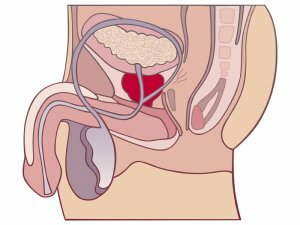
The prostate - a gland the size of a small walnut, covering all sides of the urethra at the beginning of the bladder. It is responsible for male reproductive function - produces seminal fluid (up to 30%) and contributes to its eruption during intercourse. The prostate gland is also responsible for the ability to hold urine.
The danger is not only the tumor, but also the consequences of its proliferation: narrowing of the lumen of the urinary canal and a dramatic expansion of the upper part; increase the burden on the kidneys and the formation of stones; pain in the lower part of the pelvis and lower back.
Causes of Prostate Cancer
Today, the main factor that causes prostate cancer is considered a change of DNA cancer cells that are presumably due to the age increase in the level of the male sex hormone - testosterone.
- Chances of getting to the age of 50 years minimum;
- 50 to 65 are close to 1%;
- after 65 - dramatically increases to 70%.
Percentage of age-related changes in the occurrence of prostate cancer is 95 out of 100 cases. The remaining 5% usually attributed to the combination of the following factors:
- Heredity gene BRCA 1 and BRCA 2. If the old man suffered from this form of cancer, the chance of the disease doubles. The more relatives hurt - the higher the risk.
- Features of the environment of residence and racial predisposition. Most men suffer blacks and residents of northern latitudes.
- Unbalanced diet. The predominance in the diet of high content of animal fat and small amounts of fiber.
- The work in hazardous environments (contact with cadmium).
- Precancerous conditions. Chances of cancer by mutagenesis with atypical hyperplasia, adenosis, and malignancy. At the same time, diseases such as prostatitis and adenoma, are not risk factors.
Symptoms of prostate cancer
Prostate Cancer - insidious and very sluggish progressive disease with peeling off the symptoms, similar to those of other diseases of the prostate.
Increase in symptoms occurs over the years and, unfortunately, become pronounced only in the final stages of the disease when the prognosis for survival is minimal. cancer symptoms are very similar to symptoms of hypertrophy and prostate adenoma:
- quickened night urination;
- loss of appetite, weight loss, depression;
- pain, kidney stones, kidney expansion cavity and upper ureter;
- frequent urination and labored with sluggish jet - first at night, and later during the day;
- sudden and sharp urge, urinary incontinence;
- blood in the urine and acute pain in the pelvic area.
Diagnosis of Prostate Cancer
Diagnosis of the disease in the early stages is extremely problematic because of the asymptomatic course and consists of:
- probing finger through the rectum in the presence of a pronounced increase in size, density and tuberosity gland;
- Blood tumor marker assay;
- Ultrasound and computed tomography;
- excretory urography;
- Prostate biopsy.
staging
To select the optimal treatment is necessary to assess properly, in what stage the disease. During prostate cancer grouped into 4 degrees (I-IV), each of which is further characterized by a combination of the level of prostate-specific antigen (PSA) in blood, and the amount Glisson compliance in the system TNM.
Scale Glisson points (GP) - after prostate tissue biopsy, visually determined degree Cancer cell damage, and by a special method a score between 2 and 10. TNM system classifies dimensions primary tumor (T), spread to nearby lymph nodes (N) and the presence of metastasis (M).
- I degree. Elementary. PSA <10 ng / ml; GP to 6; T1 (2) N0M0.
- Set is extremely rare, mostly histologically remote adenoma. It occurs without any symptoms and manifestations. The tumor is not detectable and is not detected by ultrasound.
- II degree. Advanced. PSA <20 ng / ml; GP to 7; T1 (2a, 2b, 2c) N0M0.
- The diagnosis is established only after the biopsy. For runs with no obvious symptoms, and urinary disorders. At rectal palpation can be found a small tight bundle of up to one lobe, which can be found on ultrasound.
- III degree. Progressive. T3N0M0 (other indicators - any).
- Tumor invades seminal vesicles, at least on the base of the bladder and the pelvic wall. May be absent or metastatic appear minor changes in the pelvic and retroperitoneal lymph nodes. It appears the main symptoms of prostate cancer.
- IV degree. Spread. T4N1M1 (other indicators - any). The tumor is larger. Affects all regional nodes in the pelvis. The final stage - multiple metastases in the spine, femur and pelvic bone, and other organs.
survival prognosis
How you can live with prostate cancer? This question can not be answered unequivocally no, but 80% of men are fighting quite successfully with the disease through early diagnosis.
Life expectancy depends on a combination of the following indicators:
- Cancer stage of development;
- the patient's age;
- the presence and severity of other diseases;
- treatment strategy;
- recurrence risks.
Statistical prediction of survival is estimated at%, which show how many patients live a certain number of years after diagnosis and treatment.
The cure stage IV cancer unrealistic. We can only briefly delay the catastrophic hurricane tumor development and metastasis. Yet showgirl indicates that 15-20% of patients with end-stage more live from 1 to 3 years.
Following successful treatment, up to 40% of patients with stage III can live from 5 to 10 years.
Prediction for I and II degree cancer
5 year survival:
- favorable prognosis to 99%;
- prostatectomy - 75-85%;
- Radiotherapy - 70-80%;
- orchiectomy followed by hormone treatment - 55%.
10-year survival:
- overall prognosis of 60 to 93%;
- prostatectomy - 50-55%;
- radiation therapy - 48%.
15-year survival is around 77%. Then stabilizes.
Using the androgen-suppressing treatment strategy results in survival up to 7 years in 95% of cases.
Protect against prostate cancer can not be any preventive measures. The only way - is to early diagnosis: a one-time annual visit to a urologist after 50 years abroad especially true for those who are at genetic risk.
Similar records
A source: http://GormonOff.com/zabolevanija/onkologiya/prognozy-pri-rake-predstatelnoj-zhelezy-i-i-ii-stepeni
Prostate cancer is the 2nd degree: treatment, prognosis

Prostate cancer is a 2 degree actively growing malignant growth of prostate epithelial cells.
It belongs to the hormone-dependent tumors, and therefore the speed of the process depends on the level of testosterone in the male body.
Ras prostate second degree characterized in that at this stage the tumor is within the tumor, therefore, timely conservative or surgical treatment at this stage gives good results.
therapy Methods
Until it at an early stage in order to completely get rid of the disease, it is necessary to radically get rid of the cancer. The most effective methods for this are as follows:
- Prostatectomy.
- Transurethral resection of the prostate.
- Radiation therapy.
- Hormone.
prostatectomy
Prostatectomy - the most effective means adapted to eliminate prostate cancer 2 degrees.
It is a complete removal of body tissue, which prevents the risk of development of metastases and further growth of the tumor. Other types of treatment are carried out in the case of contraindications for prostatectomy.
This surgery may be performed several access under general anesthesia. Among them are:
- Endoscopic. This method is used more often, especially at an early stage.
- Abdominal. This access is the most traumatic.
- The crotch.
As I mentioned above, when any kind of access is carried out removal of the prostate tissue, of its capsule iliac nodes, seminal vesicles.
The main indications for prostatectomy are absence of metastasis and tumor invasion beyond the prostate gland, as well as advanced forms of adenoma.
Thus, this surgery is suitable for the treatment of prostate cancer 2 degrees. Its fully carried out in Russia, so I do not have anywhere to go.
Laparoscopic access during prostatectomy is the removal of prostate cancer a second step with special instruments introduced through puncture in abdominal wall with chambers on end. This access is characterized by low information content, low blood loss and minimal complications.
See also:The most effective drugs for treatment of prostatitis
Prostatectomy is an effective method for the elimination of cancer of the prostate 2 degrees
When accessing an abdominal incision is performed from the navel to the pubic bone. With this type of surgery is important at any stage of the disease to maintain nerve bundle, which is responsible for erectile function.
This type of intervention in cancer of the second stage are rare, as it does not give access to the lymphatic vessels, which is especially important if there is cancer process, and retains the possibility of an erection.
Major complications are the post-prostatectomy incontinence, impotence, bladder neck sclerosis, detection of PSA in the blood. When these complications after cancer rehabilitation have to be treated again.
transurethral resection
Transurethral resection of the prostate cancer 2 degrees is performed with palliative intent of improving the flow of urine. In addition, the indications for its conduct are:
- A progressive increase in the amount of residual urine in the bladder.
- The presence tsistostomicheskogo drainage.
- When the difference in these biopsies and rectal examination.
Contraindications for this operation are a serious condition of the patient, acute inflammatory diseases, stenosis vesicourethral segment. Resection of the prostate is performed under spinal anesthesia.
Resectoscope is inserted into the urethra, which is provided with an electric loop and a valve for fluid to rinse the bladder. During the operation, removal of the prostate is produced by an electric loop.
By postoperative complications after TUR for cancer include bleeding, infection, impaired urination.
Radiation and hormone therapy
These two methods, as shown by responses of experts, allow for the treatment of prostate cancer 2 degrees without surgery. Radiation therapy is carried out in two ways: remotely and via brachytherapy.
If the remote method, exposure is performed on an outpatient basis, which is convenient for the patient. The duration of treatment is 8 weeks, and the patient must come every day to see a doctor.
This method has a number of disadvantages. These include:
- The risk of radiation sickness.
- Radiation damage near gland organs and structures.
Brachytherapy is a good alternative, because it acts directly on the prostate by administering a radioactive substance special needles. The patient is a day in the hospital and then discharged home.
Malignant tissue disintegrates within 60 days, while on the second day after the treatment, the patient feels relief.
The main advantages of this method are the small risk of exposure of adjacent organs, less the number of adverse reactions, a slight risk of re-occurrence of prostate cancer, the rate of procedure.
Effect of hormone replacement therapy aimed at reducing the production of testosterone. For this purpose, treatment of early stages of cancer apply analogues of luteinizing hormone-releasing agents and antiandrogen.
In the first case, the high risk of erectile dysfunction and arthralgia, so this group of drugs are rarely used. Antiandrogen agents are well established. They are characterized by mild action and the lack of effect on potency.
The procedure can cause bladder weakness and adversely affects the potency
Forecast
The prognosis of prostate cancer, the second depends on the severity of symptoms, the patient's age and health status. This stage of the disease is a favorable prognostic, since the tumor is within the body. According to statistics, cancer cure of 2 degrees is about 90%.
Please be aware that the more early stage of the disease is detected and have been treated, the better the prognosis and few postoperative complications. The small size of the tumor allows to preserve erectile function and prevent the violation of urination. After treatment, the patient is given a disability of the third degree, and if the operation was complications, then the second.
A source: http://prostatamaka.ru/bolezni/rak-predstatelnoj-zhelezy-2-stepeni-lechenie-prognoz.html
Forecasts for prostate cancer - which Survival?

To date, among the doctors of malignant prostate tumors are five degrees of prostate cancer. In the study, tumors oncologists not only as accurately reveal the diagnosis, but also form the projections for the treatment, choosing an effective therapeutic strategy.
Almost all malignant prostate tumors are detected before they spread beyond the area of the prostate. In that case, if the disease is found not in the final stage, 99 percent of patients will survive more than 5 years. Of course, if the tumor has metastasized to other organs, the survival prognosis worsens considerably.
If one year after treatment prostate cancer again made itself felt, then I had a relapse. Usually the disease is repeated in the prostate gland, but sometimes it spreads to other organs or bones. Typically, a relapse treated by other methods that have not previously been used in the treatment of the original tumor.
Prognosis and treatment of prostate cancer
In the event that the 3rd or 4th stage cancer metastases requiring immediate treatment, the predictions deteriorate.
Treatment methods in detecting metastases
- Remotely irradiated prostate and regional lymph nodes, wherein the hormonal therapy is prescribed.
- Medical or surgical castration. In the first case will be the opposite effect after drug withdrawal.
- In the presence of metastasis of cancer at an early stage can add chemotherapy.
Prediction of treatment will depend on the indicator of tumor aggressiveness and degree of cancer process from the selection of effective therapy.
Prognosis of prostate cancer, 1 st degree
by visual examination and x-ray undetectable tumor. Cancer cells are found in tissue samples, which are taken in the course of surgery for prostate hyperplasia. Also, they can be detected by biopsy, which is the reason for the increased content of PSA in the blood.
- If cancer cells are found less than five percent of tissue, a score less than seven Gleason.
- If such cells are found in more than five percent of tissue, rate more than seven.
- The cancer cells may show up in tissue taken by puncture.
Prognosis of prostate cancer, 2 nd degree
The resulting swelling can be felt, it is not beyond the area of the capsule, which has grown around the cancer.
- The neoplasm may occupy less than 50 percent of one-half of the gland.
- It occupies more than 50 percent of the gland halves.
- Placed on the two halves of the prostate gland.
Prognosis of prostate cancer 3rd degree
In this case can not do without surgery, Radiation and hormone therapy. Treatment is directed at reducing the growth of a malignant process and relief of painful symptoms. When selecting an effective treatment oncologists take into account the individual characteristics of the organism.
Impossible to completely eliminate the development of the disease. To determine the cancer at an early stage after 45 years recommended checkups once a year. Thus, we can get a chance for a successful recovery. The screening includes a prostate study rectal method, ultrasound and detection of PSA.
In the third step disease gives metastases in the pelvic organs, which also apply to the regional lymph nodes. The average survival rate is less than 60 percent.
Prognosis of prostate cancer 4th and 5th degree
On the 4th and 5th stage of the disease metastases occur very quickly, in about a few days, and this is probably the only clinical symptom of cancer.
Malignant cells spread through the blood and lymphatic system. Failure occurs hypogastric, iliac and obturator lymph nodes.
Due to the proliferation of metastases can be observed swelling of the genitals and lower limbs. If metastases have penetrated into the bone tissue, there is a strong pain, which indicates the presence of cancer.
Often affects the hip, skull, pelvis, vertebral and rib bones.
When metastases affect the internal organs, the first to suffer from the adrenal glands, liver and lungs.
If chosen the wrong treatment, the survival rate is less than 50 up to 5 years.
Output
In the case where a man is diagnosed with prostate cancer is the fourth or fifth degree, the prognosis regarding life expectancy, is extremely unfavorable. There is no way to completely cure the patient with the help of modern medical methods.
Life expectancy is determined by the stage of development of the disease and the course of her treatment. The earlier cancer is diagnosed, the better the chances for a full or partial recovery.
If metastases are formed in the near or distant organs, to treat and control the disease is much more difficult in cancer development.
♦ Topic: Treatment of prostate cancer.
A source: https://www.lechenie-prostatita.info/prognozyi-raka-predstatelnoy-zhelezyi/