
Food allergy in adults: symptoms and treatment, photos, nutrition
Food allergy is an immune response to certain foods, the development of a symptom of personal intolerance to food components.
An allergen is the food we eat every day. Although experts in this field are sure that food allergies are rare.
The body's susceptibility to chemicals that food contains depends on the state of immunity. The body's response to the allergen develops when immunoglobulin E and components react. The disease is expressed and latent type.
Severe allergies appear after eating. The latent type of the disease is more active and tends to accumulate, often leads to a chronic course of the disease, at the initial stage the symptoms do not appear.
Content
- Causes of allergies
- Symptoms
- Diagnosis of the disease
- Treating food allergies in adults
- Drug treatment
- Traditional methods of treatment
- Preventive actions
- Prognosis or outcome of treatment
- Related Videos
Causes of allergies
The growth of food allergy diseases is facilitated by excessive nutrition, monotonous, food preservation, which contain many dyes and flavor enhancers.
Many of them can interact with proteins, resulting in the formation of components that have antigenic properties. For example, there are well-known cases bronchial asthma and hives in people who use tablets containing the lemon pigment tartrazine in food.
It has also been experimentally recorded that when enzyme substances produced from the Aspergillus fungus are added to food, antibodies arise in human blood.
The causes of the disease can be as follows:
- hereditary and genetic predisposition (it is justified that if someone from relatives suffers from allergic manifestations, then this disease will be inherited);
- a person has bad habits (smoking, alcohol abuse contribute to the development gastritis and other digestive problems);
- non-observance of proper nutrition (who eats monotonously, or eats dry food, the risk of developing allergies increases);
- food products containing amplifiers, dyes, carcinogens (the body perceives these components as a foreign body, and the immune system responds to their appearance with a response);
- a pregnant woman consumes a lot of foods that can cause allergies in a child;
- early feeding for an infant;
- taking medications to treat a baby in the first year of life;
- congenital anomalies of the digestive system (liver, stomach);
- thyroid disease in women.
Allergy to organic salts of sulfurous acid - these substances are used to brighten the color of ready-made dishes. When eaten, there is a delay in breathing and an allergic shock develops. Sulfites cause severe asthma attacks.
Symptoms
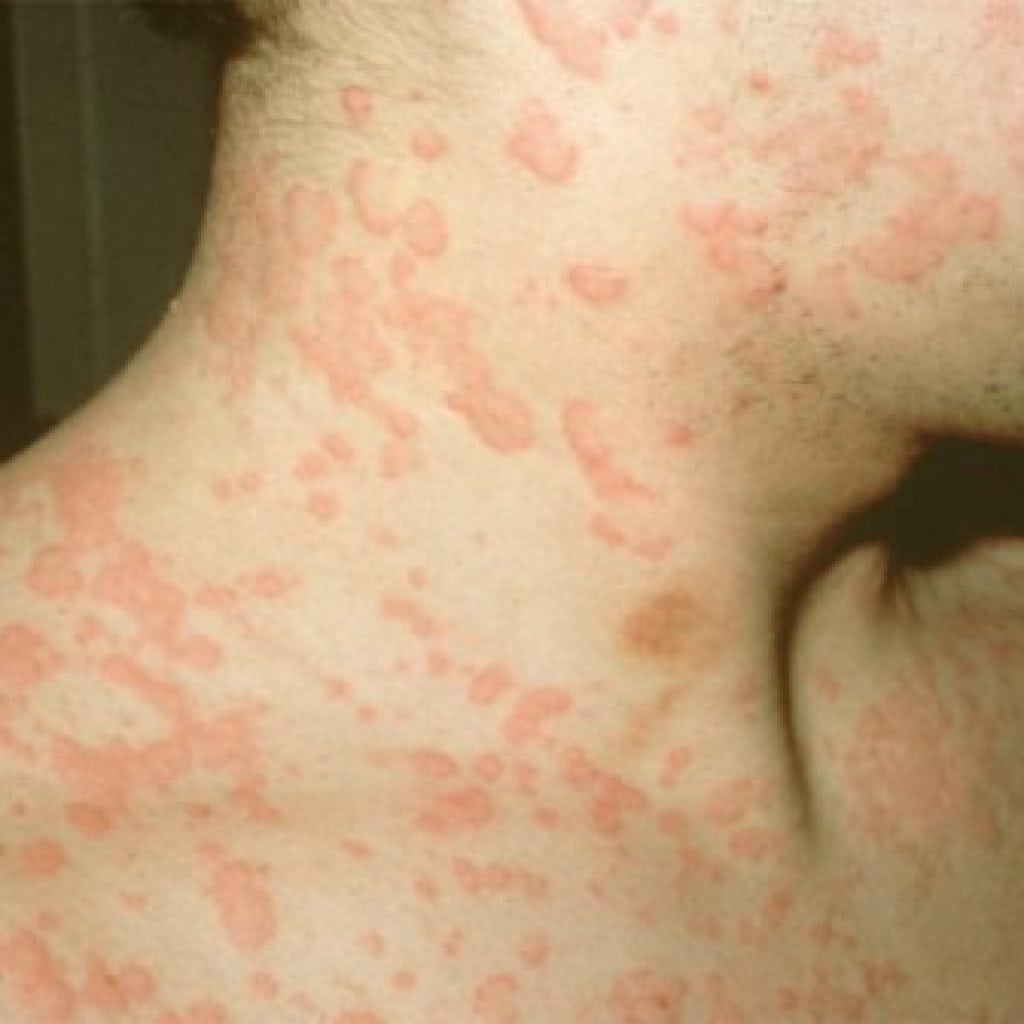
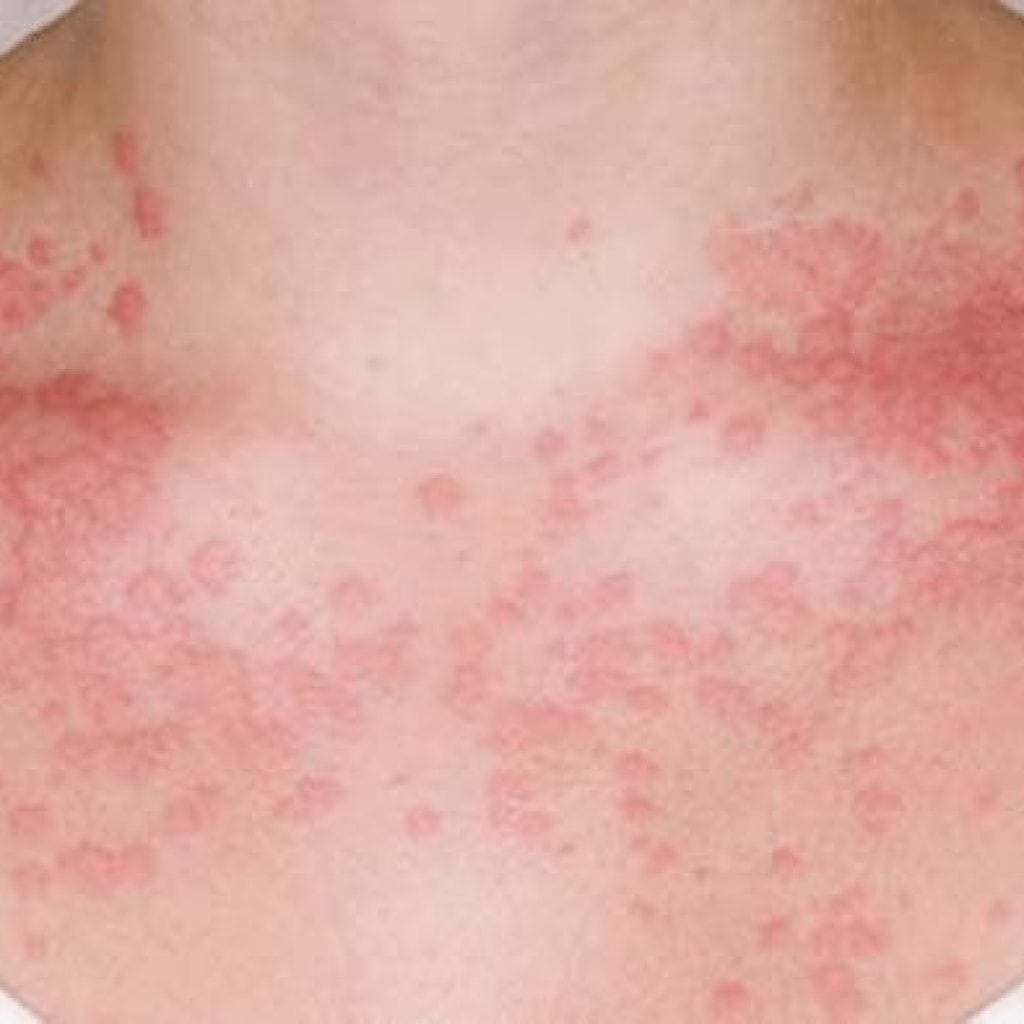
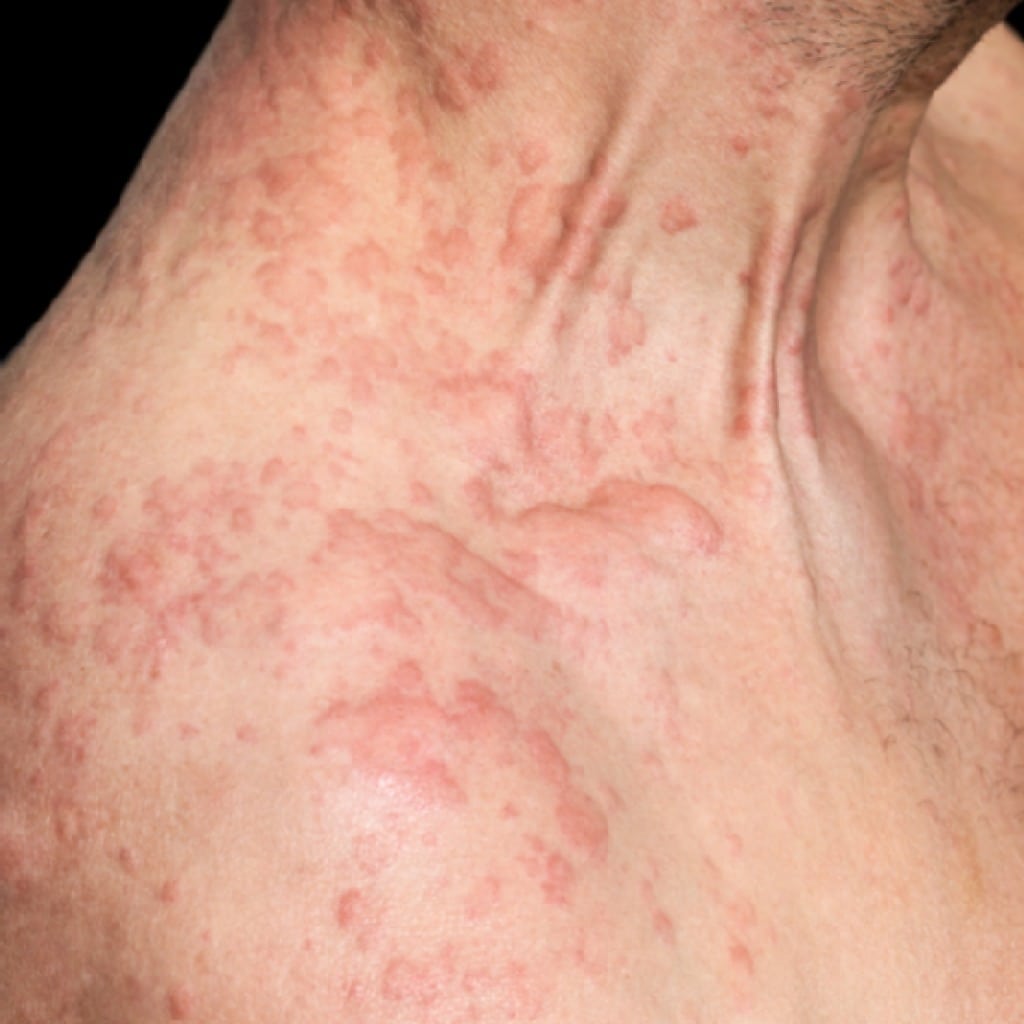
Allergy symptoms are quite diverse in nature and location:
- skin reactions: the skin dries up, rash and redness appear (see. photo above), itches a lot;
- from the respiratory system: allergic rhinitis, stuffy nose, sneezing, coughing, in some cases with sputum separation, there is swelling of the pharynx, tearing increases, difficulty breathing, asthma;
- from the digestive system: vomiting, intestinal upset, pulling abdominal pain;
- insomnia.
- a slight increase in body temperature.
- hypertension and hypotension.
Diagnosis of the disease
To make a diagnosis, medical tests and allergy test.
A compiled anamnesis, which contains knowledge about the identification of previously allergic reactions, the peculiarities of the course of the disease, the working condition, living conditions, the use of chemistry, etc., contains a lot of sense.
Read also:Pollen allergy: types, symptoms and treatment
Diagnostics in this case is carried out by an allergist.
When collecting an anamnesis, the doctor checks:
- hereditary factor (the presence of the disease in the patient's family);
- when the vaccine is administered, they look at the reaction of intolerance to the drug;
- the influence of climatic conditions;
- enzyme immunoassay, antibody study;
- the impact of various loads, stressful situations;
- the presence of viral diseases;
- check the connection with bearing a child, childbirth, gynecological diseases;
- what products the patient used, the use of household chemicals, the presence of pets, whether there are houseplants, carpets, woolen blankets.
Patients are monitored for the admissibility of the appearance of allergic reactions when taking specific products. For a specific examination, the patient must keep a food diary, where the clock is recorded. food intake, its ingredients, the number of foods, the method of preparation, and the appearance of unwanted reactions.
Diagnosis of such manifestations lasts a long time, therefore, in different situations, the introduction of records is required for 1 month. Additionally, the records need to record the dose of medications, stressful and other reasons that can affect the body.
When a food allergen is detected, it is eliminated from the diet, and the restoration of signs of the disease after a second intake of an allergic product helps to make an accurate diagnosis.
Sometimes food intolerances are not related to the food item. The reason is dysbiosis and is associated with other pathologies of internal organs.
Treating food allergies in adults

Prescribing an elimination diet is the main treatment for the disease in adults.
What does this diet mean?
The patient should exclude foods that cause allergies from the daily diet. This therapy is effective and generally beneficial.
- it is desirable to increase the percentage of vegetable oils in the human diet and greatly reduce the use of animal fats;
- you need to consume sorbents that attract toxic substances and remove them from the body; there are many of them in bran, fruits and vegetables. All dishes should be steamed, stewed, boiled, baked, but not fried;
- cut back on salt and spicy foods. When a strict diet is prescribed to a patient, it is recommended to ensure that the presence of all its nutritional components is strictly appropriate for his age and weight.
If you follow all the instructions of the doctor and follow this diet, the improvement in well-being occurs in 4-6 days.
Drug treatment
The leading principle of cure for allergic manifestations is considered to be complex therapy, which, in addition to diet, requires medicinal prescription.
The following medicines are used to treat allergies:
- antihistamines, they are used to prevent disease;
- glucocorticoids are prescribed for protracted forms of the disease. The course of taking them directly depends on the level of severity of the allergy and will be 3-14 days;
- drugs Kromoglin, Krom-Allerg, Lekrolin, Ifiral,, Vividrin, Intal, Cromolin, Taleum, Kuzikrom, Kromogen are prescribed for internal intake before meals and take them for a long time;
- adrenaline is used for anaphylactic shock, should always be in the home first aid kit. If the attacks of the disease occur often enough, are difficult, immunological therapy is prescribed. This method significantly reduces the manifestation of the disease, and in some cases gets rid of it.
For severe skin manifestations, the following drugs are prescribed:
- for intravenous administration use Calcium chloride and Sodium thiosulfate, they are able to remove the allergen from the body;
- with a large rash, appoint "Prednisolone" or "Dexapos»;
- drugs are prescribed against the manifestation of allergies: “Dermadrin», «Suprostilin», «Mebhydrolin», «Tavegil», - the duration of the effect of drugs is short, cause drowsiness;
- «Zyrtec», Cetrin», «Claritin»- drugs with a long-term effect, after taking drowsiness does not occur;
- «Fexofast», «Altiva», Erius", - have the least number of undesirable effects, long duration;
- Prednisolone pills prescribed for a protracted course of the disease. The course of his admission is capable of reaching 2 months;
- preparations and ointments based on corticosteroid (natural human hormone). They are used to reduce inflammation and are good for anesthesia. The course of their admission should not exceed 10 days (longer admission is prescribed only by the doctor).
Read also:Allergy in the eyes
For inflammation and itching, ointments are prescribed, non-hormonal ones are:
- Fenistil;
- Protopic;
- Panthenol;
- Bepanten.
Hormonal drugs can also be used, but their intake must be agreed with a doctor and used for a short time:
- Comfoderm;
- Advantan;
- Akriderm;
- Flucinar.
The manifestation of symptoms from the digestive system is reduced by adherence to a strict diet;
- medications are prescribed that contain prebiotics ("Bificol», «Bifidumbacterin» «Acipol»);
- means displacing the pathogenic microflora: "Bactisubtil», «Intetrix».
If the treatment process is started on time and is carried out in a comprehensive manner, then the expected result will not keep you waiting long.
Traditional methods of treatment
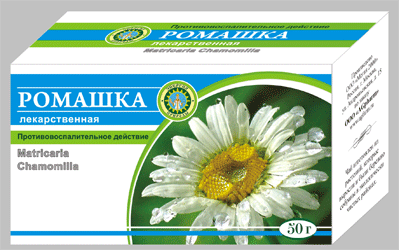
Simple home remedies can be used to effectively treat allergies.
Use herbal teas and herbal baths to cleanse the blood and reduce the negative symptoms of food allergies.
Tested means:
- a decoction of chamomile and calendula for internal use and lotions;
- infusion of nettle to cleanse the blood;
- use a decoction of chamomile, string, yarrow for taking a bath.
- crushed chicken egg shell. Boil the egg, remove the shell, crush and take 1⁄4 teaspoon for two weeks, three times a day.
- a decoction of laurel for allergies can compete in good faith with expensive medicines. It is used to treat small patients. A decoction of bay leaves is applied to irritated skin.
- viburnum from allergies gives a good therapeutic effect. An infusion is made from young shoots and drunk. Two or three days are enough for the allergy to begin to recede.
- at the first signs of allergy, use lemon balm, calendula flowers, celandine, tricolor violets. You can prepare a tincture of the herb and do the collection, stirring in the same proportion.
Preventive actions
First, you need to exclude all unhealthy foods from the diet. Additional preventive measures will also help:
Additional preventive measures:
- Washing mode. Do not wash with hot water, but slightly warm up to 38 degrees, after a bath, do not dry off with a towel, but get your skin wet.
- Use moisturizers after showering.
- Do not use decorative cosmetics and alcohol-based lotions. They cause dryness and tighten the skin.
- Wear natural fabrics.
- Avoid strenuous physical activity and keep the climate in the house up to 20 degrees. Sweat heavily it is impossible, since sweat irritates the skin and itching appears.
- Prevent seasonal colds, eat more vegetables and fruits, drink complex vitamins.
- A minimum of concentrates and canned food in the diet.
- Avoid taking antibiotics.
- Diet during pregnancy and lactation.
- Timely diagnosis and treatment of diseases of the internal organs of the digestive system.
- Partial or complete (if possible) elimination of allergenic foods from the diet.
- Get rid of smoking, or bypass places where people who smoke are crowded.
- Foods that cause allergies should be cooked or frozen well.
Read also:Mosquito bite allergy (kulicidosis)
It is important to eliminate negative reactions at an early age so that you do not suffer from an acute immune response to certain foods throughout your life.
Prognosis or outcome of treatment
According to monitoring, experts from the Immunological Institute of the FMBA of Russia today suffer from allergies about half of the inhabitants of Russia. A few years ago, only a quarter of the country's population suffered from the disease, and today it is already a third. In the West, allergies got sick statistically 35% the adult population.
In Russia, these examinations are not performed everywhere, but it has been established that in Moscow 15% of the population suffers from allergies. Over the past 10 years, the number of allergy sufferers in Russia has increased by 20%.
More specifically, food allergies are reported on average in 10% of children and 2% of adults. In 30-40% of children and 20% of adults suffering from atopic dermatitis, complications of the disease are associated with food allergens.
Patients with bronchial asthma at 8% of cases have paroxysms of suffocation when eating allergens, and in some patients with atopy, 17% are associated with complications of the disease with food allergens.
In the society of patients with diseases of the digestive tract, the intrazonal allergy to food is more significant than among people who do not have this pathology, and ranges from 5 to 50%.
The most painful reaction with a genuine allergy to food components is anaphylactic shock. The condition develops after eating the following foods: fish and seafood, eggs, milk, fatty nuts, etc.
Anaphylactic shock in case of food allergy, it is detected within a minute and up to 4 hours after a meal, it is described as a severe course (the fatal outcome in anaphylactic shock is from 20 to 70%).
Anaphylactic shock, stimulated by a certain substance from food, happens with pseudo-allergies, according to medical symptoms, he may have a similar condition, but stands out from the latter by the absence of a syndrome and a prognosis of cure favorable.
Other symptoms usually come to light: blood pressure drops sharply and the person may faint.
Similarly, a reaction can occur in the form redness on the body and Quincke's edema, a person feels a breakdown. The prognosis for this pathology is favorable and with good treatment, the positive effect comes quickly, in the first minutes and hours after the start of therapy.


