
Sudden cardiac death: causes, symptoms, help, treatment
Sudden cardiac death is naturaldeath (stop) of the heart, which occurs due to heart problems. It is not a very common condition, but sudden cardiac death has a social impact, especially when it affects young people such as athletes.
Content
- What is sudden cardiac death?
- Causes and risk factors
- Symptoms
- Diagnostics
- Treatment
- Prophylaxis
- Conclusion
What is sudden cardiac death?
Sudden cardiac death (sudden cardiac arrest) Is, by definition, sudden and natural death due to cardiac (cardiac) causes in people with known or unknown heart disease that begins with sudden loss of consciousness and occurs within 24 hours of the onset of symptoms.
Sudden cardiac arrest is a consequence cardiac arrhythmias, that is, disorders of cardiac conduction of excitement. The heart no longer receives the regular electrical impulses that would normally cause the heart muscle to contract. As a result, the heart refuses to maintain its normal rhythm. The number of beats increases dramatically in most cases to more than 500 beats per minute. A healthy person has 60 to 80 beats per minute. This increase
heart rate leads to ventricular fibrillation, inconsistent contractions of the muscle fibers of the heart. Arises heart failure, in which a uniform contraction of the heart muscle is no longer possible, as a result, the heart cannot pump blood into the circulatory system.If the condition is not treated immediately, ventricular fibrillation results in poor circulation within seconds (circulatory arrest). After 1-2 minutes, patients lose consciousness, after 3-5 minutes irreversible damage occurs, on average brain death occurs in 10 minutes.
Causes and risk factors
Sudden cardiac death can be caused by a variety of reasons, which as a result of dangerous heart rhythm disturbances (cardiac arrhythmias) cause circulatory arrest.
The main cause of cardiac arrhythmia, which means sudden death or instant death, is coronary heart disease. In rare cases, sudden heart death is caused by other heart conditions such as myocarditis or heart disease. Risk factors for sudden cardiac death include the following:
- myocardial infarction.
- heart failure;
- cardiorespiratory arrest;
- unfavorable genetic predisposition (sudden cardiac death in relatives).
- old age.
Classic factors that are bad for the heart:
- diabetes;
- hypertension (arterial hypertension);
- high cholesterol levels (hyperlipidosis, hyperlipidemia);
- smoking;
- high alcohol consumption;
- lack of physical activity.
Read also:How to lower blood pressure at home, 7 quick effective ways + recipes of traditional medicine for hypertension
Although regular physical activity improves heart health, when a person has risk factors it can lead to sudden cardiac death as a result of very great physical effort (for example, athletes). In more than 80% of all cases, sudden death occurs during or immediately after extreme physical exertion.
Symptoms
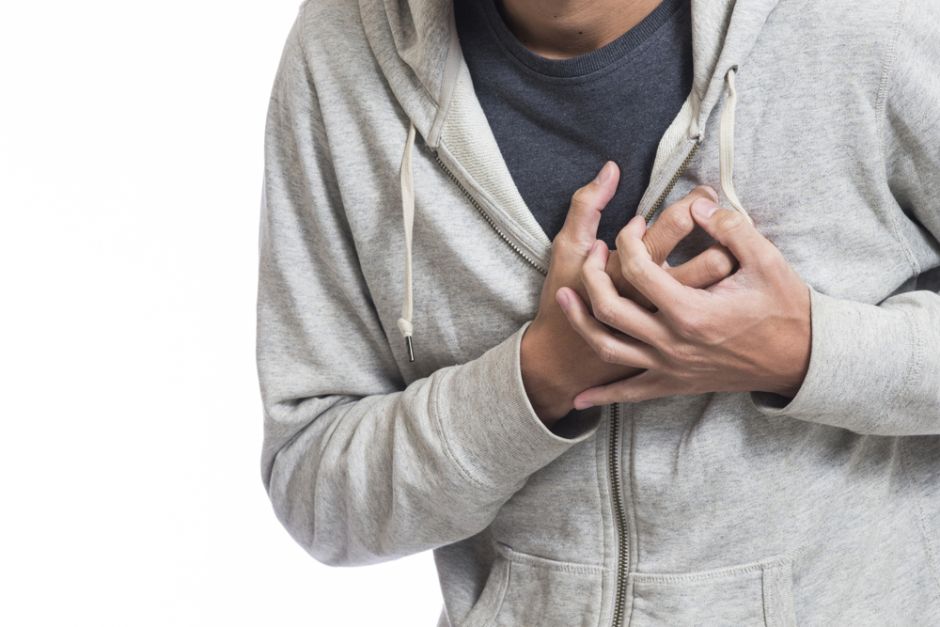
Sudden cardiac death is characterized by the following symptoms:
- Injured people fall into fainting and do not respond to speech or pain stimuli. This sudden loss of consciousness may appear with or without previous heart symptoms.
- On the carotid artery pulse cannot be felt.
- In no more than a minute man stop breathing: Respiratory movement of the chest is interrupted and no air comes out of the mouth and nose.
- The pupils dilate.
- Changes the color of the skin, first of all, the nail plate and mucous membranes become pale gray.
- Instant death occurs without treatment.
Sudden cardiac death often occurs no obvious symptoms: In half of the cases, it affects people without obvious heart problems. Even in the absence of signs of heart disease, the coronary vessels of many people are already undergoing significant changes due to atherosclerosis (coronary heart disease). When these changes cause discomfort the first time, they can lead to dangerous cardiac arrhythmias and then sudden cardiac death.
For this reason, it is important to recognize first signs possible heart disease which can lead to sudden cardiac death:
- One of these symptoms is a feeling of tightness or chest pain that spreads to the left arm or lower jaw. Discomfort usually appears after exertion and mostly in the morning.
- Other common signs are dyspnea and a general feeling of weakness. These symptoms can also occur separately and must be diagnosed.
- Also frequent recurrent dizziness and fainting, in which feeling is lost for seconds or minutes, they are not necessary, but they can be the first warning signs of an imminent sudden cardiac death.
- For people who have already undergone myocardial infarction or have heart failure, noticeable transient tachycardia must be controlled.
Read also:Heart diseases
Diagnostics
Sudden cardiac death is associated with respiratory arrest, which is diagnosed with typical symptoms such as sudden loss of consciousness and a lack of pulse. Sudden cardiac arrest is an extremely dangerous emergency. If symptoms appear, immediate resuscitation is necessary.
When sudden heart death is inevitable electrocardiogram rarely diagnoses the underlying cardiac arrhythmia.
Important information.
You should be prepared to refer to your medical history for symptoms associated with possible cardiac and respiratory arrest. The most important things to remember are the following points:
- How long does it take for symptoms to appear.
- Approximate number of times you have suffered from symptoms in recent months.
- Time elapsed between symptoms.
- Duration of symptoms when they appear.
- Describing the signs by someone who has seen them.
- What did he do when the symptoms started.
- Tell your doctor about other professionals you have seen because of your symptoms.
Diagnosis and medical advice are always needed to accurately determine the extent of the pathology, the risks and the preventive measures to be followed. It is important to consult a cardiologist in order to get an accurate diagnosis and answers to all questions regarding diseases.
Treatment

If sudden heart death is inevitable, it is necessary urgent treatment. Rapid death (instant death) can only be prevented if appropriate urgent measures are taken.
In the case of ventricular fibrillation, sudden cardiac death and life-saving can only be avoided by using immediate defibrillation and (if necessary) simultaneous cardiopulmonary resuscitation:
- When cardiopulmonary resuscitation performed heart massage, in which strong pressure is exerted on the chest of an unconscious person, so that the chest drops at least five centimeters. This is done 30 times (at a fast pace: more than three times in two seconds). After interrupting the heart massage, the unconscious person takes twice (i.e., two breaths) artificial respiration. After artificial respiration followed by repeated heart massage 30 times (at a fast pace: more than three times in two seconds), followed by artificial respiration and so on.
- At defibrillation a patient with sudden cardiac death gets a strong electrical impulsedefibrillator into the chest. This should re-regulate the electrical activity of the heart and allow the heart to beat normally again. All ambulances have the necessary defibrillators for these emergencies.
Read also:Symptoms and treatment of cardioneurosis
If with the help of these urgent measures it turns out prevent sudden cardiac arrest, the treatment used will depend on each specific case: if there is a disease in which there is a high risk of sudden cardiac death, then it must be treated disease. Thus, in addition to drug treatment, stents, dilatation or bypass affected heart arteries.
Prophylaxis
Unfortunately, anyone can transfer sudden cardiac arrest or sudden cardiac death (BCC). This condition is unpredictable and can happen to anyone, at any age, anywhere, even teenagers. Although previous heart disease is a common cause of cardiac arrest, many people who are affected have never had a heart problem. The risk increases with age.
Without immediate treatment only 5%-10% people are experiencing SCD. However, a survival rate of over 50% has been achieved in countries where early public access programs have been successfully implemented. defibrillation by installing automatic external defibrillators (AED). Survival rates can be further improved if a person is treated within three minutes of cardiac arrest.
In most cases, sudden cardiac arrest occurs no antecedent symptoms. However, if the patient has risk factors (described above) that can cause sudden cardiac death, it is important that the person consult a doctor.
A heart specialist is cardiologist, he diagnoses and heals arrhythmias (too slow, too fast, or irregular heartbeats) that can cause sudden cardiac arrest.
Conclusion
Diseases of the cardiovascular system occupy one of the leading places in the morbidity structure of the Russian population and determine the level of its mortality, temporary and permanent disability. Moreover, sudden cardiac death accounts for about half of all deaths.
In 50% of cases, deaths in such a common disease as coronary heart disease (CHD) are sudden, primarily arrhythmogenic.


