
Marfan syndrome: photos of patients, causes, symptoms and treatment
Content
- What is this disease?
- Causes of occurrence
- Classification
- Symptoms of Marfan's disease
- Diagnostics
- Treatment for Marfan syndrome
- Drug treatment
- Surgery
- Prevention
- Forecast
- Related Videos
What is this disease?
Marfan syndrome is an autosomal dominant hereditary disorder characterized by damage to the connective tissue and its components.
Marfan disease is caused by a mutation in the gene encoding fibrillin-1.
People with Marfan syndrome have elongated limbs, spider-like fingers, and weak (underdeveloped) subcutaneous fat and hyperflexible joints. photo below).
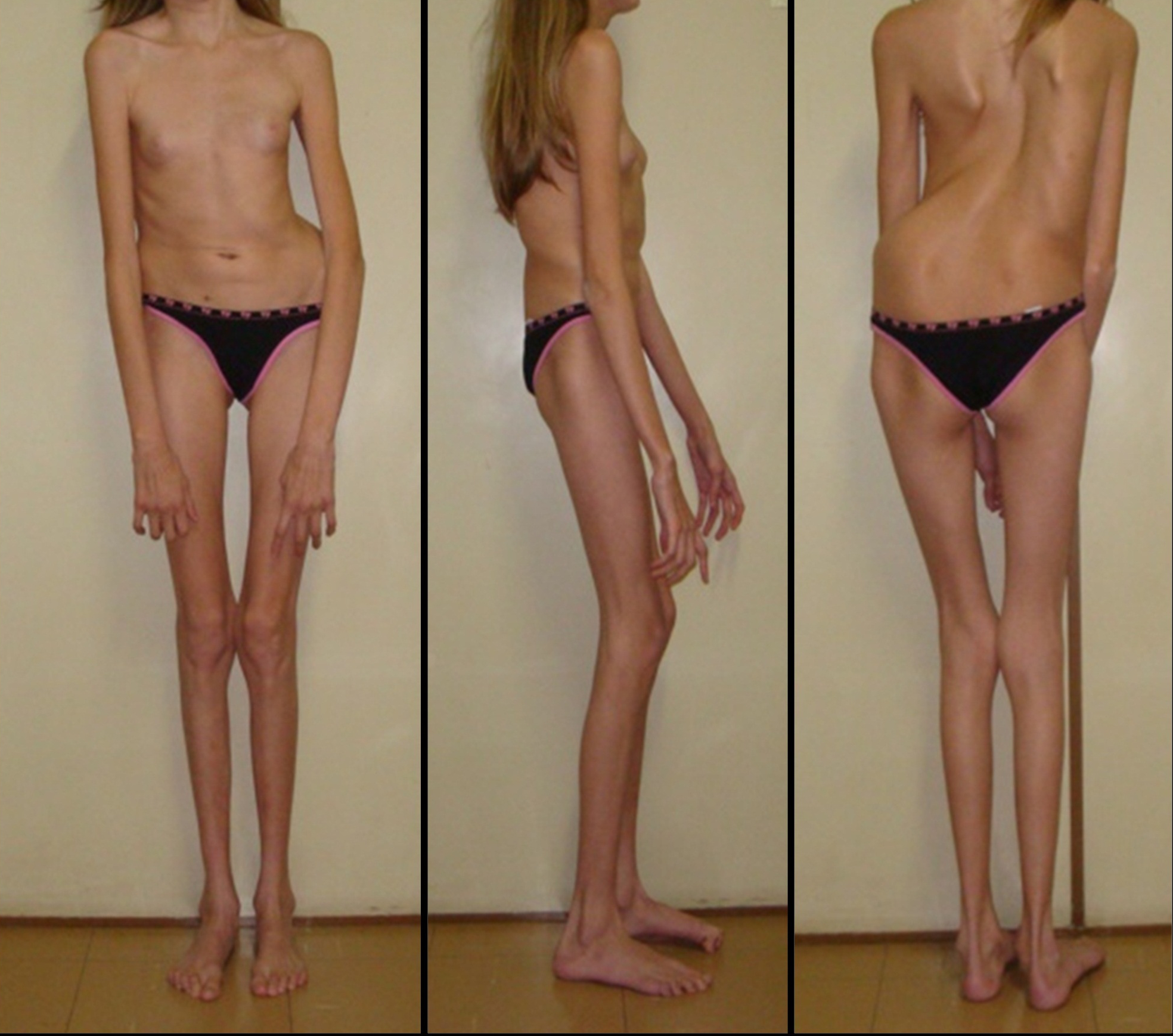
In addition to changes in the osteoarticular system, changes in the visual analyzer and the cardiovascular system are characteristic. It is also possible damage to the nervous, respiratory and other systems.
Williams was the first to describe this pathology, who noticed in his brother and sister a prolapse of the lens, while they were very high and had hypermobile joints. Then he was noticed by Marfan, a neurologist who had 20 years a woman with similar symptoms was observed, and then another 20 children.
Causes of occurrence

Marfan disease in children is inherited in an autosomal dominant manner (i.e. not passed from parent to child).
Mutations are also possible due to the effect on the woman's body of environmental factors (ionizing radiation, radiation therapy, radiation).
The causes and mechanism of development of the disease are not well understood.
A special role is given to the violation of metabolic processes, as a result of which a large amount of mucopolysaccharides accumulates in collagen and elastic fibers.
This leads to the fact that the connective tissue is overstretched, easily exposed to mechanical stress and leads to the development of clinical symptoms.
Classification
The following forms of Marfan's disease are distinguished:
Depending on the genetic predisposition:
- family (pathology is transmitted from parent to child);
- sporadic (pathology is caused by a sudden mutation in the genome).
Depending on the manifestations of the clinic:
- erased, when the signs of the disease are practically not manifested and may not be noticed throughout life. Pathological changes are detected in one or two systems.
- expressed when the signs of the disease concern two or more organs and systems (heart, bones and joints, lungs, skin, eyes).
Symptoms of Marfan's disease
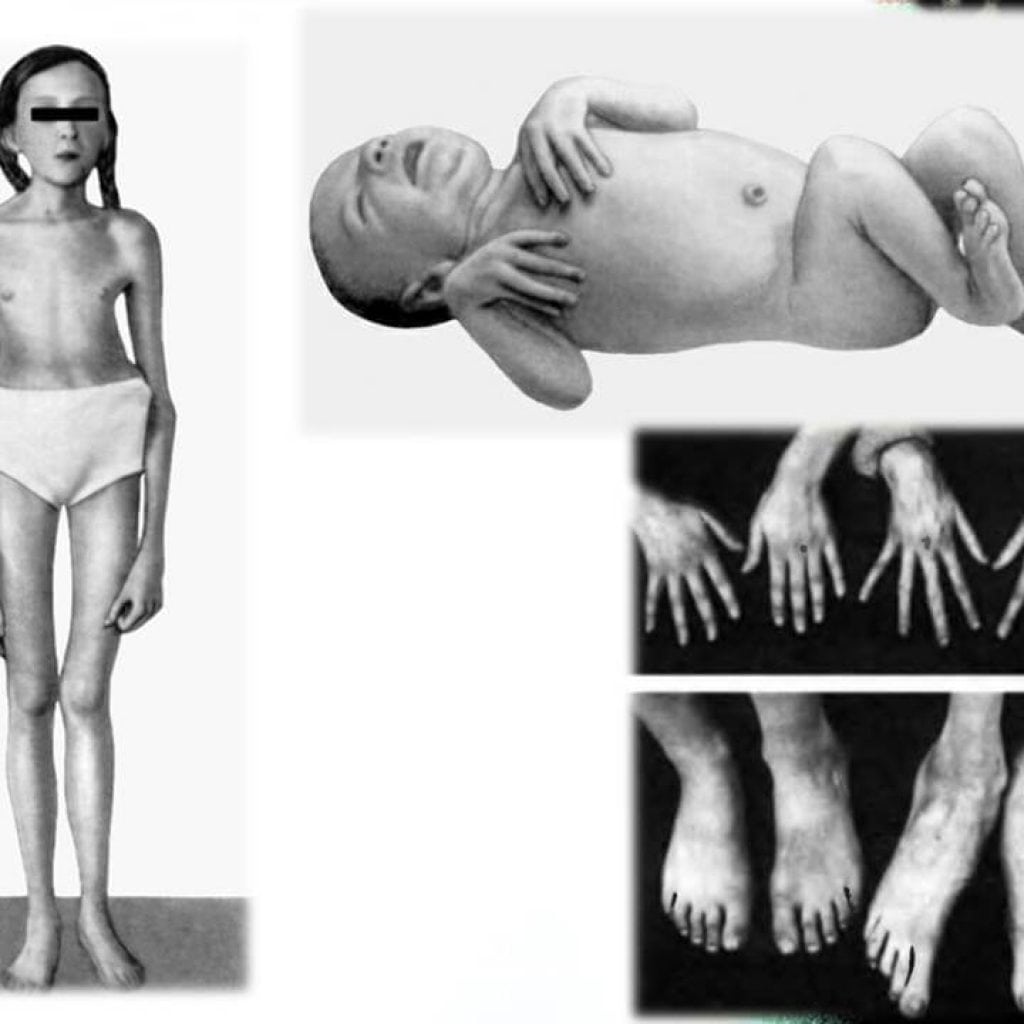

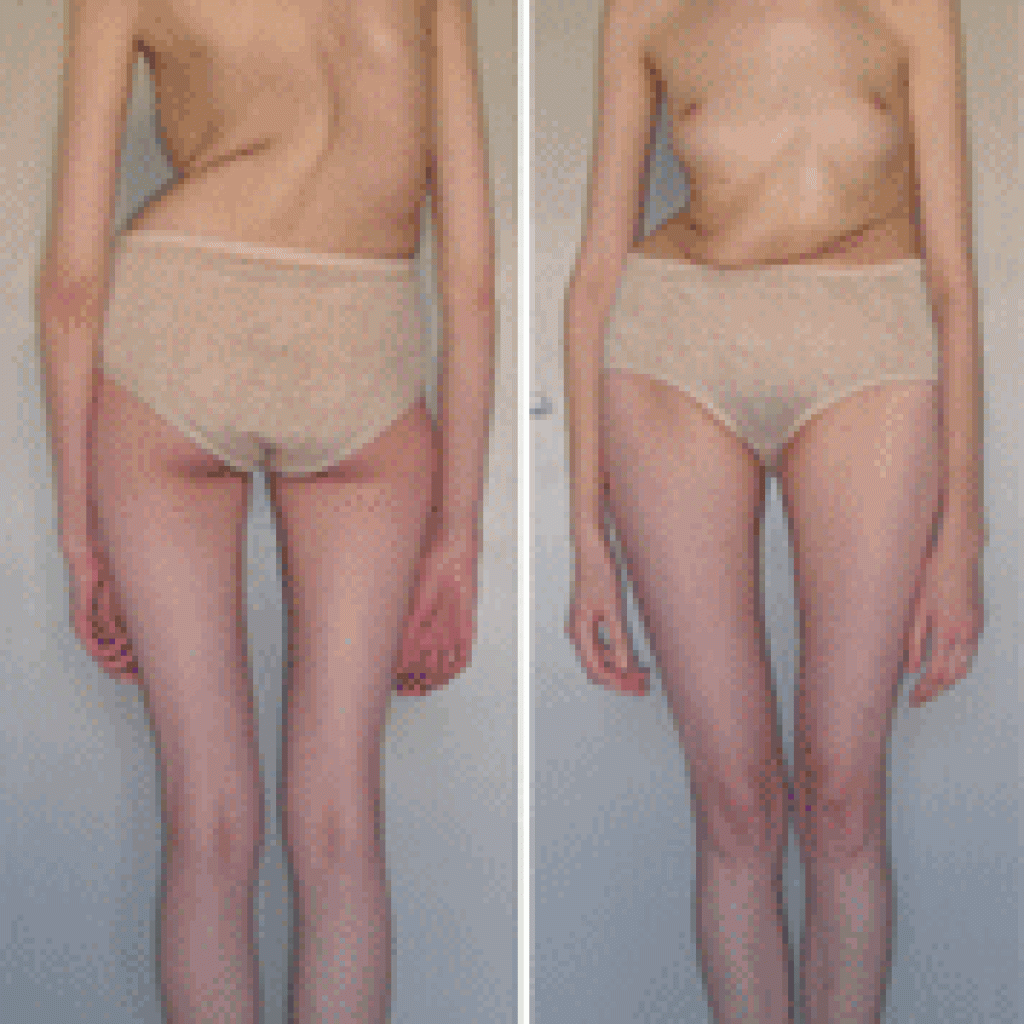
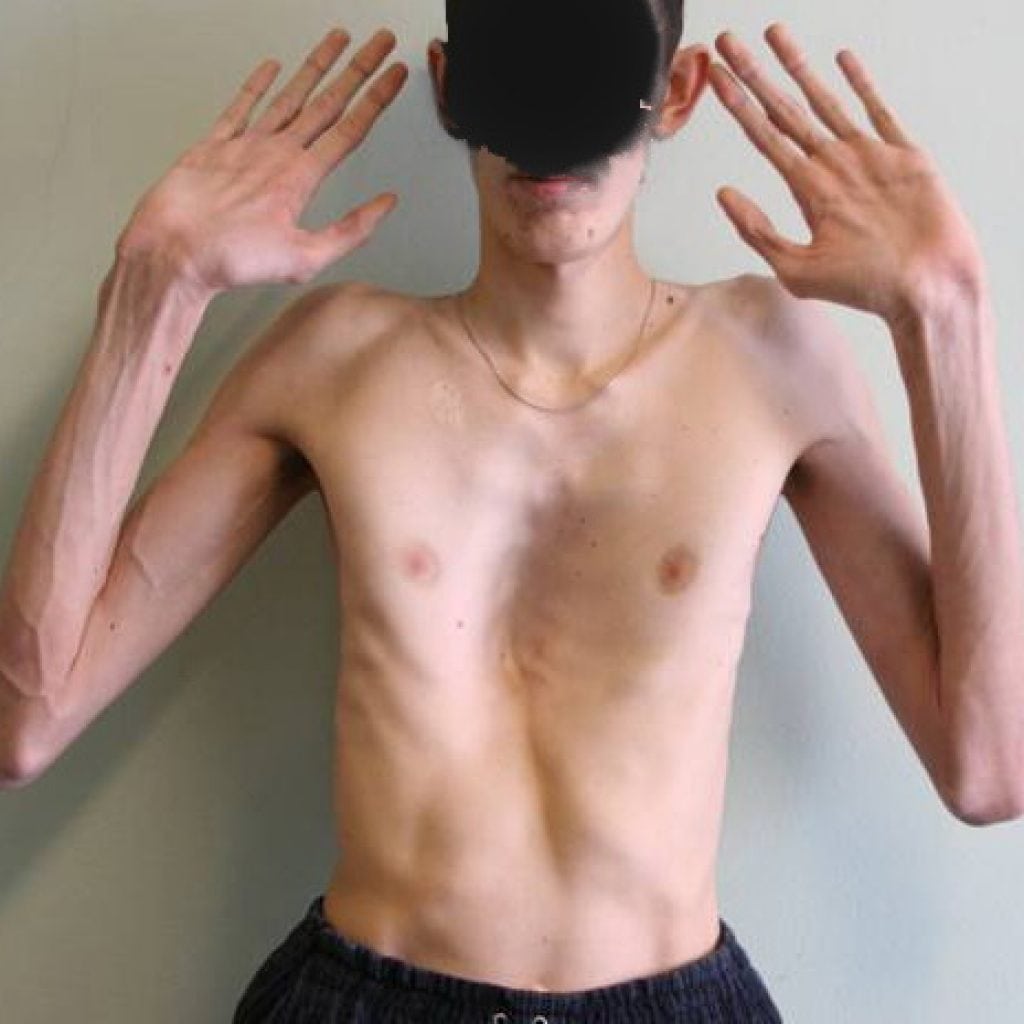
Marfan syndrome in humans leads to their isolation in society by their disproportionate skeletal structure. For newborns at an early stage of the disease, long fingers are characteristic, and by the age of 7-9 children develop a detailed clinical picture.
In adults, different symptoms are characteristic, depending on the lesion system:
- Nervous system: soreness in the lumbar region, headaches, sympathetic and parasympathetic innervation of the abdominal and pelvic organs (weakness of the intestinal wall, urinary bladder incontinence in child). There is also a high risk of developing stroke, subarachnoid hemorrhage and rupture of cerebral aneurysms.
- The cardiovascular system: \ heart defects (narrowing of the pulmonary artery, prolapse of the leaflets of the bicuspid valve, dilated cardiomyopathy, expansion of the borders of the heart (aorta and all its parts), defects of the IVS and MFJ partitions. Patients may develop rhythm and conduction disturbances in the form of arrhythmias.
- Musculoskeletal system: asthenic physique (thin children), high growth in men 190 ± 10 cm, in women 179 ± 8 cm, underdeveloped subcutaneous fat layer, long fingers (arachnid), flat feet, skull and face elongated and narrow, underdevelopment of the cheekbones, impaired development of teeth and bite, elongated lower jaw, gothic upper palate, hypermobility of the joints (see the pictures above). With the age of the child, deformity of the spinal column may progress, with the development scoliosis. Also, the chest can be deformed, an impression is formed - "the shoemaker's chest". A deformed hip joint often leads to disability if timely treatment is not provided.
- Organ of vision: displacement of the lens due to a weak ligamentous apparatus) at an early stage, flattening of the cornea, development of myopia or hyperopia, spasm of accommodation, retinal detachment.
- Skin and soft tissues: hyperextension of the skin with the formation of striae of an atrophic nature. They appear suddenly, are not associated with fluctuations in the weight of people, pregnancy and hormonal levels. The skin is clammy, sweaty, marbled. The subcutaneous fat layer is poorly developed, therefore, patients have hernial protrusions in the region of the anterior abdominal wall.
- Respiratory system: development of bullous emphysema of the lungsmanifested by cough, shortness of breath, the development of respiratory failure and spontaneous pneumothorax.
Read also:Hypertensive type neurocirculatory dystonia (NCD)
Other signs:
- development of prolapse of the kidneys (nephroptosis);
- prolapse of the pelvic organs (prolapse of the uterus in women, or its complete loss);
- varicose veins of the lower extremities;
- constipation.
Diagnostics
Diagnostics is based on a thorough collection of anamnesis of the disease, the severity of the clinical picture, examination data, on the results of laboratory and instrumental research methods.
Anamnesis collection includes: the presence of this pathology in the family (parents, brothers, sisters) or the presence of factors that provoke a mutation in the human genome.
Laboratory methods include: analysis of the genotype of DNA with a mutating gene, determination of glycosaminoglycans in urine.
Instrumental research methods include:
- ECG is used to detect vascular and cardiac pathology (CVS). Reveal characteristic disturbances of rhythm and conduction in the form atrial fibrillation, ventricular premature beats, the development of dilated hypertrophy of the left ventricular myocardium.
- Echocardiography also serves to detect CVS pathology. Reveal the expansion of the aorta and its structures, prolapse of the bicuspid valve, an increase in the size of the left half of the heart.
- Ultrasound of the heart performed to determine complications (dissecting aneurysm).
- X-ray of the chest organs (changes in the skeleton, expansion of the cavities of the heart, roots of the lungs, etc.)
- Computed tomography, magnetic resonance nuclear tomography can reveal pathologies of the osteoarticular, nervous system, circulatory disorders in the vessels of the brain and spinal cord.
These research methods are used to detect criteria for Marfan syndrome in various organs and systems. They play the most important role for making and confirming a diagnosis, and subsequently, for determining treatment tactics.
There are the following criteria for the diagnosis of Marfan syndrome:
| System | Big criteria | Small criteria |
| Support- locomotor apparatus There should be: 4 large criteria, or 2 large and 1 small. |
|
|
| Organ of vision | Lens displacement | Flattened cornea, myopia, hyperopia, underdevelopment of the iris and ciliary muscle of the eyes. |
| The cardiovascular system | Dilation of the aorta and its structures | Bicuspid valve prolapse, expansion of the pulmonary artery valve in persons under 40 years of age, deposition of calcium salts on the cusps of the bicuspid valve, dissection of the aorta. |
| Respiratory system | Absent | Suddenly developing pneumothorax (accumulation of air in the chest), apical bullae. |
| Leather | Absent | Re-development of hernial protrusions, atrophic striae. |
| Nervous system | Expansion of the vessels of the membranes of the spinal cord in the lumbar / sacral spine. | Absent |
| Genetic changes | The presence of these criteria in parents, children, brothers, sisters, grandmothers, grandfathers. The presence of a mutated gene encoding fibrillin 1. | Absent |
For the diagnosis of Marfan syndrome, one sign from the list of large criteria or a small criterion characteristic of each of of the affected systems, except for the musculoskeletal system, (at least 4 criteria are required), as well as the presence in the family history of patients with this pathology.
Treatment for Marfan syndrome
It is impossible to completely get rid of Marfan's syndrome and eliminate the mechanism of its development. Treatment is based on improving the general condition of the patient, eliminating clinical manifestations and taking preventive measures to prevent the development of complications.
Patients with these syndromes are advised to limit physical activity to a low level, or minimal. The risk of pathology of the cardiovascular system increases with medium and high physical exertion.
It is necessary to bypass the side and daily loads, in which an increase in intrathoracic pressure is possible, leading to the development of pneumothorax (for example, lifting weights, climbing floors).
Patients with Marfan syndrome should be consulted by different specialists, depending on the clinically affected organ systems. Medical examinations should be done every six months throughout your life.
Drug treatment

Drug therapy is aimed at eliminating the clinical picture of the disease.
On the part of the cardiovascular system, β-blockers are recommended (for example: Anaprilin), which reduce the speed of propagation of pulse waves with a rapidly growing expansion of the aorta and reverse blood flow on the bicuspid or aortic valve.
β-blockers also have a positive effect on rhythm and conduction disturbances, in combination with cardiac glycosides.
But you should remember about the existing contraindications for these groups of drugs:
- chronic obstructive bronchitis;
- bronchial asthma;
- decline heart rate;
- low blood pressure.
Calcium channel blockers are used when there are contraindications to B-blockers.
Surgery
Surgical treatment is carried out if there are complications from the cardiovascular system, in order to correct the affected areas. It is performed with prolapse of the bicuspid valve and dissection of the aorta.
In this case, prosthetics of the bicuspid valve is carried out.
In pregnant women with severe Marfan disease, the delivery is resolved surgically.
Prevention
For prophylactic purposes, in order to avoid the development of infectious complications, the formation of blood clots and thromboembolism, anticoagulants (heparin), antibiotic therapy and vitamin therapy are prescribed.
- In Marfan syndrome with severe visual impairment, surgical correction of vision is performed, after which patients must wear glasses or contact lenses.
- If complications arise, they carry out laser correction of glaucoma, cataracts, remove the displaced lens, replacing it with an artificial one.
- With functional dysfunction of the musculoskeletal system, it becomes necessary to stabilize the spine using metal plates.
- With pronounced deformation of the chest, thoracoplasty is performed.
- With protrusion of the hip joints, internal joint replacement is performed.
Forecast
Life expectancy on average in Marfan syndrome is 30-45 years.
It is known that many famous personalities suffered from this syndrome. This is Hans Christian Andersen - Danish writer, author of the famous Little Mermaid; Abraham Lincoln is the 16th President of the United States, Michael Pellps is a famous swimmer, multiple Olympic champion. And also famous composers - Niccolo Paganini, Sergei Rachmaninov.
People with this pathology should carefully monitor their health, constantly monitor and consult with their doctor, avoid excessive physical exertion.
In addition to drug treatment, it is necessary to carry out preventive measures in order to improve general well-being, increase immunity, and an appropriate mode of work and rest.