Presses in the middle of the sternum, it is hard to breathe like a lump in the throat, the reasons and what to do
Pressing pain in the sternum is a symptom with many causes. Among them are less serious diseases of muscles and soft intercostal structures. The chest area shows pain from the spine or abdominal organs.
However, the cause of chest pain may be more serious (cardiovascular diseases, lung diseases, inflammation, insufficient blood supply), and threaten health and life person. Let's take a closer look at this.
Content
- What diseases provoke pressing conditions in the chest in the middle
- Angina pectoris
- Pericarditis
- Pleurisy
- Inflammation of the endocardium and heart valves
- Myocarditis
- Reflux disease
- Violation of esophageal motility
- Respiratory tract infections
- Spine pain
- Abdominal pain
- Shingles
- Pneumothorax
- Special, acute conditions in which there is pressure in the chest
- Myocardial infarction
- Aortic aneurysm
- Broken ribs
- Pulmonary embolism
- What to do, what examinations you need to undergo
- Which doctor to contact
- What to do with pressing pain in the chest - how to help yourself quickly
What diseases provoke pressing conditions in the chest in the middle
Pain in the middle of the sternum can be one of the symptoms of obesity, atherosclerosis, anemia and other diseases that, at first glance, have nothing to do with the chest area. Consider what diseases provoke pressing pain in the sternum.
Angina pectoris
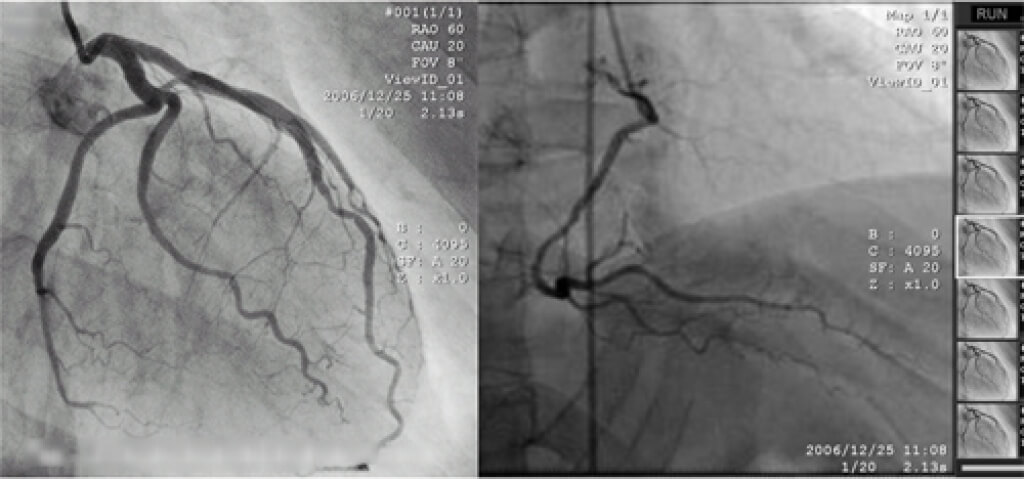
This is a serious form coronary heart disease. Pressing chest pain occurs as a result of reduced oxygen supply to the heart muscle. Mostly the condition is caused by atherosclerosis of the coronary arteries that supply blood to the heart.
In the case of narrowing of an artery due to an atherosclerotic process, during physical exertion, it does not pass a sufficient amount of blood, therefore, oxygen deficiency occurs. This causes a feeling of tightness in the chest.
Discomfort occurs with stress, physical exertion. It does not last long, disappears 3-5 minutes after the end of physical activity. If the disorder is not treated, the constriction continues, the pressure in the chest on the left worsens (pain occurs with less effort or even at rest).
At any stage angina pectoris in the artery damaged by atherosclerosis, a blood clot can form, completely blocking the coronary vessel. Is happening myocardial infarction.
Pericarditis
Pericarditis - This is an inflammation of the pericardium, pericardium. It is the membrane that surrounds the heart. If inflammation of any etiology occurs (infection, lupus erythematosus, rheumatism, the occurrence of oncology, etc.), there is pressing pain.
Soreness is not as pronounced as with a heart attack, but it is often difficult to distinguish pericarditis from a heart attack. In differential diagnosis, ECG or echocardiography is used.
Pleurisy
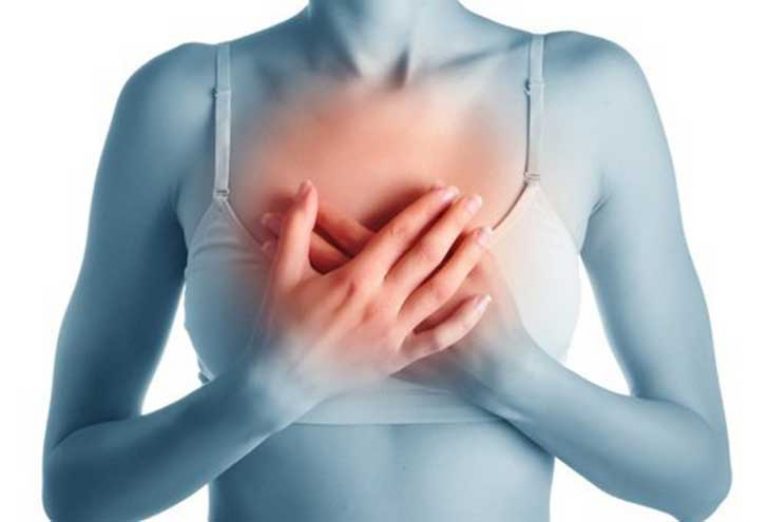
With inflammation of the pleura, it also compresses the chest. The typical pleural nature of pain is soreness associated with breathing, aggravated by inhalation.
Inflammation of the endocardium and heart valves
The inflammation can affect various parts of the heart wall. With inflammation of the inner mucous membrane, endocardium, we are talking about endocarditis. Heart valves are often affected. Soreness in the middle of the sternum is similar to discomfort in other inflammations (pericarditis, pleurisy), the pain syndrome is moderate.
Myocarditis
With inflammation of the heart muscle (myocarditis) of any etiology, there is pain in the chest in the middle or on the left. Heart rhythm disturbances may also be present, signs heart failure.
Read also:Syncope (fainting): causes of fainting at high and low pressure, first aid, prevention
Reflux disease
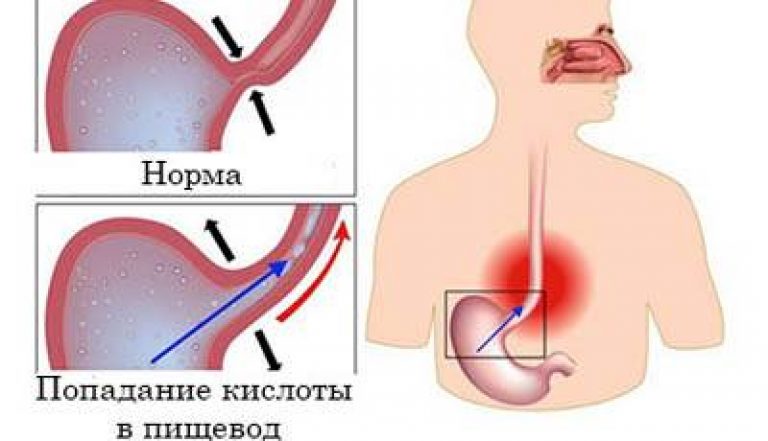
In reflux, pain radiating to the chest is caused by the return of stomach contents into the esophagus (gastroesophageal reflux).
Usually, the esophagus is separated from the stomach by a muscular sphincter, allowing food to travel from the esophagus to the stomach, but not back. If the sphincter does not work properly, the acid content in the stomach can return to the esophagus and damage the lining. This is accompanied by heartburn, sudden chest pain. Discomfort occurs after eating, antacids (alkaline substances that reduce the acidity of the contents of the stomach) help to cope with it.
Sometimes the soreness is "just" unpleasant, sometimes it is so strong that it resembles myocardial infarction, including a nasty lump in the throat.
If a heart attack is suspected, it is recommended to seek immediate medical attention to rule out an acute condition.
Violation of esophageal motility
With violations of the musculature of the esophagus, it also often compresses the chest. This symptom is typical of an abnormal increase in peristalsis.
Respiratory tract infections
Soreness with inflammation of almost all airways can be given to the chest. Pain is common with pneumonia, accompanied by fever, cough (dry or productive).
The diagnosis is confirmed by x-rays of the lungs and other examinations. An important blood test showing the presence of an inflammatory process in the body.
Spine pain

Pressing pain is a symptom of problems with the thoracic spine and its nerves. The peculiarity of pain is a stabbing character, frequent irradiation from the back to the chest. She is not dangerous, but very unpleasant.
Abdominal pain
Some abdominal disorders present with chest pain in the middle. Such diseases include acute pancreatitis, biliary colic.
Shingles
Shingles Is an infectious disease caused by the varicella-zoster virus that affects the nerves leading from the skin and subcutaneous tissue.
The disease can affect almost any part of the body, including the scalp, face, typical localization is the chest area. In the early stages of the disease, burning or pressing pain of varying intensity occurs.
Pneumothorax
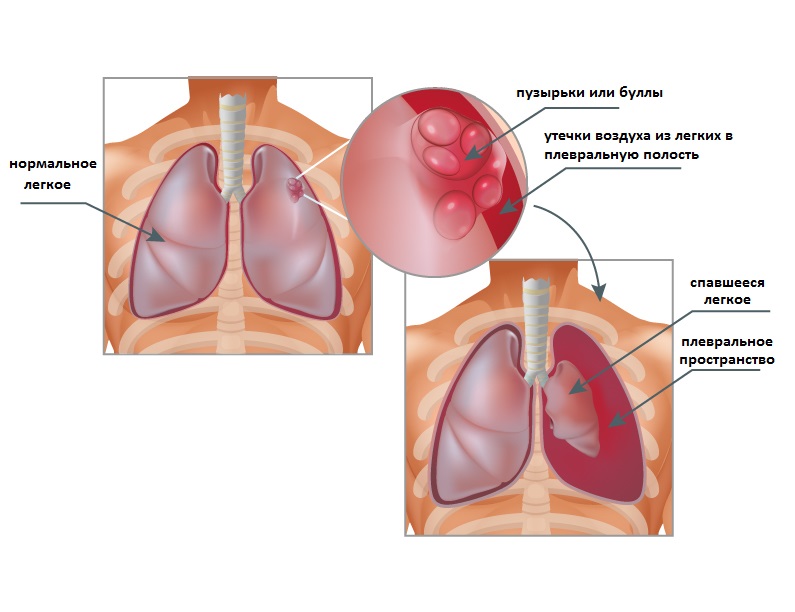
This is a condition in which air enters the pleural cavity. There are two pleural cavities, one around each lung. These cavities are lined with a membrane, pleura, and have a vacuum. It is this vacuum that allows the lungs to open when inhaled.
Spontaneous pneumothorax. It usually occurs in perfectly healthy young people. When part of the lungs burst for some reason, air from them enters the pleural cavity.
A depressed lung cannot open during breathing. This condition is associated with sudden chest pain on the left or right, depending on the location of the lesion; it is difficult for a person to breathe, and his head is spinning.
With extensive pneumothorax, in addition to chest pain on the left or right, it is also present dyspnea. The condition is determined by listening with a phonendoscope, when breathing is not heard over pneumothorax (lung does not shorten), the final diagnosis is confirmed by an x-ray of the lungs.
While a smaller pneumothorax does not heal (air is absorbed on its own), an extensive pneumothorax requires pressing on the pleural cavity.
Special, acute conditions in which there is pressure in the chest
The most common acute conditions in which there is pressure in the middle of the sternum.
Myocardial infarction

A heart attack occurs as a result of a sudden blockage of a vessel that delivers oxygen to the heart muscle, causing flow to stop. Due to the lack of oxygen, part of the muscle is necrosis.
Read also:Unstable angina
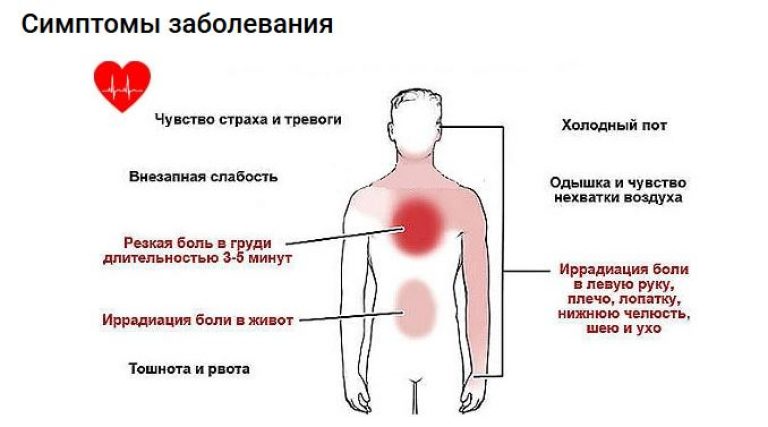
With a heart attack, the pain manifests itself in the chest, in the region of the heart, persists for more than 20 minutes, can be given to the upper limbs, neck, lower jaw, back, epigastrium (abdominal region).
Pressing pain is accompanied by sweating, pallor, anxiety. Shortness of breath, a lump in the throat, and a rapid heart rate may be present.
The feeling of constriction during a heart attack, unlike angina pectoris, does not go away at rest, does not respond to taking nitroglycerin. In the event of such pain, you must immediately seek medical help, take care of the minimum load on the heart.
Aortic aneurysm
Acute chest pain in the middle, shooting into the lower body, especially in the abdomen or back, may indicate an aortic aneurysm. This is a very serious and life-threatening condition. Requires immediate medical attention. The soreness is intense, medications do not help.
Broken ribs
Fractures usually occur with injuries to the chest area. The pain is very unpleasant, worse with inhalation.
Pulmonary embolism
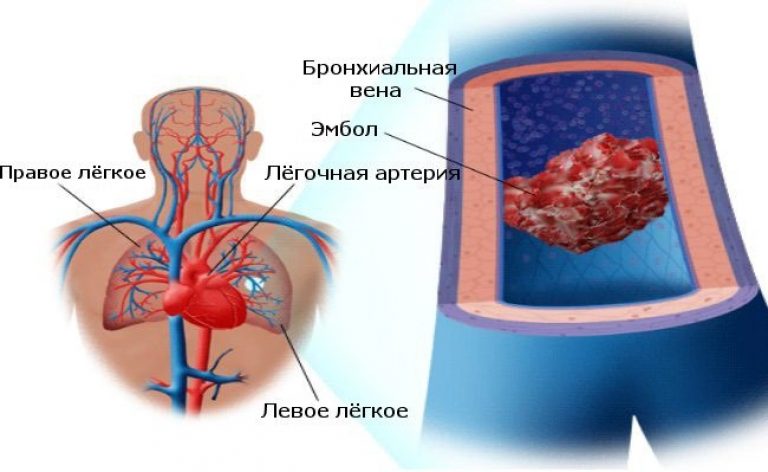
This is a condition in which a blood clot forms in a vessel (usually in the vessels of the lower extremities).
In case of detachment, a lump, an embolus, enters the lungs with blood flow, where it blocks the pulmonary artery, disrupts the flow of blood through part of the pulmonary bed.
A large clot that clogs a pulmonary vessel can cause sudden death. Smaller blockages in the pulmonary system may present with chest pain associated with dry cough, shortness of breath.
What to do, what examinations you need to undergo
Basic methods of investigating the causes of chest pain, including a thorough history and physical examination, provide 90% of success on the way to the correct diagnosis.
Elevated body temperature accompanying a feeling of constriction is common in pneumonia, acute myocardial infarction, pericarditis, shingles. Soreness in the chest, along with a weakening of the pulse, is characteristic of dissection of the aorta, aneurysm.
Enlargement of the cervical veins occurs with congestive heart failure, sometimes as a complication lower heart attack or pulmonary embolism, when the blockage is more than 60% of the blood supply lung.
Pain in the chest in the middle, palpable on palpation, indicates a musculoskeletal cause. Unilateral discomfort in the thoracic region is a sign of damage to one or more adjacent ones with the involvement of a spinal or peripheral nerve (shingles).
Auscultation, in which the doctor listens to the chest wall, is an important part of the physical examination. Auscultation findings:
- weak one-sided breathing, in which it presses the chest, raises suspicion of pneumothorax, local attacks of auditory detection - to effusion;
- tubular breathing is heard over the inflamed area, sometimes over the effusion;
- limited areas with audible crepitus in the chest are present with prolonged lobar pneumonia, dilated areas accompanied by pain in the region of the heart indicates either multilobar inflammation or pulmonary edema due to left ventricular failure after an acute heart attack myocardium (or cardiac failure);
- with pericarditis and pleurisy, rustling occurs (pericardial sounds are audible only when holding the breath).
Read also:What is normal pressure for an adult, a table of indicators for women and men
The main tests aimed at determining the cause of discomfort in the middle of the sternum include a blood test. With pneumonia, leukocytosis (a change in the cellular composition of the blood) is detected, which may be less present in acute myocardial infarction. Cardiospecific markers after myocardial infarction increase within 6 hours.
Chest examinations identifying pathologies that accompany pressing pain in the sternum:
| Diagnostic measures. | What is expected during the survey. |
| History, physical examination. | Musculoskeletal, skin diseases. |
| ECG, oxygen saturation. | Heart arythmy, myocardial infarction, pulmonary embolism, hypoxic diseases. |
| Elevated troponin T. | Spicy myocardial infarction, myocardial necrosis of a different etiology. |
| D-dimer. | Exclusion of pulmonary embolism. |
| X-ray. | Pneumonia, pneumothorax, damage to the ribs and vertebrae. |
| Echocardiography. | Dissection of the aorta, suspension pulmonary embolism, suspension acute myocardial infarction, aortic stenosis. |
| CT, angio computed tomography | Pulmonary embolism, aortic dissection, pneumothorax, pneumonia, pleural diseases, rib damage. |
| Stress tests, coronary angiography, gastroscopy, psychiatric examinations | Other reasons (for example: cardioneurosis, cardiophobia) |
Which doctor to contact
In case of pain in the middle of the sternum, it is best to immediately contact a therapist. He examines the chest and, in accordance with the primary conclusions, will refer to a specialized specialist:
- cardiologist (suspected heart disorder or illness);
- neurologist (neurological etiology of chest pain);
- psychotherapist (psychological reasons);
- gastroenterologist (diseases of the digestive tract);
- pulmonologist (pulmonary diseases);
- vertebrologist (vertebrogenic causes).
What to do with pressing pain in the chest - how to help yourself quickly

You should know about pain in the chest area that this is a symptom that indicates not only overstrain, but also a serious acute condition. Therefore, acute pain in the sternum in the middle is the reason for contacting a specialist.
With a heart attack, every minute counts, so you should immediately call an ambulance. The same rule applies to a number of other conditions in which there is pressure in the middle of the sternum.
The patient should sit down, lean his back and head.. You should not lie down, because in this position the heart works more intensively. If a person did not have acute conditions, in particular, a history of heart attack, the first choice in the question of what to do to alleviate the condition is taking acetylsalicylic acid (Aspirin).
For people who have had a heart attack, in addition to acetylsalicylic acid, it is recommended to take nitroglycerin under the tongue. It will help within 2-3 minutes. Wait for the ambulance to arrive.
Chest pain is a serious symptom with 2 risks. First of all, there is a danger of faint-hearted patients with a tendency to hypochondria and self-observation. (predominantly this category includes young people and women) who repeatedly visit a doctor with complaints chest pain.
The doctor constantly examines them, does not find the slightest reason why he presses on the chest. But at the same time, he wastes time that is important for other patients.
The second, much worse risk is the underestimation of a serious condition, both by the cardiologist and by the patient himself. Errors in this area happen even with the best doctors, which is not surprising given the complexity of the problem.