Measles: symptoms in children, photos, description of the disease
Measles belongs to the common infectious diseases. The causative agent of the disease is an RNA-containing virus from the genus Measles morbillivirus paramyxoviruses.
Susceptibility to this disease is almost universal, but measles has the character of a childhood disease only because most people get sick with it already in childhood, and thus protect themselves for life. Secondary diseases of measles do occur, although very rarely.
Measles disease is possible at all ages, but infants in the first 4-5 months of life are very little susceptible to measles poison, so diseases at this age are only rarely observed.
Infection is easy; it is carried out mainly by contact and can only be transmitted through healthy persons or objects for a very short time. For example, a caregiver, if negligent, can transfer measles from one child to another in the hospital, but measles poison does not persist for a long time. on a dress, underwear or other items and from a practical point of view, one has to reckon only with the transfer of infection directly from the patient to healthy.
Doctor Komarovsky will tell you in detail about this disease
The spread of the disease is favored, on the one hand, by a long incubation period lasting 11 days, and on the other - a catarrhal prodromal period, during which recognition of the disease is often impossible.
Finally, its spread is also influenced by the accumulation of susceptible children in schools, nurseries, orphanages, etc. institutions. It is from here that often extensive epidemics begin.
Content
- The course of the disease (typical picture)
- Deviations from the usual flow
- Convalescent anomalies
- Diagnosis
- Treatment
- Forecast
The course of the disease (typical picture)
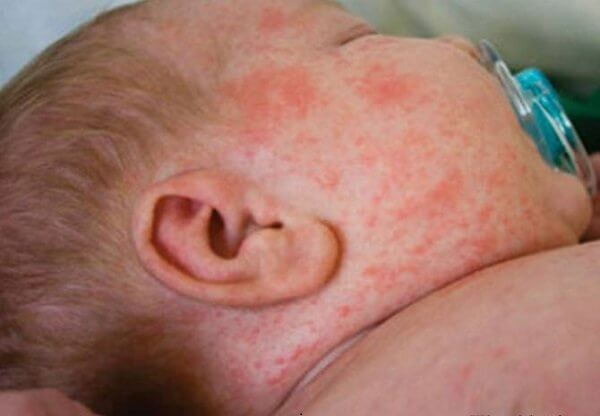
The incubation period occurs in most cases without any symptoms.
Children are cheerful and nothing indicates the beginning of the disease. Sometimes, however, mild disorders are observed:
- children seem tired
- are reluctant to play
- they have less appetite,
- there are mild catarrhal phenomena,
- and if it is possible to accurately trace the temperature, then in the evenings slight rises in temperature are noticed.
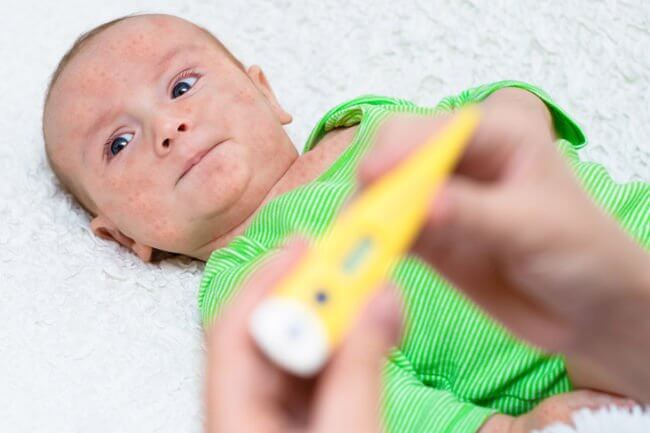
These symptoms in children with the disease are the most basic and are less pronounced (how measles looks in children in the initial stage, see the pictures below).
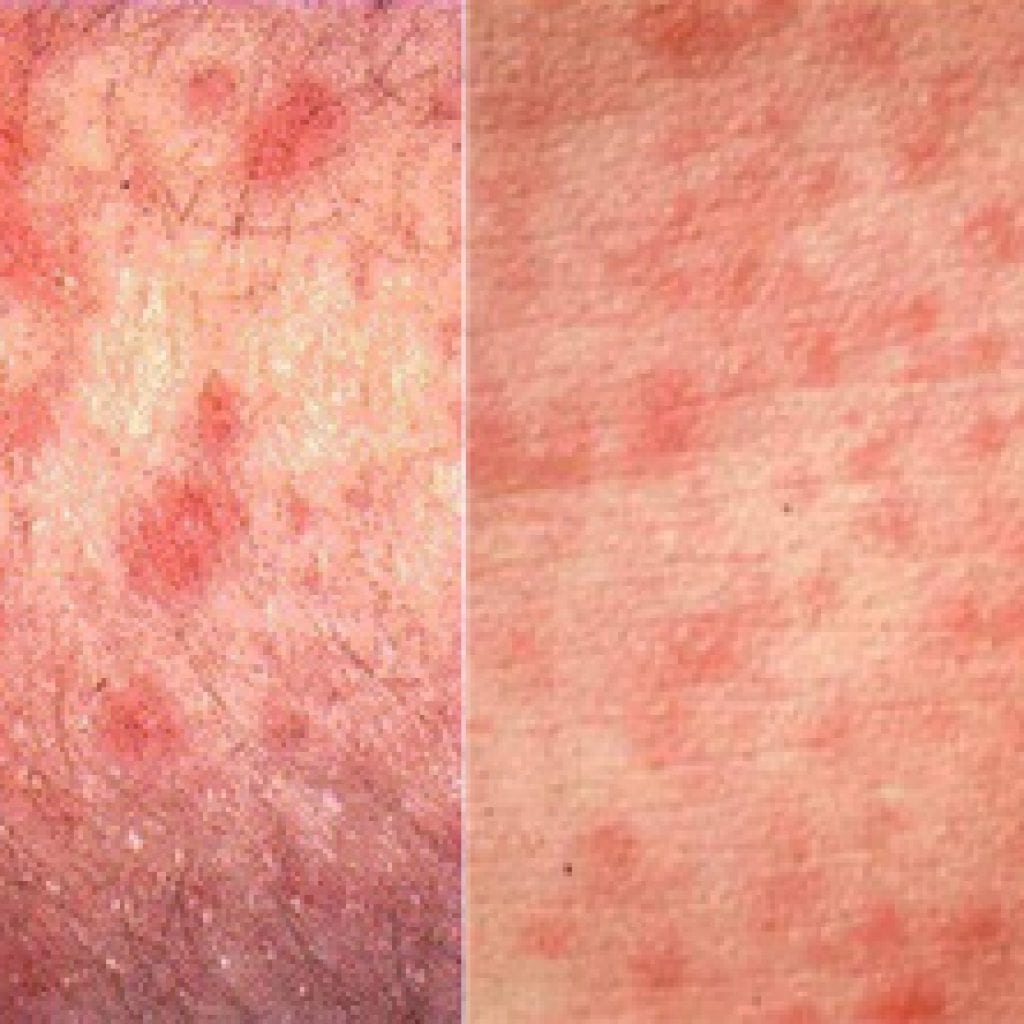
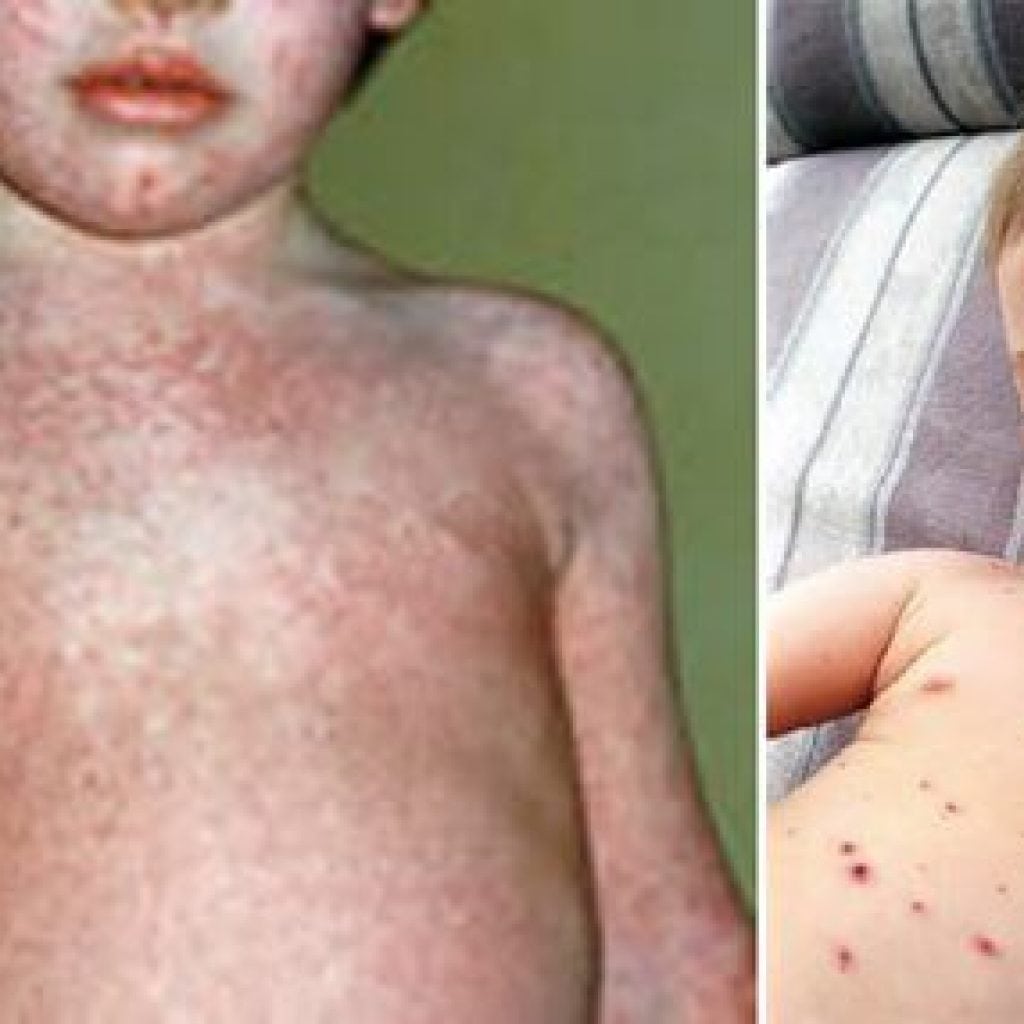
The prodromal or catarrhal period of the disease begins with a runny nose, conjunctivitis and tracheitis, sometimes bronchitis.
A runny nose is no different from an ordinary one, it should be mentioned that, especially in young children, sometimes severe nosebleeds are observed.
The incipient conjunctivitis is already more striking and surpasses conjunctivitis in lacrimation and photophobia, which is usually observed with a cold.
The cough is peculiarly rough, painful and is often accompanied by more or less severe hoarseness, which indicates a slight catarrh of the larynx (laryngitis).
At the same time, children begin to feel the following ailments:
- they are capricious
- apathetic
- experience remitting fever, which reaches 39 ° and even more in the evening.
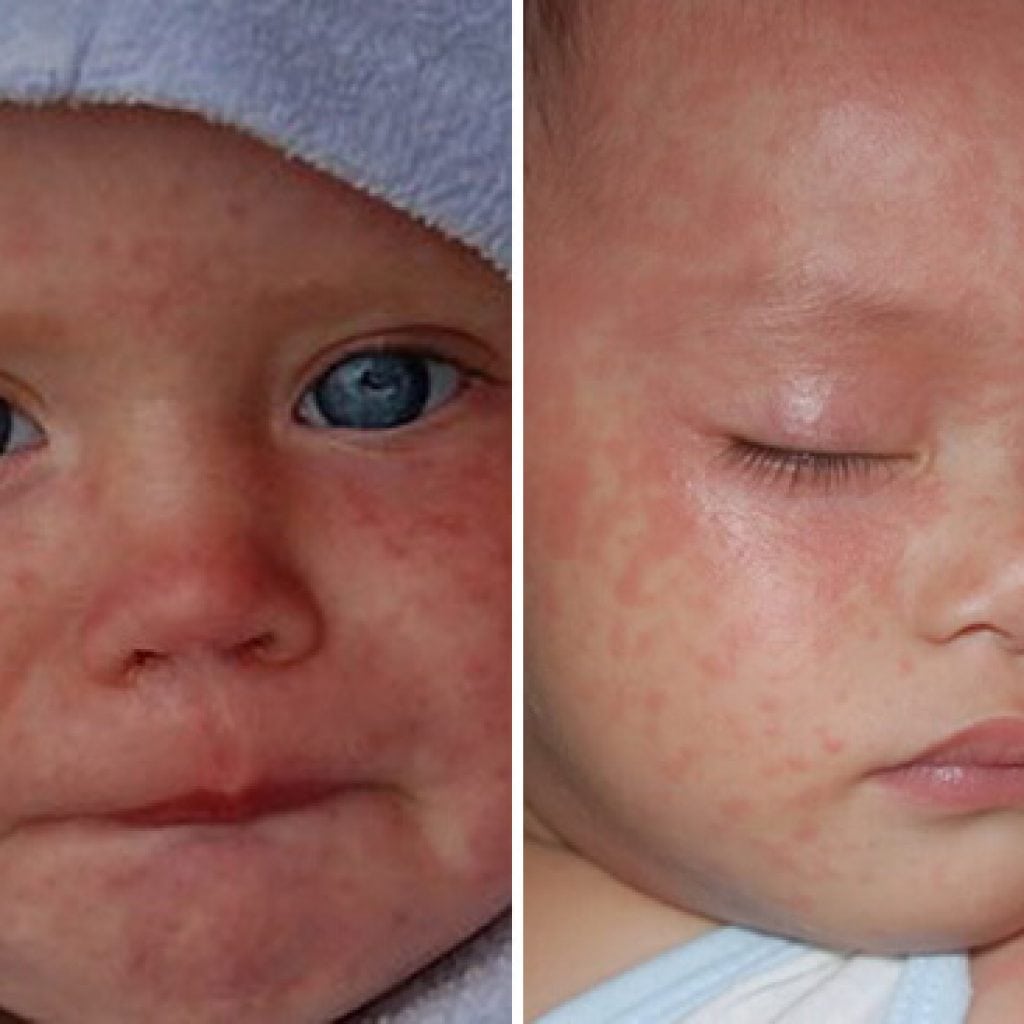
Catarrhal period of the disease lasts 3 daysthen a rash appears. It begins in most cases on the face, around the eyes and mouth, and then spreads to other parts of the body, most recently to the forearms, lower legs, hands and feet.
At first, the rash appears as rather small red spots, which, however, soon merge into spots of various shapes, lose their bright red color and become dark red, even brownish.
Between individual spots, often merging into bizarre figures and reaching a significant size, there are areas of unaffected skin. The more such merged spots on the skin, the more measles deserves the name drain (see photo below).
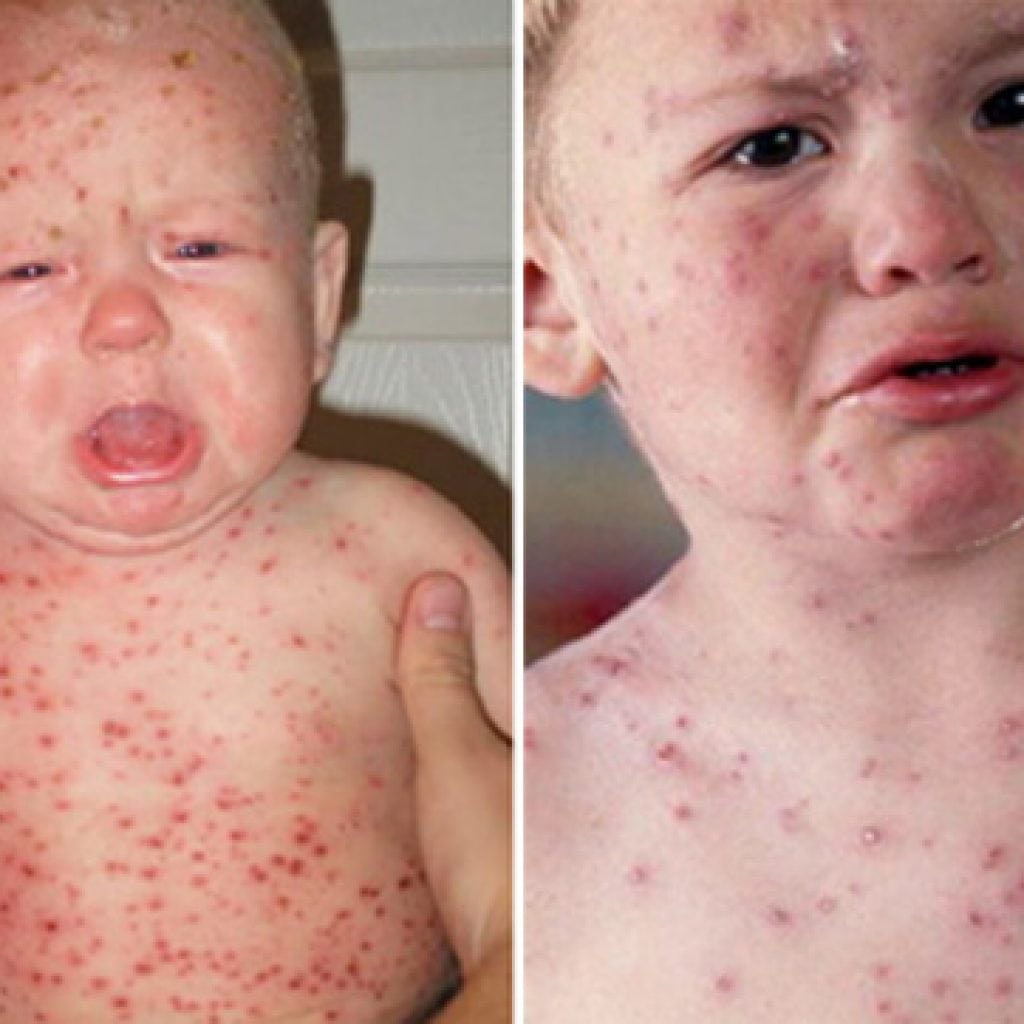
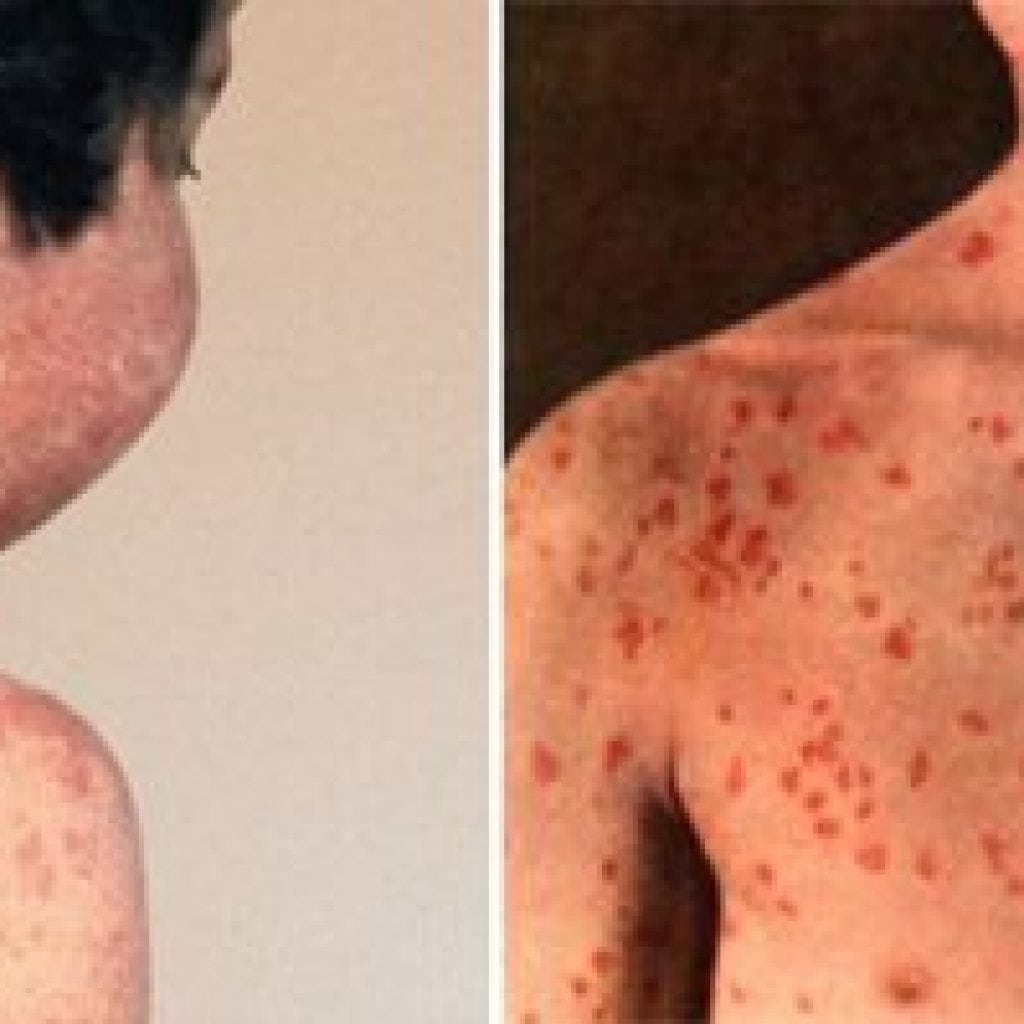
In the area of large spots, elevations are seen, corresponding to swollen hair follicles and excretory ducts of the sebaceous glands. Depending on the greater or lesser prevalence of such elevations, one speaks of morbilli elevati or morbilli laeves.
The whole picture of a measles rash can be called variegated in comparison with a scarlet rash, which is always monotonous. Separate specks at scarlet fever always clearly separated from each other, no matter how densely located and numerous they are, so that at a distance the skin seems to be dyed red.
In places of the skin affected by the rash, the vessels are distinguished by the increased permeability of their walls, both for hemoglobin and for red blood cells, as a result of which pigmentation appears on them, which often remain noticeable even after the rash turns pale, or hemorrhage.
In parallel with the rash, the disease develops. The fever intensifies and reaches 40 ° and higher at the height of the rash.
Read also:Constipation in infants - what to do, how to solve the problem of constipation in a newborn, nursing child.
At the same time, the nature of the fever also changes: while in the catarrhal period of the disease it had a clearly remitting character, it now approaches more to type f. continua, i.e. the difference between morning and evening temperatures is no greater than with ordinary daily fluctuations in temperature.
The pulse corresponds to the fever.
The feeling of discomfort at this time is very pronounced. Patients are indifferent to their surroundings, completely deprived of appetite, complain of headaches and aches in the limbs, at night they are often very delirious.
All the phenomena of the prodromal stage become sharper:
- runny nose accompanied by profuse discharge, which causes irritation of the skin around the nostrils and on the upper lip,
- conjunctivitis and photophobia increase
- children completely lose their voice and cough painfully and incessantly due to increased tracheitis and bronchitis.
On the part of other organs, the following phenomena are observed:
- Kidneys. Urine has a high specific gravity, contains protein and gives, even in mild cases, diazo reaction.
- Lymphatic glands. All glands accessible to palpation swell and may become painful.
- Blood. As with typhoid fever, there is a decrease in the number of leukocytes.
Digestive apparatus. The tongue is very coated, the plaque comes off from it in spots, a spotty redness (enanthema) appears on the mucous membrane of the mouth.
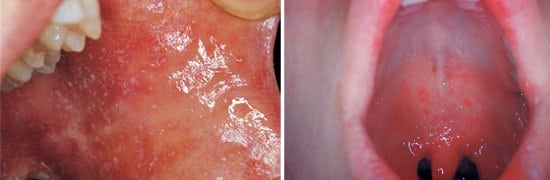
Often a rash that appears on the skin for a short time, and turns pale before its appearance. For the most part there is constipation, but sometimes there is also diarrhea.
With the intensification of the rash, the described phenomena of the disease also intensify, and then on 5-6 days after the onset of the rash, the temperature drops critically and within 12-36 hours returns to normal.
At the same time, the general condition is rapidly improving, consciousness is clearing up, the child begins to play again, etc.
After a drop in temperature, a period of recovery follows, which, however, cannot be looked at as convalescence itself. Catarrhal phenomena still persist, and with a careless attitude of the patient, they rapidly intensify and can cause a consistent, often quite serious illness.
This is especially true for colds, from which it is required to especially carefully protect measles patients during the recovery period: children at this time sweat a lot and are especially prone to colds.
On the part of the heart, a special anomaly is noticed at this time, which consists in the fact that the pulse becomes slow and somewhat irregular, but after a few days this phenomenon completely disappears.
Deviations from the usual flow
In the catarrhal stage, all phenomena can be expressed very sharply:
- conjunctivitis takes on a purulent character,
- the runny nose becomes so severe that the patient barely has time to remove the secret that is continuously flowing from the nose.
Nosebleeds are quite frequent, the mucous membrane of the larynx is often so severely affected that it comes to narrowing the lumen of the larynx and to the development of a false croup; sometimes catarrh through the Eustachian tube passes already at this time to the middle ear - a complication that occurs much more often in the further course of measles.
Bronchitis in such cases also becomes intense and is accompanied by a very painful cough.
Especially in young children, this severe form of the catarrhal stage already corresponds to a severe general condition from the very beginning. Fever is high and f. continua, sometimes there are general convulsions, from the position of the gastrointestinal tract is observed severe diarrhea and vomiting.
This serious condition with the appearance of a rash gives way to the usual course, but it can last throughout the entire illness and predisposes, in this case, as is easily understood, to complications. The prodromal stage of the disease can sometimes last up to 7 days.
Another deviation in the course of the disease at this stage is its extraordinary ease. Typical catarrhs are subtle and very easily overlooked.
Fever is detected only when the temperature is measured correctly; with insufficient supervision, which is carried out in families only when another child has already become ill measles, it seems that the catarrhal stage of the disease was completely absent and that the disease began as if immediately rash.
During the period of the rash, extremely severe and unfavorable cases are observed, which, similarly to similar cases scarlet fever, are distinguished by the special participation of the central nervous system. Already during the prodromal stage, which is usually quite sharply expressed, consciousness with a rapid rise in temperature is severely dimmed and the patients are in complete apathy.
Read also:Edwards syndrome - causes, symptoms, diagnosis and treatment
The rash begins on the trunk in the form of pale, few characteristic spots, of which in some cases a very intense measles rash develops, while in others, an unexpressed rash remains without changes. But in both cases, the general condition is rapidly deteriorating, the children seem to be apathetic, then restless, then give the impression of suffering meningitis;
- they have a wandering look,
- trembling,
- strabismus.
A week later, in approximately deep nervous weakness, death occurs, which is often preceded by still severe convulsions.
These forms of very severe measles infection are rare, much more often there is an anomaly that can rightfully be called "underdeveloped measles."
After a more or less severe prodromal stage, a rudimentary pale cyanotic rash appears on the body, sometimes so weakly expressed that it escapes with a not particularly careful study and does not give the opportunity to put measles diagnosis. But at the same time, the condition quickly deteriorates with symptoms of severe shortness of breath.
Children become weak, become pale cyanotic, breathe very heavily, as if they do not have enough air. On objective examination, they have more or less pronounced bronchiolitis.
Convalescent anomalies

Here, diseases of the nose, oral cavity and adjacent parts are in the foreground.
Instead of the usual coryza, a dry swelling develops on the nasal mucosa, which, like a syphilitic rhinitis, causes wheezing during nasal breathing.
In other cases, ulceration near nostrils and in their circumference, which can be extremely persistent and is accompanied by prolonged fever.
The resulting ulceration is covered with a sebaceous bloom and becomes diphtheria in nature.
From the nose or actually from the back wall of the pharynx, the process along the Eustachian tube can go to the middle ear. The temperature rises again, children become very restless, sleep poorly, clutch their heads, refuse to swallow; older children complain of tinnitus or headaches. The pressure on the tragus is very painful, and otitis media is clearly visible on otoscopy.
In the oral cavity, stomatitis aphthosa or ulcerosa is observed, to which noma can join. The measles process represents a particularly fertile ground for such ulcerative processes, in view of which stomatitis in measles requires especially careful care and treatment.
Inflammatory swelling of the mucous membrane of the larynx can already in the first days of the disease lead to the so-called false croup with severe difficulty in breathing. The voice, which was already hoarse before, becomes completely silent, and more and more signs appear, indicating the difficulty of air access to the upper respiratory tract.
Forced breaths, assisted by the accessory respiratory muscles, are unable to deliver a sufficient amount of air through the narrowed larynx; the negative pressure in the chest cavity resulting from inspiratory movements is not equalized by filling the lungs with air, therefore, external atmospheric pressure acts on the chest wall, causing retraction in the pliable places, in the epigastric region and the jugular fossa.
The resulting danger of asphyxia requires the same measures as with diphtheria croup. But here we are dealing with a different anatomical process, since the narrowing of the lumen of the larynx is caused not by films, but by severe hyperemia and inflammatory swelling of the laryngeal mucosa.
But not only the mucous membrane is inflamed, but also the submucosa, perichondrium and adjacent connective tissue. This severe inflammation is accompanied by severe pain in the larynx, which is often on touch and almost always on light pressure.
If real croup is observed with measles, i.e. narrowing of the larynx due to the formation of films, then it is always explained by a mixed infection with a real diphtheria.
The same process that leads to the development of croup in the upper respiratory tract can, of course, be overwhelming. and the lower respiratory tract and cause more or less common inflammation of large or small bronchi, i.e. e. lead to bronchitis, bronchiolitis and bronchopneumonia.
In children, during or after a rash, there is:
- very severe shortness of breath
- they become cyanotic and restless,
- the fever does not subside or intensifies again and shows an irregular remitting character,
- the general condition is severely disturbed.
The danger posed by this post-colorectal lesion of the respiratory apparatus depends on firstly, from the spread of the process itself, from the size of the respiratory surface and, finally, from the age of the child.
The greatest danger is caused by bronchiolitis, in which the smallest bronchi are affected and a significant part of the respiratory surface is quickly excluded. This danger is especially great in young children, in whom the small lumen of the small bronchi can be blocked sooner than the relatively large lumen in older children.
It must be remembered that in very young children, due to inflammatory swelling, bronchi can also become clogged, which cannot actually be considered the smallest branches of the bronchial tree. Each blockage of such a branch of the bronchi excludes a relatively large area of the respiratory surface, and the higher the obstacle to breathing is, the more of the lungs is excluded.
Another form of this disease seems less dangerous, in which certain parts of the lungs are affected, while others remain unaffected, and if they are affected, then very weakly.
Read also:Patau syndrome: what is it, symptoms, methods of diagnosis and treatment, prognosis
In such cases, in one part of the lungs there are limited nests of bronchiolitis and bronchopneumonia, which, merging into large nests, then make it possible to clearly recognize the phenomena of pneumonic infiltration during physical examination sick.
If this process is moderately widespread and other severe complications do not occur, then the prognosis is relatively favorable. But it, of course, is darkened when the pneumonic process spreads over a more or less significant surface, for example, over several lobes.
In this case, a picture of the disease is obtained, corresponding in nature to severe fibrinous pneumonia: remitting, irregular fever becomes high and constant, tense and rapid breathing, and excruciating cough are painful.
Delirium is observed, and small children sometimes have seizures. The pleura is almost always affected at the same time.
The mucous membrane of the digestive organs, namely its lymphatic apparatus, is also always affected in severe cases of measles.
Sometimes this complication can dominate the entire picture of the disease:
- vomiting and very severe diarrhea appears,
- difficult to treat and disappears only with pallor of the rash.
In other more frequent cases, along with a decrease in fever, an intestinal disease develops, representing all the essential signs of enteritis; frequent, but not abundant bowel movements are observed, containing cloudy, purulent mucus and blood.
A similar measles enteritis is mostly benign and goes away after a few days, but sometimes it happens that a persistent intestinal a disorder of a typhoid or enteric nature, which in itself is life threatening and is also dangerous in the sense that it contributes development sepsis.
Bowel disturbances are especially unpleasant when other complications of measles are already causing a more difficult therapeutic task, for example, when lung diseases place high demands on strength sick.
Finally, it should be noted that the measles process reduces both the respiratory and the digestive apparatus the ability to resist in relation to specific secondary infections.
The nervous system is rarely so affected that it sharply affects the course of the disease. The phenomena observed in many febrile infectious diseases, such as delirium, drowsiness, etc., do not in themselves have any particular significance.
With regard to seizures, which are observed especially in young children, those that appear in rare cases before the rash usually do not have a bad prognostic value; on the contrary, convulsions that occur with the appearance of a rash almost always indicate a very severe course of the actual measles infection.
Diagnosis
The diagnosis of measles is straightforward. A peculiar course of the disease, an incubation period almost regularly lasting 11 days, a prodromal stage lasting three days with its sharp catarrhal symptoms, finally, a characteristic rash - all this makes it very easy to make a diagnosis.
But, it goes without saying that there are many such cases in which things are not so simple.
In some of them, almost no phenomena are observed in the prodromal period, in others, instead of catarrh of the mucous membrane of the respiratory tract and eyes, throat disease develops, anginawhich is misleading at first.
Then the rash may not be characteristic, resemble scarlet fever, etc.
On the other hand, serum or drug rashes can be so similar to a typical measles rash that it is sometimes difficult to decide what is being dealt with. In such cases, the solution to the question depends on various studies.
Treatment
Forecast
The prognosis for measles is generally good.