Dandy Walker syndrome in children: what is it, causes, symptoms
This disease is very rare. Despite this, it is necessary to learn as much as possible about the disease.
The syndrome has many causes, symptoms and treatments. This will be discussed in the article.
Content
- Dandy Walker Syndrome - what is it?
- Causes and provoking factors
- Symptoms of the disease
- Types of Dandy Walker Syndrome
- Diagnostics
- Syndrome treatment
- Drug treatment
- Surgery
- Home remedies
- Prophylaxis
- Forecast
- Related Videos
Dandy Walker Syndrome - what is it?
This disease is a very serious illness.
It is a defect in the development of some parts of the brain.
Sometimes the causes leading to the disease can be aggravated; then Dandy Walker's syndrome can lead to a critical condition of the patient.
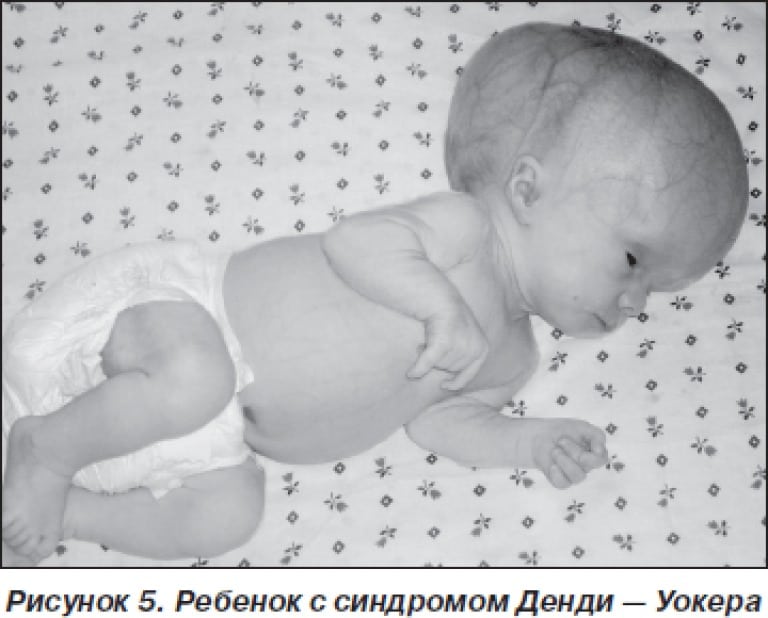
The syndrome can be detected even during the development of the fetus in the womb. If the disease is confirmed, the child is immediately registered with a specialist.
The disease is quite rare - about 1 in 25,000 newborns has Dandy Walker syndrome.
Causes and provoking factors
There are many reasons why Dandy Walker syndrome can develop in children.
Some are directly related to the health of the mother during the first three months of gestation. So, health conditions that can provoke illness:
- measles;
- rubella;
- intrauterine trauma;
- taking antibiotics;
- diabetes.
Measles and rubella affect the fetus in the following way: these viruses literally "consume" the tissues around the embryo. In view of this, brain tissue defects often occur, which leads to the onset of Dandy Walker syndrome.
Antibiotics, in turn, can affect the baby's central nervous system, which can also cause the onset of the disease.
If the mother has diabetes, the likelihood of developing Dandy Walker syndrome increases several times. Due to the woman's illness, the fetus does not receive enough of the substances it needs, so its cerebellum does not develop.
Most often, the syndrome has some concomitant diseases, which also indicate the presence of Dandy Walker syndrome:
- heart disease;
- renal failure;
- a split upper lip or palate;
- splicing of fingers or toes.
Read also:Sudden Infant Death Syndrome: what is this disease, causes, symptoms, how to prevent
Symptoms of the disease


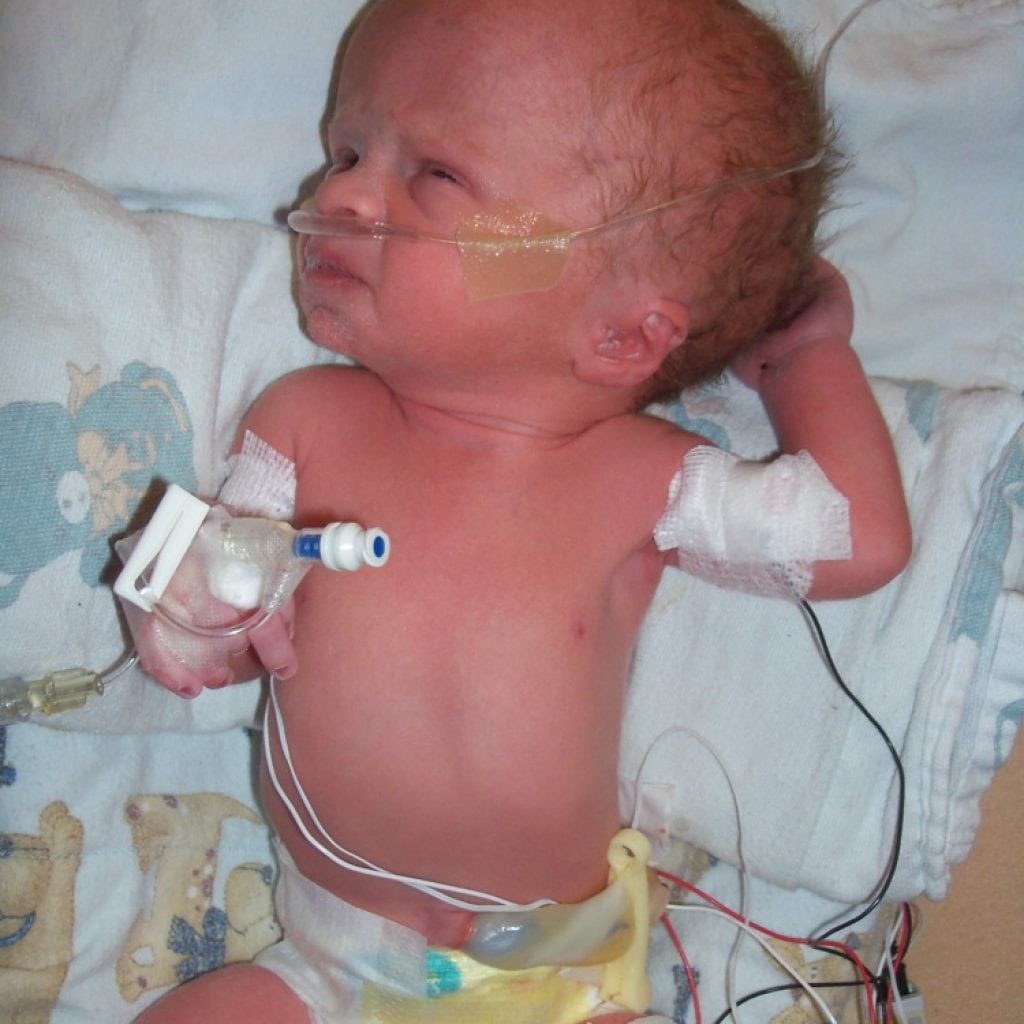
The symptoms of Dandy Walker syndrome are almost the same for everyone. They can be divided into internal symptoms, which are almost invisible visually, and external, which are clearly visible (see. photo above).
Internal signs of the syndrome:
- delay in the development of fine motor skills of the hands;
- inhibited movements;
- the child has frequent headaches, as a result of which he often cries and becomes irritable.
External signs:
- hydrocephalus. The main sign that a child has Dandy Walker syndrome. The "fontanelle" will constantly pulsate. Because of this, the back of the skull will grow much faster than the front; the head will appear oversized;
- "Protrusion" of the bone at the back of the head;
- large fontanelles;
- soft cranial bones;
- bent limbs;
- involuntary movements of the eyes.
It must be remembered that each child, due to some factors, can develop faster or slower. This will also determine how quickly the symptoms of Dandy Walker Syndrome appear.
It is necessary to take into account the severity of the symptoms - in some patients they are extremely weak, in others they are pronounced.
Types of Dandy Walker Syndrome
The types of the syndrome differ only in the degree of cerebellar underdevelopment. If he is severely underdeveloped, the disease proceeds with the presence of the main symptom - hydrocephalus.
In the event that the underdevelopment of the cerebellum is not so strong, the disease can proceed without changing the state of the bones of the brain and some other symptoms.
The degree of damage to the cerebellum can only be determined by a doctor. For this, it is necessary to conduct a number of studies, which will be discussed below.
Diagnostics
Before starting the diagnosis, you need to find out whether there was a similar disease in the family before, when the very first symptoms began to appear. After that, you need to contact your doctor for a referral for tests and procedures.
To determine the Dandy Walker syndrome, you must undergo the following procedures:
- MRI. Allows you to identify the degree of enlargement of the skull, the presence of cysts, an increase in the ventricle and the degree of cerebellar underdevelopment.
- Ultrasound procedure. It is carried out during gestation in order to determine the first signs of the development of the disease. In addition, the study is used to determine complications in the heart and other organs in the case of an advanced degree of the syndrome.
- Neurological examination. The procedure helps to reveal the presence of involuntary movement of the patient's eyeballs, an increase in the fontanel area, an increase in the size of the skull and a decrease in the tone of the muscles of the body.
Read also:Treatment and prevention of diphtheria in a child
To determine the presence of the syndrome, in some cases, it is necessary to consult a neurosurgeon and a medical geneticist.
Syndrome treatment
Treatment for this disease makes almost no sense. Despite this, in some cases, treatment is ongoing. Sometimes it even leads to success.
It is worth saying that even with a successful outcome of treatment, the child will not be healthy. He will have some signs (most often visual) indicating the presence of Dandy Walker syndrome.
Drug treatment
Medication is prescribed only in cases of mild disease. In such a situation, the patient is prescribed diuretics (for example: Merkuzal, Promeran, Novurit), which reduce the level of fluid in the skull, relieve headaches and dizziness.
Surgery
If the enlargement of the skull begins to progress, surgical intervention is necessary. In this operation, the goal is to reduce intracranial pressure by bypassing the fourth ventricle of the brain.
Also, surgery is possible to improve the outflow of fluid from the brain and reduce the size of the child's head.
In other cases, surgical intervention for this disease is not used.
Home remedies
Unfortunately, the treatment of such a serious illness as Dandy Walker syndrome is not possible at home. Parents can only help their child with sedative broths if the patient has a high degree of irritability. In addition, it is permissible to use other non-traditional means to relieve a child of headaches and dizziness.
Doctors advise to engage in various exercises with children without overloading the patient's muscles. This will prevent complete muscle atrophy in the body. It is possible to resort to physical exercise only in the case of a mild form of the disease. Otherwise it will not bring any results.
Some doctors advise tempering children who have Dandy Walker syndrome. But this is a rather controversial point of view. In this matter, it is necessary to consult the child's attending physician. As practice shows, in most cases of hardening, the symptoms are aggravated, and the child's condition is approaching critical. In view of this, the opinions of doctors are divided from a categorical "no" to an unconditional "yes".
Read also:What time do the first teeth erupt in babies and which ones, how to help the baby
Prophylaxis
Given that the disease is largely hereditary, prevention is useless.
Doctors give recommendations to visit a gynecologist while carrying a child and undergo the necessary examinations that can reveal pathologies in the development of the fetus even in the early stages of pregnancy.
In other cases, doctors and specialists in this field consider the prevention of the disease to be absolutely impossible.
Forecast
In cases where a child is born with a severe form of development of syndromes, he lives for a maximum of a month and a half. If the disease is of moderate severity, then he usually remains alive, but there are great difficulties with his mental development. As a rule, the child has a low level of intelligence that cannot be increased.
The prognosis for the development of a sick child is very unfavorable and frightening for many.
In most cases, children die in the first year of their lives. If the child survived, he needs to be constantly under the supervision of his attending physician.
The prognosis of treatment is favorable if the disease was detected in a timely manner and treatment is under way. In this situation, residual effects are possible: a slightly increased size of the skull, inhibition of movements and speech. In other respects, the child is practically healthy.