
Kawasaki disease (syndrome): what is it, symptoms, treatment, prognosis
Content
- general information
- Signs and symptoms
- Causes of Kawasaki Syndrome
- Affected populations
- Diagnostics
- Symptomatic Disorders
- Treatment for Kawasaki syndrome
- Forecast
general information
Kawasaki disease (syndrome) - acute multisystem inflammatory disease of the blood vessels (vasculitis), which most often affects infants and young children. The disease can be characterized by high fever, inflammation of the mucous membranes of the mouth and throat, a reddish skin rash, and swelling of the lymph nodes (lymphadenopathy).
In addition, people with Kawasaki disease may develop inflammation of the arteries that transport blood to the heart muscle (coronary arteritis) associated with the expansion or bulge (aneurysm) of the walls of the affected coronary arteries, inflammation of the heart muscle (myocarditis) and / or other symptoms and complications.
Kawasaki syndrome is the main cause of acquired heart disease in children. Although the cause of the disease is unknown, it is widely believed that it is caused by an infection or an abnormal immune response to an infection.
Signs and symptoms
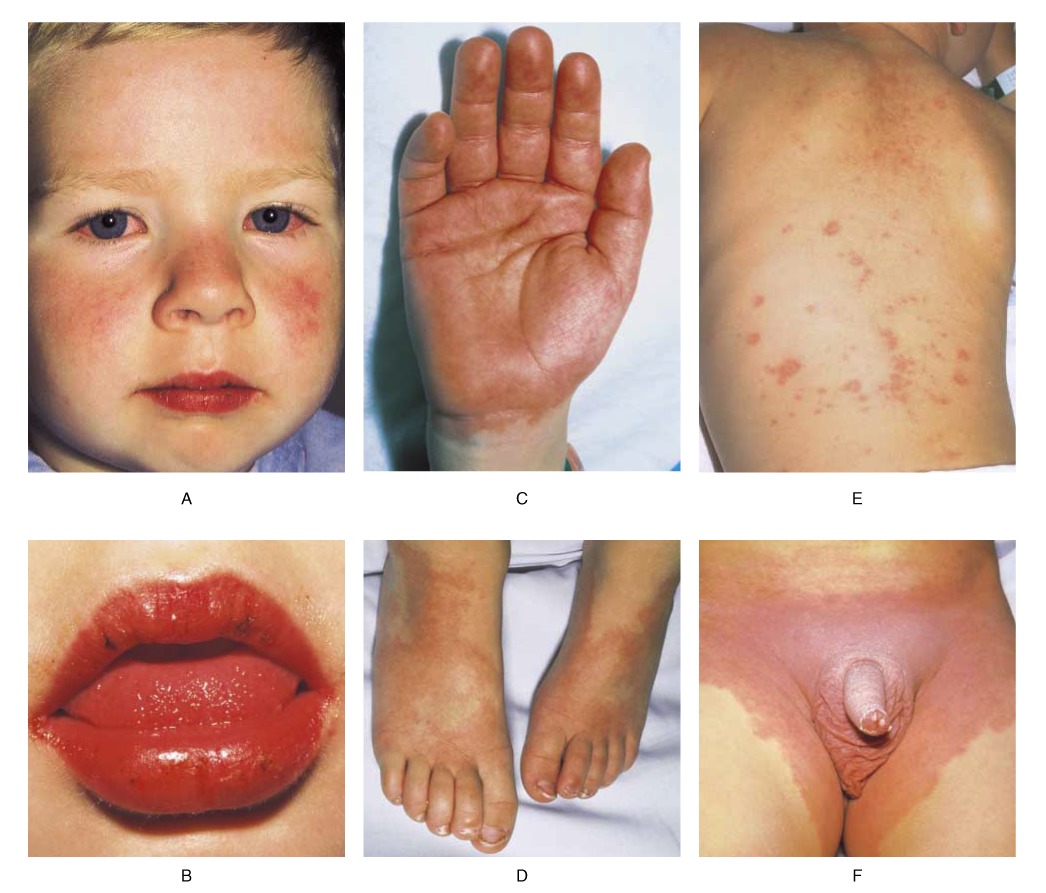
In many sick children, the initial symptom associated with Kawasaki disease is heatusually rising and falling (remitting fever) lasting approximately one to two weeks if left untreated.
In some cases, the fever can persist for about three to four weeks.
Additional characteristic manifestations of the syndrome include:
- inflammation of the white eyes (bilateral conjunctivitis);
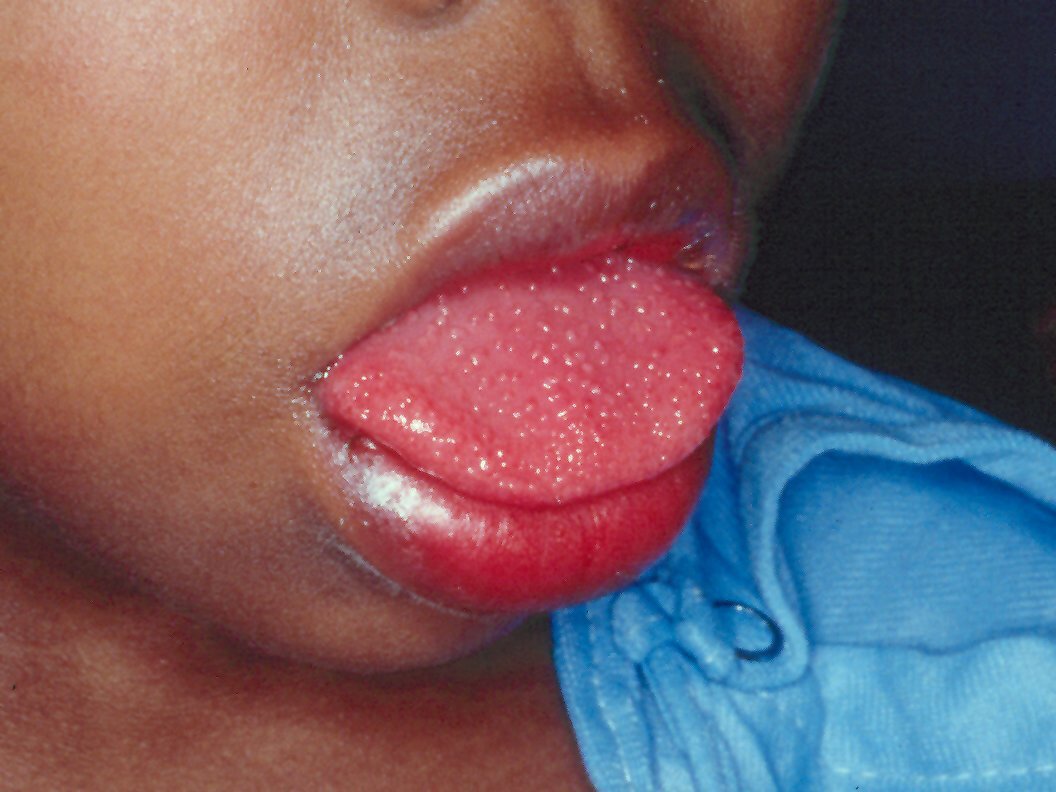
- inflammation of the mucous membranes of the mouth and throat, resulting in dry, red, chapped lips and strawberry red tongue;
- inflammation of the lymph nodes in the neck (cervical lymphadenitis);
- redness and swelling of the hands and feet;
- a reddish rash, usually affecting the trunk and often affecting the groin area.
By about the second or third week, the cutaneous epidermis peels off from the fingertips and may progress to involve the hands and feet.
In many cases, sick children may develop additional symptoms and signs, such as:
- irritability;
- diarrhea;
- vomit;
- cough;
- joint inflammation (arthritis);
- pain and swelling.
Other related violations may include:
- enlargement of the liver (hepatomegaly) and enlargement of the spleen (splenomegaly);
- inflammation of the protective membranes covering the brain (aseptic meningitis);
- inflammation of the middle ear (otitis media) and / or other complications.
Many people with Kawasaki disease may also have heart problems. In 50% of cases, inflammation of the heart muscle (myocarditis) may develop, which may be associated with an abnormally increased heart rate (tachycardia), decreased function of the ventricles (lower chambers of the heart) and, in severe cases, impairment of the heart's ability to efficiently pump blood to the lungs and the rest of the body (heart failure).
In addition, in some cases, cardiac involvement may include inflammation of the membrane sacsurrounding the heart (pericarditis), leakage of certain heart valves (aortic or mitral insufficiency), or other abnormalities.
The most serious heart complication is inflammation of the arteriesdelivering oxygen-rich blood to the heart muscle (coronary arteritis) and possibly weakening, dilating, and bulging (aneurysms) of the affected artery walls.
An increase in the volume of the heart chambers and aneurysm formation occur in about 3-20% of patients. In severe cases complications may include the development of blood clots in the area of vascular distention with obstruction of blood flow, rupture of an aneurysm, or heart attackwhich can lead to potentially life-threatening consequences.
Some cases have also been reported in which patients, especially infants, had a fever with less than four other signs of the disease and subsequently developed coronary artery disease arteries.
Causes of Kawasaki Syndrome
Although the exact cause of Kawasaki Disease is unknown, it is assumed that the cause is an infection or an inadequate immune response to an infection. However, despite numerous studies in this area, no specific infectious cause has been identified.
Some scientists speculate that Kawasaki syndrome may be caused by certain toxic substances called bacterial "superantigens" produced by certain types of bacteria such as streptococci or staphylococci.
Scientists point out that such superantigens can cause an overreaction of the immune system, leading to infiltration blood vessel walls by certain white blood cells, inflammation of the blood vessels (vasculitis) and cardiovascular diseases. However, other scientists suggest that one or more common antigens may be involved in the onset of inflammatory disease.
Antigen is any substance that elicits a specific immune response, such as foreign proteins, including microorganisms.
Further research is needed to determine the role that specific antigens or "superantigens" may play in the onset of Kawasaki disease.
Affected populations
Kawasaki disease most commonly affects children 5 years of age and younger. In extremely rare cases, Kawasaki syndrome can occur during adolescence or adulthood.
Children with the disease were first reported in Japan in the 1960s, and the disease is now recognized worldwide and occurs in people of all racial and ethnic groups.
However, Kawasaki syndrome most commonly affects children of Asian descent. It is estimated that at least 3,000 cases of Kawasaki syndrome are diagnosed each year in the United States.
In Russia, there are no official data on the incidence. Research carried out in the Irkutsk region for the period 1995-2009 showed that the average incidence rate was 2.7 per 100,000 children under the age of 17 and 6.6 per 100,000 children under 5 years of age. However, it should be noted that the actual incidence of Kawasaki syndrome is likely to be higher because the registration of cases of the disease was carried out according to the appealability, and usually already on the fact of the held cardiac complications. Men appear to be affected more often than women, at a ratio of about 1.5 to 1.
Diagnostics
Kawasaki syndrome is diagnosed based on careful clinical evaluation; detailed medical history of the patient; and detecting characteristic signs, including fever for at least 5 days and at least 4 out of 5 characteristic signs (reddened eyes; changes in lips and mouth; reddish, swollen limbs; rash and swollen lymph nodes).
Laboratory tests can reveal some nonspecific, albeit characteristic, signs, including an increase in white blood cell count (leukocytosis) and low red blood cell count (anemia) during early illness, with a rapid increase in the number of platelets in the blood from the second to the third week after the onset.
In addition, additional diagnostic tests are needed to identify possible cardiac involvement in all individuals with Kawasaki disease. Research may include echocardiography both at diagnosis and at recommended intervals (eg, 2–3 weeks, 6–8 weeks, and possibly 6–12 months after onset).
During an echocardiogram, high-frequency sound waves are sent to the heart, allowing doctors to study the structure and function of the heart.
Often, along with an echocardiogram, electrocardiogram (ECG). An ECG records the electrical activity of the heart muscle. For children who develop coronary artery abnormalities, doctors may advise more frequent echocardiography and additional cardiac tests (eg, stress testing, coronary angiography and / or so on).
Symptomatic Disorders
Symptoms of the following disorders may be similar to those of Kawasaki disease. Comparisons can be useful for differential diagnosis:
- Measles - a highly contagious viral disease that occurs mainly in children. Symptoms may include fever, cough, sore throat, runny nose, redness of the eyes (conjunctivitis) and increased sensitivity to light (photophobia). Small red spots with a bluish or whitish color in the center may appear on the inner cheeks (Koplik spots). In addition, a characteristic red skin rash appears.
- Scarlet fever - an infectious disease of childhood caused by toxins produced by streptococcal bacteria. Scarlet fever is manifested by fever, vomiting, headache, sore throat, enlarged lymph nodes in the neck, reddened face, pale area around the mouth, inflammation of the tongue, and a widespread red rash that is often flaky.
- Toxic shock syndrome - a rare infectious disease caused by toxins produced by bacteria Staphylococcus aureus. Symptoms may include sudden high fever, vomiting, diarrhea, headache, sore throat, eye redness, and / or a characteristic skin rash similar to sunny burnd, with peeling of the skin, especially of the palms and soles. As the disease progresses, affected individuals may develop dangerously low blood pressure (hypotension), hepatic and renal failure and dysfunction of other organs. Without early diagnosis and appropriate treatment, life-threatening complications can occur. Toxic shock syndrome is most common in women with menstruationwho use highly absorbent tampons. Other cases associated with postoperative wound infections, runny nose, or other factors have been reported.
Also, a number of additional infectious and non-infectious diseases may be associated with some symptoms similar to those potentially associated with Kawasaki disease.
Treatment for Kawasaki syndrome
Experts point out that children with Kawasaki disease should be treated by a pediatrician, pediatric cardiologist.
Research has shown that early diagnosis and treatment accelerates resolution of fever and other acute symptoms and significantly reduces the risk of heart damage. Treatment begins as soon as possible after diagnosis and may include high-dose intravenous therapy immunoglobulin (IVIg) and high-dose therapy aspirin.
Immunoglobulin is a special preparation containing antibodies obtained from the liquid part of the blood. The available data indicate that when IVIg is administered within the first 10 days after the onset of the disease, the incidence of the incidence of coronary artery anomalies decreases in patients by about 20%, the introduction of aspirin reduces these indicators only up to 3-4%.
In rare cases, patients may have an inadequate response to initial IVIg therapy and may need to be re-treated.
Standard or IgM-rich IVIGs are used to treat Kawasaki syndrome. High dosages of the foreign protein contained in IVIG (intravenous immunoglobulin) are necessary to achieve the desired effect.
By the 14th day of illness or after the fever has resolved, a lower dose of aspirin is usually given for its antiplatelet effect to help prevent blood clots. This therapy can continue for up to eight weeks after the onset of the disease in children without echocardiographic abnormalities. However, doctors may advise continuing aspirin therapy indefinitely for those with coronary artery disease.
In some cases, patients with multiple or large aneurysms of the coronary arteries may also be treated with anti-clotting drugs such as dipyridamole or warfarin.
Due to the low risk of Reye's syndrome during outbreaks flu and chickenpox in children doctors may recommend annual vaccinations against these viruses in need of long-term aspirin therapy.
Reye's syndrome is a rare childhood disorder characterized by fatty changes in the liver and acute cerebral edema. There appears to be an association between the onset of Reye's syndrome and the use of aspirin-containing drugs [salicylates] in children or adolescents with certain viral diseases, especially those with upper respiratory tract infections [eg influenza B] or, in some cases, varicella smallpox. If affected children develop symptoms of influenza or chickenpox, parents should immediately warn the child's pediatrician, who may recommend temporarily interrupting or replacing aspirin dipyridamole.
In rare cases, coronary artery bypass surgery or heart transplant may be recommended for patients with severe heart disease. Treatment with corticosteroid drugs is not recommended for children with Kawasaki disease. Other treatment for affected individuals is symptomatic and supportive.
Forecast
With early treatment, rapid recovery from acute symptoms can be expected, and the risk of coronary aneurysms is significantly reduced. If untreated, the acute symptoms of Kawasaki disease are self-limited (i.e., the patient recovers over time), but the risk of coronary artery disease increases significantly. Overall, about 2% of patients die from complications of vasculitis.
Symptoms may relapse soon after initial treatment with IVIg. This usually requires re-hospitalization and re-treatment. IVIg treatment can cause allergic and non-allergic acute reactions, aseptic meningitis (inflammation meninges), hypervolemia (an increase in the volume of circulating blood and plasma) and, rarely, other serious reactions.
In general, life-threatening complications resulting from therapy for Kawasaki syndrome are extremely rare, especially when compared to the risk of not being treated.


