
Atherosclerosis: what is it, causes, symptoms, treatment, prevention
Content
- Introduction
- What is atherosclerosis?
- Causes of atherosclerosis
- Risk factors for atherosclerosis
- Symptoms of atherosclerosis
- Diagnostics
- Prevention and treatment
- Complications
Introduction
Atherosclerosis is a disease in which uneven arteries appear in the walls of medium and large arteries. deposition of fatty material (atheroma or atherosclerotic plaques), which leads to a decrease in the lumen or blockage vessels.
- Atherosclerosis is caused by chronic damage to the wall of the arteries.
- Many factors contribute to this damage, including high blood pressure, tobacco smoke, diabetes mellitus, and high blood cholesterol levels.
- Blockage of blood vessels due to atherosclerosis is a common cause myocardial infarction and stroke.
- Often, the first symptom is pain and cramps at a critical moment when blood flow no longer meets the tissue's oxygen demand.
- To prevent atherosclerosis, you should give up nicotine, follow a diet, exercise regularly and control blood pressure, cholesterol levels and diabetes.
- The progression of atherosclerosis to life-threatening complications such as heart attack or stroke requires urgent care.
In Russia and most other developed countries, atherosclerosis is the leading cause of morbidity and mortality. In 2015 cardiovascular disease, especially coronary artery disease (atherosclerosis, which affects the arteries that supply blood to the heart) and stroke (atherosclerosis, which affects the arteries supplying the brain) have resulted in nearly 15 million deaths worldwide, making atherosclerosis the leading cause of death worldwide the world.
Atherosclerosis can affect the medium and large arteries of the brain, heart, kidneys, other vital organs, and legs. It is the most important and most common type of arteriosclerosis (a general term for a number of conditions in which the wall of an artery thickens and becomes less elastic).
What is atherosclerosis?
Arteriosclerosis, which means hardening (sclerosis) of the arteries (arterio-), is a general term for several diseases in which the wall of the artery becomes thicker and less elastic. There are three types:
- Atherosclerosis;
- Arteriolosclerosis;
- Menckeberg's arteriosclerosis.
Atherosclerosis, the most common type, refers to the hardening of a vessel due to the formation of plaques, which are deposits of fat. It affects the medium and large arteries.
Arteriolosclerosis means hardening of arterioles, small arteries. It primarily affects the inner and middle layers of the arteriole walls. The walls thicken, leading to narrowing of the arterioles. As a result, organs that are supplied with blood through the affected arterioles do not receive enough blood. Kidney damage is common. This disorder occurs mainly in people with high blood pressure or diabetes mellitus. Any of these conditions can put additional stress on the walls of the arterioles, causing them to thicken.
Menckeberg's arteriosclerosis affects small and medium-sized arteries. Calcium builds up in the walls of the arteries, increasing their rigidity, but not leading to narrowing of the lumen. As such, it is a harmless disease that usually affects men and women over 50 years of age.
Causes of atherosclerosis
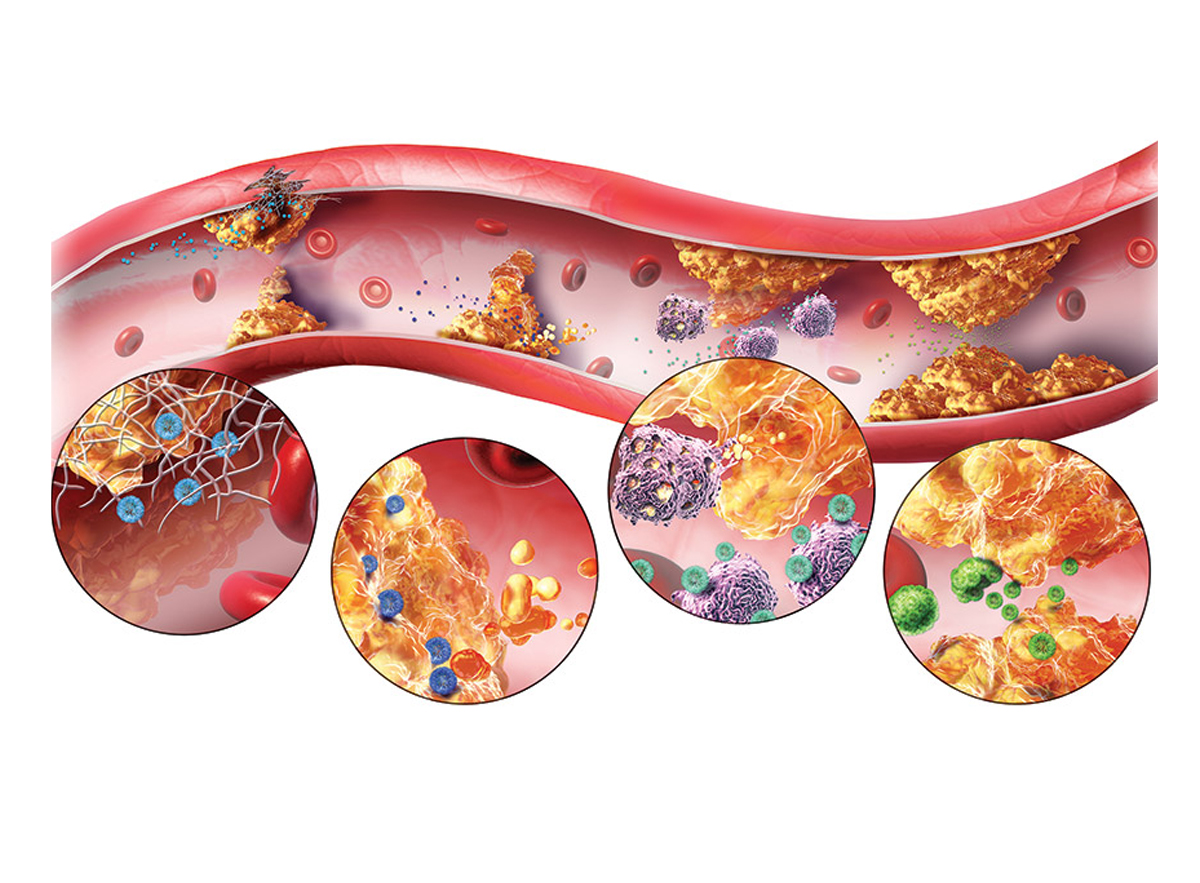
The development of atherosclerosis is a complex process, but it turned out that the primary event in all cases is chronic, barely noticeable damage to the inner lining of the artery (endothelium) through various mechanisms. Such mechanisms include:
- Physical stress from turbulent blood flow (as occurs in arterial branches, especially in people with high blood pressure).
- Inflammatory stress associated with the immune system (for example, when smoking cigarettes).
- Abnormalities in the chemistry of circulating blood (for example, high cholesterol or high blood sugar, as is the case with diabetes mellitus).
Infections caused by certain bacteria or viruses (for example, Chlamydia pneumoniae or cytomegalovirus) can also increase inflammation of the inner lining of the artery (endothelium) and lead to atherosclerosis.
- Plaque formation.
Atherosclerosis begins when a damaged artery wall generates chemical signals that cause certain types of white blood cells (monocytes and T cells) to attach to the artery wall. These cells migrate to the artery wall. There they turn into foam cells, which store cholesterol and other fats and stimulate the growth of smooth muscle cells in the artery wall. Over time, these fat-laden foam cells accumulate in the vessel wall. They form focal deposits (deposits) (atheromas, also called plaques) covered with fibrous tissue in the lining of the artery wall. Over time, calcium builds up in the plaque. Plaques can occur all over the middle and large arteries, but usually they begin to appear at the sites of the arteries branching.
- Plaque rupture.
Plaque can grow inside the cavity (lumen) of the artery, which gradually leads to its narrowing. When an artery narrows due to atherosclerosis, the tissues supplied with blood by this artery do not receive enough blood and oxygen. Plaque can also grow into the artery wall, where it does not obstruct blood flow. Both types of plaque can burst (rupture), causing their contents to come into contact with circulating blood. This material stimulates the formation of blood clots. These blood clots can suddenly block all blood flow through an artery, which is the main cause myocardial infarction or stroke. Sometimes these blood clots break off, travel with the bloodstream, and block arteries elsewhere in the body. Likewise, pieces of plaque can come off, migrate with the blood, and block an artery elsewhere.
Risk factors for atherosclerosis
Some of the risk factors for atherosclerosis can be modified.
Modifiable risk factors include:
- the use of tobacco products;
- high blood cholesterol levels;
- arterial hypertension;
- diabetes;
- obesity;
- lack of physical activity;
- low daily intake of fruits and vegetables.
Risk factors that cannot be changed include:
- a family history of early atherosclerosis (i.e., a close male relative who the disease developed before age 55, or a close female relative who developed the disease before age 65 years old);
- elderly age;
- male gender.
There are many unexplored risk factors, such as high levels of C-reactive protein (an inflammatory protein) in the blood, high levels of some cholesterol components such as apolipoprotein B or lipoprotein (a); and psychosocial factors (such as anxiety and low socioeconomic status).
- Smoking.
Smoking is one of the most important modifiable risk factors. (Using tobacco in other forms, such as snuff and chewing tobacco, also increases the risk.) A smoker's risk of developing some forms of atherosclerosis, such as coronary heart disease, is directly related to the number of cigarettes smoked daily. The risk of myocardial infarction increases threefold in men and sixfold in women who smoke 20 or more cigarettes a day, compared with nonsmokers. For those who already have a high risk of cardiovascular disease, tobacco use is especially dangerous.
Tobacco use lowers high-density lipoprotein (HDL) cholesterol - the "good" cholesterol and raises the level of low density lipoprotein (LDL) cholesterol - the "bad" cholesterol. Smoking increases the level of carbon monoxide in the blood, which can increase the risk of damage to the inner layer of the artery wall. The use of tobacco causes an even greater contraction of the arteries already narrowed by atherosclerosis, further reducing the amount of blood entering the tissues. In addition, tobacco use increases the susceptibility of the blood to clotting (by increasing the adhesion platelets), and the risk of peripheral arterial disease (atherosclerosis affecting arteries other than those carrying blood in heart and brain), coronary heart disease, stroke and blockade of arterial anastomosis imposed during coronary artery bypass grafting or surgery to bypass a blocked artery anywhere else body.
For those who quit smoking, the risk is halved compared to those who continue to use tobacco, regardless of previous smoking history. Quitting smoking also reduces the risk of death after coronary artery bypass surgery or myocardial infarction and the risk of illness and death in people with peripheral artery disease. The benefit of quitting tobacco starts immediately and increases over time.
It turned out that secondhand smoke (inhalation of ambient air containing the products of tobacco smoking by other people) also increases the risk. It should be avoided.
- Cholesterol levels.
High LDL cholesterol is another important modifiable risk factor. A diet high in saturated fat causes LDL cholesterol levels to rise in susceptible individuals. Blood cholesterol levels also rise with age and are generally higher in men than in women, although levels in women also rise after menopause. Some hereditary diseases lead to high levels of cholesterol or other fats. Individuals with these inherited conditions can have extremely high cholesterol levels and (if left untreated) die of coronary heart disease at an early age.
Lowering high LDL cholesterol with drugs can significantly reduce the risk of heart attacks, strokes, and death. There are many types of lipid-lowering drugs (lipid-lowering drugs). The most common type are statins.
Not all types of cholesterol increase the risk of atherosclerosis at high levels. High HDL (good) cholesterol levels reduce the risk of atherosclerosis.
The desired level of total cholesterol, which includes LDL cholesterol, HDL cholesterol and triglycerides, is 140 to 200 mg / dL (3.6 to 5.2 mmol / L). The risk of myocardial infarction more than doubles when total cholesterol levels approach 300 mg / dL (7.8 mmol / L). The risk decreases when LDL cholesterol is below 130 mg / dL (3.4 mmol / L) and HDL cholesterol is above 40 mg / dL (1 mmol / L). People at high risk, such as those with diabetes or atherosclerosis of the heart, or with myocardial infarction, stroke, or a history of bypass surgery may benefit from high doses of statins to help maximize cholesterol reduction LDL. However, the percentage of HDL cholesterol in relation to total cholesterol is a more reliable indicator of risk than total and LDL cholesterol levels. HDL cholesterol should be more than 25% of total cholesterol. High triglyceride levels are often accompanied by low HDL cholesterol levels. However, evidence suggests that an isolated increase in triglyceride levels may also slightly increase the risk of atherosclerosis.
- High blood pressure.
Uncontrolled high blood pressure is a risk factor for myocardial infarction and stroke due to atherosclerosis. The risk of cardiovascular disease begins to increase when blood pressure rises above 110/75 mm Hg. Lowering high blood pressure clearly leads to a lower risk. Doctors usually try to achieve a blood pressure of 140/90 mmHg. and below, and in persons at risk of cardiovascular diseases, for example, those suffering from diabetes mellitus or kidney disease, often 130/80 mm Hg. Art. and below.
- Diabetes.
In persons suffering from diabetes mellitus, it is more common to develop a disease that affects small arteries such as the arteries of the eyes, nerves, and kidneys, resulting in loss of vision, nerve damage, and chronic kidney disease. People with diabetes also tend to develop atherosclerosis in the large arteries. They tend to develop atherosclerosis at an earlier age and more extensive than in individuals without diabetes. The risk of developing atherosclerosis in persons with diabetes mellitus increases 2-6 times, especially in women. Women with diabetes, unlike those without diabetes, are not protected from atherosclerosis until menopause. Individuals with diabetes mellitus have the same risk of death as those with a history of myocardial infarction. Doctors usually try to help these patients carefully manage other risk factors (such as high cholesterol and high blood pressure).
- Obesity.
Obesity, especially abdominal obesity, increases the risk of coronary artery disease (atherosclerosis of the arteries that supply blood to the heart). Abdominal obesity increases the risk of other risk factors for atherosclerosis: high blood pressure, type 2 diabetes mellitus and high cholesterol levels. Losing weight reduces the risk of all of these diseases.
- Lack of physical activity.
It turned out that physical inactivity increases the risk of coronary heart disease. However, there is ample evidence that regular exercise, even with moderate exercise, reduces this risk and mortality rate. Exercise can also help change other risk factors for atherosclerosis - lowering blood pressure and cholesterol levels and, while promoting weight loss, reduce insulin resistance.
- Food ration.
There is ample evidence that regular consumption of vegetables and fruits can reduce the risk of coronary heart disease. It is unclear if the benefits of eating fruits and vegetables are related to the substances they contain (phytochemicals), or to the fact that people with a diet rich in fruits and vegetables also eat less saturated fat and are more likely to consume dietary fiber and vitamins. It turned out that phytochemicals called flavonoids (found in red and purple grapes, red wine, black tea and dark beer) have a particularly pronounced protective effect. High concentrations of these substances in red wine explain the relatively low incidence of ischemic heart disease in French people, even though they use more tobacco and consume more fat than Americans. However, there is no research to prove that consumption of foods rich in flavonoids or the use of appropriate supplements prevents atherosclerosis.
The increased fiber content in certain vegetables can lower total cholesterol, blood glucose, and insulin levels. However, too much fiber interferes with the absorption of certain minerals and vitamins. Typically, foods rich in phytochemicals and vitamins are also rich in fiber.
Fat is an essential part of the diet. The claim that eating less fat is important for a healthy diet is only partly true because the type of fat also matters. The main types of fats
- saturated and trans fats;
- unsaturated fats (polyunsaturated and monounsaturated are types of fats).
Fats can be soft (or liquid) or hard at room temperature. Soft fats such as oils and some margarines tend to be higher in polyunsaturated and monounsaturated fats. Solid fats such as butter and fat added to dough tend to be higher in saturated and trans fats. Saturated and trans fats are more likely to cause atherosclerosis. Thus, people should use every opportunity to limit the amount of saturated and trans fats in your diet, and instead choose foods that are monounsaturated or polyunsaturated fats.
Saturated and trans fats are found in red meats, many instant meals and snacks, non-fat dairy products (such as cheese, butter, and cream), and hard margarines. However, evidence of the dangers of natural trans fats remains mixed. Monounsaturated fats are found in canola and olive oils, trans fat free soft margarines, nuts, and olives. Polyunsaturated fats are found in nuts, seeds, vegetable oils, and mayonnaise.
Two types of polyunsaturated fats - omega-3 and omega-6 fats - are essential for a healthy diet. Omega-3 fats are found in oily fish such as salmon, omega-3-fortified eggs, canola oil, and walnuts. Omega-6 fats are found in some nuts and seeds, as well as safflower, sunflower and corn oils.
Eating a healthy diet can help reduce your risk of developing atherosclerosis. However, it is not entirely clear whether dietary supplements containing vitamins, phytochemicals, trace minerals, or coenzyme Q10 also help reduce risk.
- Alcohol consumption.
It turned out that individuals who consume moderate amounts of alcohol have a lower risk of coronary heart disease than individuals who drink too much or do not drink at all. Alcohol raises HDL (good) cholesterol levels, it also reduces the risk of blood clots and inflammation, and helps protect the body from cellular byproducts. However, excessive alcohol consumption (more than 14 drinks per week for men and more than 9 drinks per week for women) can cause significant health problems and increase the risk of death. People who consume more alcohol should reduce their consumption. Individuals who do not drink alcohol should not start.
- High levels of homocysteine in the blood (hyperhomocysteinemia).
Individuals with very high blood levels of homocysteine (an amino acid), usually due to a hereditary disorder, have an increased risk of coronary heart disease at a young age. However, it is unclear why high homocysteine levels lead to atherosclerosis. It turned out that giving such patients drugs that lower homocysteine levels did not reduce the risk of death.
Symptoms of atherosclerosis

Symptoms of atherosclerosis depend on
- localization of the affected artery;
- whether there has been a gradual narrowing or sudden blockage of the affected artery.
- Symptoms of gradual narrowing.
With gradual narrowing, atherosclerosis usually does not cause symptoms until the inner lumen of the artery is narrowed by more than 70%.
The first symptom of a narrowed artery may be pain and cramps when blood flow stops providing oxygen to the tissues. For example, a person may feel chest pain or discomfort during exercise because the oxygen supply to the heart is insufficient. This chest pain (angina) stops within a few minutes after the person finishes the load. While walking, a person may feel cramps in the calf muscles (intermittent claudication) due to insufficient oxygen supply to the leg muscles. If the arteries supplying blood to one or both kidneys narrow, kidney failure or dangerously high blood pressure may develop.
- Symptoms of a sudden blockage of an artery.
If an artery that supplies blood to the heart (coronary artery or coronary artery) is suddenly blocked, myocardial infarction. Blockage of the arteries that supply blood to the brain can cause stroke. Blocked arteries in your legs can cause gangrene to your toes, feet, or lower leg.
Diagnostics
Methods for diagnosing atherosclerosis depend on the presence of symptoms in the patient.
- People with symptoms.
People with symptoms suggesting a blockage in an artery are given tests to determine the location and extent of the blockage. Different tests are used depending on which organ may be affected. For example, if a doctor suspects a blockage of an artery of the heart, then, as a rule, an electrocardiography (ECG) is prescribed, tests blood tests for substances (heart markers) that indicate damage to the heart, and sometimes stress testing or catheterization hearts.
Individuals with atherosclerosis of the arteries of one organ often have atherosclerosis in other arteries. Therefore, if a doctor detects an atherosclerotic blockage in one artery, such as a leg, he will usually order tests to find blockages in other arteries, such as the heart.
The doctor also checks for certain risk factors in people with atherosclerotic artery blockage. For example, it measures the levels of glucose, cholesterol, and triglycerides in the blood. Doctors usually also do these examinations on adults as part of their routine annual check-ups.
Because it is likely that some of the plaques in the arteries will rupture and form a blood clot in this area, your doctor will sometimes order tests to identify these dangerous plaques. Although no examinations guarantee an accurate diagnosis, doctors use computed tomography (CT) angiography, an intravascular ultrasound scan (in which using an ultrasound probe at the tip of a catheter placed in the lumen of an artery) during cardiac catheterization and coronary angiography, as well as a number of other imaging studies and tests blood.
- Individuals without symptoms (screening).
For people with risk factors for atherosclerosis but no symptoms, doctors usually do blood tests to measure the levels of glucose, cholesterol, and triglycerides in the blood. Doctors usually also do these examinations on adults as part of their routine annual check-ups.
Some doctors recommend imaging tests as a preventive measure to detect atherosclerotic blockade in people with risk factors but no symptoms. These tests include an electron beam CT scan of the heart and ultrasound of the arteries in the neck (carotid arteries).
CT can also detect sclerosed (calcified) plaques in the coronary arteries. The result of this test is sometimes called the calcium index. Ultrasound of the carotid arteries detects thickening of the artery wall, which suggests atherosclerosis. However, many doctors believe that the results of these examinations rarely lead to an adjustment. recommendations they would make based on other, easily identifiable risk factors for a particular the patient.
Prevention and treatment
To prevent atherosclerosis, people should:
- consume healthy foods;
- do physical education;
- lose weight;
- quit smoking;
- lower LDL cholesterol levels;
- lower blood pressure;
- lower blood glucose levels;
- sometimes take drugs such as statins.
Eating a healthy diet can help reduce your risk of developing atherosclerosis. A diet low in saturated fat, refined carbohydrates, alcohol and high in fruits, vegetables, and fiber reduces the risk of heart disease. A healthy diet and exercise can help you lose weight if you are overweight or obese.
Patients who smoke should quit smoking. For those who quit smoking, the risk is halved compared to those who continue to use tobacco, regardless of previous smoking history.
With high blood pressure, it is necessary to reduce blood pressure through lifestyle changes and medication. Diabetic patients must maintain close control of their blood sugar (glucose) levels.
Individuals with a high risk of developing atherosclerosis are also advisable to prescribe certain medications.
It is advisable to take statins that lower cholesterol levels (even if cholesterol levels are normal or slightly elevated), and in some cases, aspirin or other antiplatelet agents (drugs that prevent platelets from sticking together and blocking blood vessels). Aspirin and other antiplatelet agents can cause bleeding, so these drugs should only be taken if patients are at very high risk of atherosclerosis.
Certain drugs used to treat high blood pressure and drugs used to treat diabetes also help reduce the risk of atherosclerosis.
Complications
Atherosclerosis can lead to serious and long-term complications.
It can directly contribute to the development of ischemic, carotid and peripheral heart disease. In coronary artery disease, the arteries close to the heart narrow. Carotid artery disease affects arteries near the brain in the same way, while peripheral artery disease affects the blood supply to the limbs.
This can lead to a number of dangerous complications, including:
- Heart diseases and heart failure;
- Heart attack;
- Kidney failure (the kidneys may stop functioning if they don't get enough blood);
- Aneurysm;
- Stroke;
- Arrhythmia (atherosclerosis can lead to irregular heart rhythms and palpitations).
Atherosclerosis is the leading cause of death in many countries. However, people with atherosclerosis are living longer with a better quality of life than ever before. For many, this disease is preventable. Even those people who are genetically programmed for atherosclerosis can delay the onset and exacerbation of the disease with a healthy lifestyle, proper food and medications to reduce LDL cholesterol.


