
Actinomycosis: what is it, types, signs and symptoms, treatment
Content
- What is actinomycosis?
- Bacteria Actinomycetes
- Types of actinomycosis
- Oral cervicofacial actinomycosis
- Thoracic actinomycosis
- Abdominal actinomycosis
- Pelvic actinomycosis
- How common is actinomycosis?
- Symptoms of actinomycosis
- Causes and risk factors
- How does actinomycosis spread?
- Abscesses
- Narrow sinuses
- Opportunistic infection
- Oral cervicofacial actinomycosis
- Thoracic (chest) actinomycosis
- Abdominal actinomycosis
- Pelvic actinomycosis
- Diagnostics
- Treatment of actinomycosis
- Surgery
- Complications
- Forecast
- Prevention and recommendations
What is actinomycosis?
Actinomycosis (radionuclide disease) is a rare type of bacterial infection. Most bacterial infections are limited to one part of the body because bacteria cannot penetrate the tissues of the body. However, actinomycosis is unusual in that the infection is able to slowly but steadily move through the tissues of the body.
Sign and symptoms include:
- swelling and inflammation of the affected tissue (see images below);
- tissue damage that leads to the formation of scar tissue;
- the formation of abscesses (purulent swelling, see. photo below);
- small holes or tunnels that develop in tissues and flow as lumpy pus.
Bacteria Actinomycetes

Actinomycosis is caused by a family of bacteria known as actinomycetes (radiant fungi). In most cases, bacteria live harmlessly on the lining of the mouth, throat, digestive system, and vagina (in women).
Bacteria only pose a problem if the tissue lining is damaged by injury or disease, allowing the bacteria to penetrate deeper into the body. This is potentially serious because actinomycete bacteria are anaerobic bacteria that means they thrive in parts of the body where oxygen levels are low, such as deep in tissues person.
However, one of the advantages of being anaerobic actinomycide bacteria is that they cannot survive outside the human body. This means that actinomycosis is not contagious.
Types of actinomycosis
In theory, the disease can develop almost anywhere within the tissue of the human body. But the condition tends to affect certain areas of the body and can be classified into four main types:
- oral cervico-facial;
- thoracic;
- abdominal;
- pelvic.
They are described below.
Oral cervicofacial actinomycosis

Oral cervicofacial actinomycosis (jaw actinomycosis) - An infection develops inside the tissue of the neck, jaw, or mouth. Most cases are caused by dental problems, such as tooth decay.
Oral cervicofacial type is the most common type of actinomycosis and accounts for about half of all cases.
Thoracic actinomycosis
Thoracic actinomycosis - an infection develops inside the lungs or the airways associated with them. It is believed that most cases of the thoracic type are caused by people accidentally inhaling droplets of contaminated fluid into their lungs.
The thoracic type accounts for approximately 15-20% of cases.
Abdominal actinomycosis
Abdominal actinomycosis - an infection develops inside the abdomen. This type of disease can have a number of possible causes. It can develop as a secondary complication of a more common infection such as appendicitis, or after accidentally swallowing a foreign object, such as chicken bone, containing actinomycide bacteria.
The abdominal type accounts for approximately 20-25% of all cases of the disease.
Pelvic actinomycosis

Actinomycosis of the pelvis - An infection develops in the pelvic region (the bone structure that includes the bones of the thigh). Pelvic actinomycosis usually only occurs in women because most cases occur when actinomycide bacteria are spread from the female genital organs into the pelvis.
It is believed that most cases of pelvic actinomycosis are associated with long-term contraceptive use of an intrauterine device (IUD), often referred to as a coil. The coil is a T-shaped device that fits inside the uterus.
The pelvic type accounts for approximately 10% of all cases.
How common is actinomycosis?
Actinomycosis is one of the rarest types of bacterial infections. In developed countries, it is believed that only one in every 300,000 people develops the disease.
Actinomycosis is probably more common in parts of the world where access to antibiotics is limited and oral hygiene standards are poor. However, it is difficult to assess the magnitude of this condition globally, since reliable data are not easy to obtain.
Three out of every four cases of actinomycosis affect men, usually between 20 and 60 years of age. The reasons for this are unclear.
Symptoms of actinomycosis
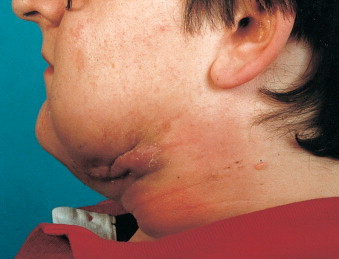
Symptoms of oral cervicofacial actinomycosis include:
- swollen bumps on the cheek or neck, which may gradually increase in size and number;
- lumps (bumps) of a reddish or bluish color (see. Photo);
- high fever (fever) 38 ° C (100.4 ° F) or higher (rare).
In the early stages of oral cervicofacial actinomycosis, the lumps may be tender before subsequently becoming painless and firm to the touch. The jaw muscles may also be affected, which can make chewing difficult.
This type of actinomycosis can also cause narrow skin passages in the affected areas. The passages are called sinuses. They should not be confused with the usual sinuses, cavities found on the face and nose of a person.
These sinuses are filled with pus containing yellow granular lumpy material.
Thoracic-type symptoms include:
- a high fever of 38 ° C (100.4 ° F) or higher;
- weight loss;
- fatigue;
- loss of appetite;
- shortness of breath;
- chest pain;
- the appearance of narrow passages on the surface of the chest.
You may also have a dry cough or a cough that causes phlegm. When coughing, drops of blood may come out, or if sputum appears, it may be stained with blood.
Abdominal symptoms include:
- moderate fever, usually no higher than 38 ° C (100.4 ° F);
- weight loss;
- fatigue;
- changes in bowel habits such as constipation or diarrhea;
- abdominal pain;
- nausea, vomiting;
- a noticeable mass or lump in the lower abdomen;
- the appearance of narrow sinuses on the surface of the abdomen.
Symptoms of pelvic actinomycosis include:
- pain in the lower abdomen;
- irregular or abnormal vaginal bleeding or discharge;
- loss of appetite;
- fatigue;
- mild fever;
- a noticeable mass or lump in the pelvic area.
Causes and risk factors
Actinomycosis is caused by a strain of bacteria called actinomycetes. Actinomycetes are found in many body cavities, such as the mouth and, less commonly, the intestines.
In women, they can also be found in the uterus and fallopian tubes.
How does actinomycosis spread?
Actinomycetes are anaerobic bacteria, which means they cannot survive in oxygen-rich environments. Therefore, they do not cause disease when they are in one of the body cavities, such as the mouth or intestinal tract.
However, if actinomycetes pierce the protective membrane (mucous membrane) surrounding the cavities, they can penetrate deeply into body tissues. Since there is little oxygen in the deep layers of human tissue, bacteria are able to multiply rapidly and infect healthy tissues.
Abscesses
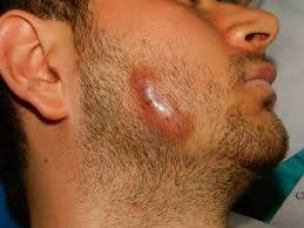
In an attempt to fight infection, the immune system (the body's natural defense against infection and disease) will send infection-fighting cells to the source of the infection. However, these cells are unable to kill bacteria and die quickly.
When the cells that fight infection die, they accumulate in a yellowish fluid called pus. Failing to kill the infection, the immune system will try to limit its spread by using healthy tissue to form a protective barrier around the pus. This forms a purulent swelling known as abscess.
Unfortunately, the actinomycete strain of bacteria has the ability to penetrate the protective barrier of the abscess and break through into healthier tissues. The immune system will try to fight off the infection, which will cause the abscess to grow.
Narrow sinuses
The body will eventually have to rid itself of the accumulation of pus. To do this, small channels called sinuses will develop, leading from the abscesses to the surface of the skin.
Pus will flow through the sinuses, as well as "sulfur granules", which are a yellow powdery substance. Sulfur granules are actually clumps of bacteria, but they are known as sulfur granules because they are the same color as chemical sulfur.
Opportunistic infection
Actinomycosis is an opportunistic infection that does not cause any symptoms unless it is able to invade body tissues.
Oral cervicofacial actinomycosis
Causes of oral cervicofacial actinomycosis include:
- caries, especially if caries has been left untreated for many years;
- gum disease;
- dental abscess;
- tonsillitis;
- inner ear infection (otitis);
- dental surgery such as tooth extraction or root canal treatment;
- jaw surgery.
Thoracic (chest) actinomycosis
Most cases of breast disease are believed to be caused by small food particles or other ingested materials that mix with the actinomycosis bacteria. Instead of safely entering the stomach, particles mistakenly enter the airways and airways of the lungs.
People with long-term drug or alcohol problems are especially at risk of developing breast actinomycosis for two reasons:
- drunkenness or inebriation increases the risk of accidental ingestion of material into the lungs;
- Long-term drug and alcohol abuse weakens the immune system, making the person more vulnerable to infection.
Abdominal actinomycosis
The abdominal type occurs when something breaks the intestinal wall, allowing bacteria to penetrate deep into the tissues.
The intestine can rupture as a result of an infection, for example, if the appendix bursts, which damages the intestinal wall. Or, the intestines may become damaged due to trauma, such as when someone mistakenly swallowed a fish bone.
Cases of abdominal actinomycosis have also been reported as a complication of bowel or abdominal surgery.
Pelvic actinomycosis
Most cases of pelvic disease occur in women who use intrauterine contraception (IUD). The IUD is a small T-shaped contraceptive device made of plastic and copper that fits inside the uterus. Affected women are usually long-term IUD users (eight years or more).
One of the explanations for the large number of cases of pelvic actinomycosis in women using an IUD is that over time, the IUD can damage the lining of the uterus, allowing bacteria to penetrate deep fabrics. However, no research has yet been done to confirm this.
It should be emphasized that the development of pelvic disease as a result of the use of an IUD is unlikely. Millions of women use an IUD device and only a few cases of pelvic actinomycosis have been reported.
Diagnostics
In the early stages of actinomycosis, it can be difficult to make a correct diagnosis. This is because it shares the symptoms of many other more common conditions, including:
- cancer;
- appendicitis (inflammation of the appendix);
- pneumonia (lung infection);
- pelvic inflammatory disease (bacterial infections of the female reproductive system, such as the uterus or fallopian tubes).
Because actinomycosis is difficult to diagnose, many cases are only discovered when doctors do tests or surgery to check for other conditions. For example, many cases of actinomycosis are found on biopsies to detect cancer. A biopsy is the procedure for removing a small sample of tissue, which is then examined in a laboratory under a microscope.
The disease can usually be diagnosed more confidently at later stages, after the appearance of narrow sinuses on the surface of the skin. This is because the sulfur granules that are produced through narrow pathways during actinomycosis infection have a distinctive shape that can be detected under a microscope.
Treatment of actinomycosis

Antibiotics are the main treatment for actinomycosis. A long-term course of antibiotics is necessary to completely eradicate the infection.
An initial course of antibiotic injections is usually recommended for 2-6 weeks, followed by a course of antibiotics for another 6-12 months.
The nurse should teach you how to inject antibiotics at home so you don't have to stay in the hospital for the entire course.
The preferred antibiotics for treating actinomycosis are benzylpenicillinwhich is used in the form of antibiotic injections and tablets phenoxymethylpenicillin.
Side effects of these penicillins include:
- diarrhea;
- nausea;
- skin rash;
- increased vulnerability to fungal infections such as thrush on the tongue (fungal infection that occurs in the mouth)
If you are allergic to penicillins, alternative antibiotics can be used, such as tetracycline or erythromycin.
Surgery
Surgery may sometimes be required to repair any tissue damage or remove pus from any abscesses that have formed deep within the body.
Complications
Abscesses resulting from actinomycosis can develop in many parts of the body, including the lungs. Abscesses can easily spread from one part of the body to another.
If the original site of infection is on the skin of the face, it can spread to nearby parts of the body, such as the scalp or ears.
If the original site of infection is the mouth, it can spread to the tongue, larynx (voice box), trachea (windpipe), salivary glands, and tubes that connect the throat to the nose.
Forecast
The infection responds well to treatment, although antibiotics are usually needed for several months to ensure that all bacteria are killed.
In some cases of actinomycosis, minor surgery may be required to repair damaged tissue and remove pus from abscesses.
Prevention and recommendations
Most cases of oral actinomycosis result from poor oral hygiene. Good oral hygiene is the best way to prevent actinomycosis. You may find the tips below helpful:
- Brush your teeth twice a day using fluoride toothpaste.
- Limit the amount of sugary and sticky foods you eat because this increases your risk of tooth decay.
- Make sure you attend all scheduled dental check-ups. If you have healthy teeth, you should have a dental check-up at least every two years. However, if there is a history of dental problems, more frequent examinations may be required.


