
Thrombotic thrombocytopenic purpura: what is it, symptoms, treatment, prognosis
Content
- What is thrombotic thrombocytopenic purpura?
- Signs and symptoms
- Causes and risk factors
- Affected populations
- Related disorders
- Diagnostics
- Standard treatments
- Forecast
What is thrombotic thrombocytopenic purpura?
Thrombotic thrombocytopenic purpura (TPP, Moshkovitz disease) Is a rare serious blood disorder. The main symptoms may include a sharp drop in platelet count (thrombocytopenia), abnormal destruction of red blood cells (hemolytic anemia), as well as disorders in the nervous system and other organs resulting from the formation of small blood clots (thrombi) in the smallest arteries. The exact cause of thrombotic thrombocytopenic purpura is unknown.
Signs and symptoms
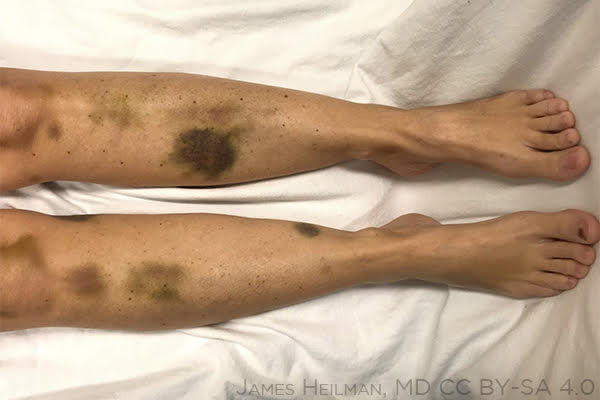
Thrombocytopenia and hemolytic anemia result from these small blood clots in the blood vessels of many organs, potentially blocking normal blood flow through the vessels. Disorders that affect the nervous system can include:
- headache;
- mental changes;
- confusion of consciousness;
- speech disorders;
- slight or partial paralysis (paresis);
- convulsions;
- to whom.
Fever, plasma proteins in the urine (proteinuria) and very few red blood cells in the urine (hematuria) may also occur. Affected people also develop red, rash-like patches of skin or purple-colored (purpura) patches in as a result of abnormal bleeding into the mucous membranes (the thin, moist layer lining the body cavities) and into skin. Additional signs of Moshkovitz disease may include abnormally heavy bleeding, weakness, fatigue, lack of color (pallor), and abdominal pain with nausea and vomiting. Half of people with TTP have elevated levels of a chemical compound known as serum creatinine.
Acute renal failurerequiring kidney dialysis occurs in only 10 percent of patients with TTP. Urine flow is often below normal. Within a few days, you may experience edema stop, dyspnea, headache and fever. The retention of water and salt in the blood can lead to high blood pressure (arterial hypertension), changes in brain metabolism and congestion in the heart and lungs. Acute renal failure can lead to accumulation of potassium in the blood (hyperkalemia), which can cause an irregular heartbeat.
Read also:Von Willebrand disease
Thrombotic thrombocytopenic purpura can develop during pregnancy, and women with TTP can have serious complications during pregnancy. As a rule, Moshkovitz disease often occurs suddenly with a high degree of severity and may recur or persist.
Causes and risk factors
The exact cause of TTP is unknown. However, the disease is associated with a deficiency of an enzyme involved in blood clotting called von Willebrand factor protease (also called ADAMTS13). A deficiency of this enzyme allows large complexes of a coagulation protein known as background factor Von Willebrand, circulate in the blood, resulting in platelet clotting and destruction of red blood cells Taurus.
It is believed that there is an acquired (non-hereditary) form of TTP and a familial form. The acquired form may appear later in life, later in childhood or into adulthood, and sufferers may experience one episode or recurrent episodes of the disease. This is called immune-mediated TTP.
If the disorder is present at birth (familial), signs and symptoms can usually appear earlier, in infancy or early childhood. This is called congenital TTP.
The acquired form may involve an autoimmune reaction. Autoimmune disorders occur when the body's natural defenses against "foreign" or invading organisms (such as antibodies) begin to attack healthy tissue for unknown reasons.
Thrombotic thrombocytopenic purpura may result from AIDSa, a complex associated with AIDS, or an infection caused by the human immunodeficiency virus (HIV).
Affected populations
Currently, the incidence of TTP is about 3.7 cases per million people per year. One estimate puts the overall incidence of Moshkovitz disease at 4 per 100,000. Two thirds of people with TTP are women. Moshkovitz disease usually affects people between the ages of 20 and 50.
TTP is sometimes associated with pregnancy and collagen vascular disease (a group of diseases affecting connective tissue).
TTP is more common than usual in people infected with the human immunodeficiency virus (HIV).
Related disorders
Childhood onset or congenital thrombotic thrombocytopenic purpura (TTP) often occurs concomitantly with systemic lupus erythematosus (SLE). A literature search by researchers at the University of Toronto found that about half of childhood-onset TTP cases met the criteria for "incipient or overt SLE." The best indicator of the presence or later development of SLE was high-grade proteinuria (excess serum proteins in the urine) at the time of TTP diagnosis. The researchers recommended that clinicians rule out comorbid SLE in all children with TTP.
Read also:Blood cancer
Symptoms of the following conditions may be similar to those of thrombotic thrombocytopenic purpura. Comparisons can be useful for differential diagnosis:
- Typical hemolytic uremic syndrome (tHUS) is an uncommon condition that occurs in 5-15 percent of people, especially children infected with the bacteria Escherichia coli (E. coli). This organism releases toxins into the intestines that are absorbed into the bloodstream and can be carried by leukocytes (white blood cells) to the kidneys. This leads to acute kidney damage. There may also be brain damage from seizures and even coma, pancreas at pancreatitis and sometimes diabetes mellitus and other organs. Typical hemolytic uremic syndrome mainly affects young children between 1 and 10 years of age. The onset of tHUS is preceded by a disease characterized by vomiting, abdominal pain, fever, and usually bloody diarrhea.
- Idiopathic thrombocytopenic purpura (ITP, primary immune thrombocytopenia, Werlhof disease) - a blood disorder without any known cause (idiopathic). It is characterized by thrombocytopenia, abnormal bleeding into the skin and mucous membranes, and anemia. ITP is more common in children and young adults, and more common in women than in men. ITP may be preceded by a viral infection.
- Purpura Genoch-Schönlein (hemorrhagic vasculitis) Is a rare inflammatory disease of small blood vessels (capillaries) that usually resolves on its own. This is the most common form of vascular inflammation in children (vasculitis), which leads to inflammatory changes in small blood vessels. Symptoms of Henoch-Schönlein purpura usually start suddenly and may include headache, fever, loss of appetite, cramps, abdominal pain, painful periods, hives, feces with blood and joint pain. The skin usually has red or purple spots (petechiae). Inflammatory changes associated with hemorrhagic vasculitis can also develop in the joints, kidneys, digestive system and, in rare cases, in the brain and spinal cord (central nervous system). The exact cause of hemorrhagic vasculitis is not fully understood, although research suggests it is associated with an abnormal immune response or, in some rare cases, extreme allergic reaction to certain harmful substances (for example, food or medicine).
Read also:Increased blood eosinophils in an adult
Diagnostics
In thrombotic thrombocytopenic purpura, prompt diagnosis and immediate treatment are essential. Diagnosis can be made on the basis of a careful clinical assessment, a detailed history of the patient, and identification of characteristic features.
Standard treatments
In many cases, plasmapheresis is used to remove antibodies that inhibit the ADAMTS13 protease, as well as to re-add functional ADAMTS13 protein. During this process, the patient's blood is removed by a special machine, then the blood cells are separated from the plasma, the patient's plasma is replaced with healthy plasma, and then the blood is returned back to the patient. Patients are also regularly given steroids to inhibit the production of anti-ADAMTS13 antibodies.
Blood product plasma SD (VIPLAS / SD) has been approved by the Food and Drug Administration (FDA) for the treatment of TTP.
In 2019, the FDA approved Cablivi (caplacizumab) as the first therapy specifically listed in combined with plasma exchange and immunosuppressive therapy for the treatment of adult patients with acquired TPP. Kablivi is the first targeted blood clot suppressant.
Genetic counseling can be beneficial for affected individuals and their families if congenital TTP has affected other family members. Other treatments are symptomatic and supportive.
Forecast
The mortality rate is about 95% for untreated cases, but the prognosis is quite favorable (survival 80–90%) for people with idiopathic TTP who are diagnosed and treated early with plasmapheresis.


