
Polymyositis: what is this disease, symptoms, treatment, prognosis
Content
- What is polymyositis?
- Signs and symptoms
- Causes and risk factors
- Epidemiology
- Diagnostics
- Treatment
- Forecast
- Complications
What is polymyositis?
Polymyositis refers to idiopathic inflammatory myopathy, which includes, in addition to polymyositis, three more main subtypes, - dermatomyositis, myositis with included bodies and necrotizing myopathy. Polymyositis, an autoimmune and chronic inflammatory myopathy, is characterized by symmetric weakness of the proximal muscles due to injury endomysial layers of skeletal muscle versus dermatomyositis, which affects the perimisial muscle layers along with dermatological manifestations.
Polymyositis develops over several months compared to included body myositis (MBT), which is slowly progressive chronic myopathy that develops in the elderly over a period of months to years with more severe symptoms. MBT develops secondary, either as a result of an autoimmune reaction or as a result of a degenerative a process resulting from a persistent retroviral infection, such as human T-lymphotropic virus type 1 (TLVCH-1). Polymyositis, a rheumatological disease that is
autoimmune disease, requires long-term treatment with steroids or immunomodulators, along with the treatment of the main etiological factors.Signs and symptoms
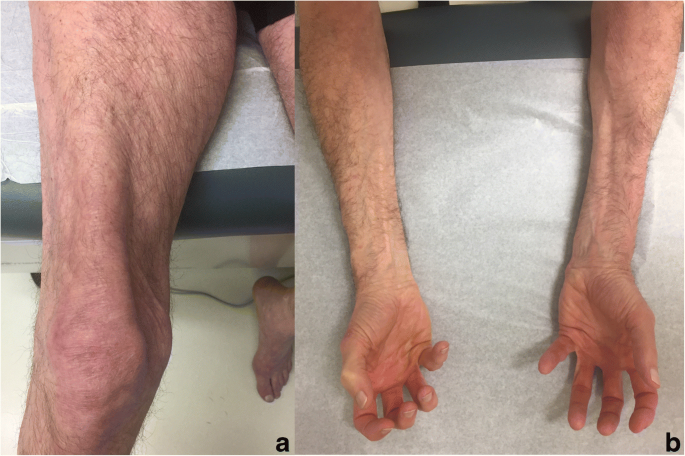
Polymyositis is characterized by chronic muscle inflammation and skeletal muscle weakness (involved in movement) on both sides of the body. Weakness usually begins in the proximal muscles (those closest to the chest and abdomen, such as the muscles of the forearm and shoulders, and the upper legs and thighs). The symptoms of polymyositis can continue to get worse from the onset of the disease for weeks or months. Muscle weakness can make it difficult to climb stairs, stand up from a sitting position, or lift objects. In some cases, the distal muscles (located further from the chest and abdomen, including the lower arms, hands, legs, and feet) may also be affected as the disease progresses.
Other symptoms of polymyositis include:
- arthritis;
- dyspnea;
- swallowing dysfunctions (dysphagia);
- speech problems;
- mild joint or muscle soreness;
- fatigue;
- arrhythmia of the heart.
People with polymyositis may have an increased risk of developing cancer.
Causes and risk factors
Polymyositis autoimmune disease, develops due to abnormal activation of cytotoxic T-lymphocytes (CD8 cells) and macrophages against muscle antigens, and due to strong extrafusal muscle expression of the major histocompatibility complex 1, which causes damage to the endomysium of skeletal muscles.
Read also:Antiphospholipid syndrome
Various cytokines, including interleukins, tumor necrosis factor (TNF), etc., play an important role in the onset of rhabdomyolysis. It mainly affects people who are already suffering from some kind of systematic disease due to viral infections, malignant neoplasms, or other autoimmune diseases. Typically, the viruses responsible for polymyositis are retroviruses, human immunodeficiency virus (HIV) and HDTV-1 / HTLV1, and the virus hepatitis C, which possibly cause this inflammatory muscle degeneration, causing endomysial damage leading to edema and nodular mass formation in myocytes.
Coxsackie virus is another cause of this autoimmune disorder due to abnormal functioning of the main complex histocompatibility (MHC) secondary to the release of cytokines after damage to the intima and vascular endothelium vessels. Another important etiological factor in rhabdomyolysis caused by polymyositis is an underlying malignant neoplasm, such as lungs' cancer, genitourinary malignancies or lymphomas, etc. The presence of polymyositis also increases the likelihood of developing carcinoma 2-5 years after diagnosis, especially non-Hodgkin lymphoma. It has the highest risk of developing, followed by lung carcinoma and bladder cancer.
Other causes include the presence of certain variants of human leukocyte antigens (HLA / HLA [A1, B8, DR3]), the presence of another autoimmune disease such as celiac disease (celiac disease), and the use of certain drugs such as hydralazine, procainamide, antiepileptic drugs, and angiotensin-converting enzyme (ACE) because of their ability to act as a hapten. The study found that 24% of patients taking statins developed polymyositis.
Epidemiology
Autoimmune disorders are the leading cause of increased mortality in middle-aged populations around the world, with varying incidence rates. Polymyositis rarely occurs in childhood and usually affects people over 20 years of age. However, dermatomyositis has a bimodal age distribution, affecting populations 5 to 15 and 45 to 60 years old.
Women are almost twice as likely to develop the disease as men, which is the exact opposite of myositis with included bodies (MBT). In the population, the rate of development of this autoimmune disease ranges from 0.5 to 8.4 cases per 100,000 people. Having ethnic variability, it is more common in blacks than in whites.
Read also:Sjogren's Syndrome
Diagnostics
Diagnosis consists of four parts: history and physical examination, elevated creatine kinase levels, electromyograph (EMG) changes, and a positive muscle biopsy.
The hallmark clinical sign of polymyositis is proximal muscle weakness, with less important symptoms being muscle pain and dysphagia. Cardiac and pulmonary signs will be present in about 25% of patients with polymyositis.
Treatment
Polymyositis is treated with a combination of various pharmacological and non-pharmacological methods. Pharmacological treatments mainly include corticosteroids. Prednisone and methylprednisolone are the most common corticosteroids used for polymyositis, with an initial dose of 1 mg / kg prednisone per day. Gradually steroids decrease. Second-line treatment options include the use of immunomodulators (methotrexate, azathioprine, cyclosporine) in those patients who either do not respond to steroids or who develop severe side effects due to use steroids. Cyclophosphamide, an immunomodulator, works effectively, especially in patients with pulmonary interstitial involvement. For chronic refractory polymyositis, intravenous immunoglobulins (IVIG) can be used. The study showed improvement in about 70% of patients after IVIG use.
IVIG also shows significant improvement in patients with dysphagia due to damage to the esophagus. Keratin biologics such as infliximab and etanercept have been used to treat refractory cases. Other treatment options include tacrolimus, a calcineurin inhibitor that has been shown to be beneficial in patients with refractory disease while taking prednisolone. Mycophenolate mofetil and Rituximab, an anti-CD20 monoclonal antibody, have also been shown to be useful in the treatment of difficult to treat cases of polymyositis.
Patients with lesions of various systems should be examined by appropriate specialists, for example, a cardiologist at cardiomyopathy, pulmonologist for interstitial lung disease, speech therapist for voice changes, etc. Non-drug treatments include physical therapy of the affected muscles to prevent atrophy. These patients should be advised to engage in supervised resistance training. These people should be advised on a diet rich in proteins that help build muscle.
Read also:Myositis: symptoms and treatment (ointments, drugs)
Forecast
Polymyositis, being a chronic disease, has a difficult prognosis in the long term. It was found that this disease not only causes disability and affects the patient's quality of life, but is also associated with A 10% mortality rate, especially in those who also develop cardiac dysfunction or malignant diseases. Most patients usually respond to steroid therapy. This disease has the worst prognosis in patients with refractory disease, in older women, in blacks, and in patients with systemic disabilities.
Complications
Although polymyositis is a rare condition, it has been found to be associated with an increased incidence and mortality due to concomitant conditions, for example, damage to large vessels or the gastrointestinal tract, and etc.. Patients with polymyositis have an approximately 2.2% risk of developing myocardial infarction compared to the general population. Patients with the disease are most likely to be diagnosed with cancer within the first year after diagnosis polymyositis, therefore, age and sex assessment of malignancy should be performed in all patients with disease. According to the study, having a high neutrophil / lymphocyte ratio in patients over 60 years of age significantly increases the risk of developing lung / bladder cancer or non-Hodgkin's lymphoma.
Polymyositis affects the distal muscles of the esophagus at a late stage of the disease in almost 70% patients, resulting in inability to swallow, as well as problems with regurgitation, which can summon aspiration pneumonia. Lung involvement can increase mortality due to adverse effects on quality of life. The presence of the disease in women of the reproductive age group can lead to fetal loss if the disease is active.
The disease can cause a state of hypercoagulability in plasma, resulting in an increased incidence thromboembolism. Increased risk of development amyotrophic lateral sclerosis also observed in a study involving patients with polymyositis. It was found that also the risk osteoporosis increased in patients with polymyositis.


