
Neurofibromatosis: what is it, symptoms, treatment, prognosis
Content
- What is neurofibromatosis?
- Signs and symptoms
- Causes and risk factors
- Epidemiology
- Pathophysiology
- Diagnostics
- Treatment
- Forecast
What is neurofibromatosis?
Neurofibromatosis (NF) is a neurocutaneous disease characterized by tumors of the nervous system and skin. The most common types of neurofibromatosis are types 1 and 2, both of which are autosomal dominant. Neurofibromatosis type 1 (NF1), also known as von Recklinghausen disease, manifests as neurofibromas, coffee-and-milk spots, freckles, and optic gliomas. Type 2 neurofibromatosis (NF2) is characterized by bilateral vestibular schwannomas and meningiomas. Treatment for neurofibromatosis types 1 and 2 includes clinical monitoring and, if necessary, medical intervention.
There is a third related condition called schwannomatosis. Although schwannomatosis can share many similarities with NF1 and NF2, current evidence suggests that it is a separate genetic disorder. Schwannomatosis is more commonly diagnosed in adults aged 30 and over.
Signs and symptoms
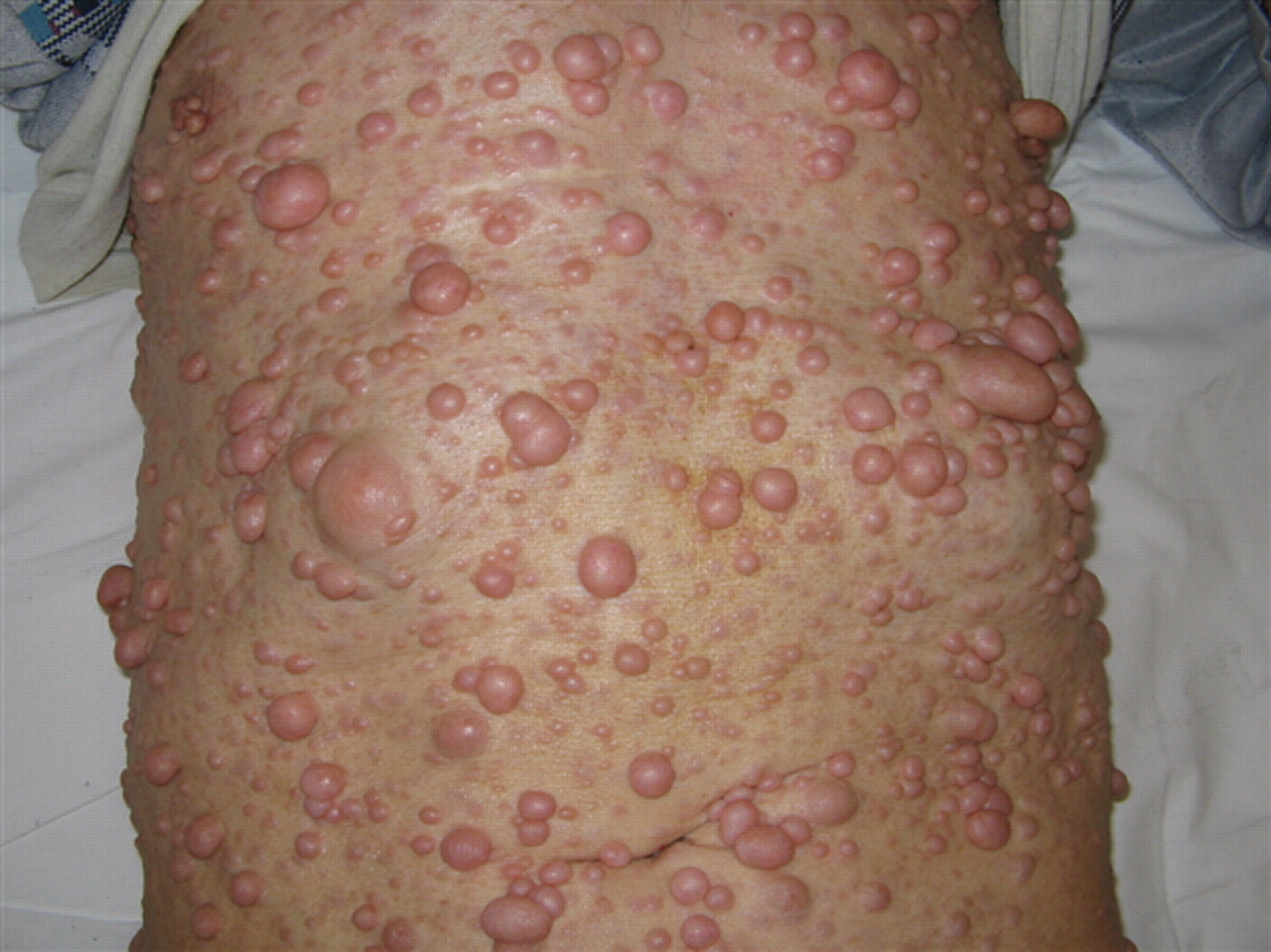
Symptoms of type 1 neurofibromatosis include:
- the presence of light brown spots on the skin (“coffee with milk” spots);
- The appearance of two or more neurofibromas (pea-sized bumps) that can grow on nerve tissue or under the skin
- the manifestation of freckles under the armpits or in the groin area;
- The appearance of tiny yellow-brown lumps of pigment on the iris of the eyes (Lish nodules);
- tumors along the optic nerve of the eye (optical glioma);
- severe curvature of the spine (scoliosis);
- enlargement or deformation of other bones of the skeletal system.
Symptoms of NF1 vary from patient to patient. Those related to the skin are often present at birth, in infancy, and by the child's tenth birthday. Neurofibromas may appear between the ages of 10 and 15. Symptoms such as cappuccino spots, freckles, and Lish nodules pose little or no health risk to a person. Although neurofibromas are usually a cosmetic problem for people with NF1, they can sometimes cause psychological distress. Symptoms can be severely relieved in 15% of patients with NF1. Neurofibromas can grow inside the body, affecting organ systems. Hormonal changes during puberty and / or even pregnancy can increase the size of neurofibromas. About 50% of children with NF1 have speech problems, learning disabilities, epilepsy, hyperactivity.
Symptoms of type 2 neurofibromatosis include:
- tumors along the eighth cranial nerve (schwannomas);
- meningiomas and other brain tumors;
- noise in the ears and head (tinnitus), hearing loss and / or deafness;
- cataract In young age;
- spinal tumors;
- balance problems;
- muscle wasting (amyotrophy)
Patients with NF2 develop tumors that grow on the eighth cranial nerve and on the vestibular nerve. These tumors often put pressure on the auditory nerves, resulting in hearing loss. Hearing loss can begin as early as adolescence. Tinnitus, dizziness, facial numbness, balance problems, and chronic headaches can also appear during adolescence. Numbness in other parts of the body may occur due to spinal cord tumors.
Read also:Impetigo
A related condition, schwannomatosis, does not develop on the eighth cranial nerve and does not cause hearing loss. Schwannomatosis causes pain primarily in any part of the body. Although schwannomatosis can also lead to numbness, weakness, or balance problems such as NF1 and NF2, symptoms are less severe.
Causes and risk factors
NF1 is an autosomal dominant hereditary disease. The NF-1 gene is located on chromosome 17 and encodes a gene product called neurofibromin. This protein is widely expressed in various tissues and acts as a tumor suppressor gene by suppressing the gene product RAS. Gene mutation or deletion NF-1 leads to neurofibromatosis type 1 and, as a result, to the proliferation of many neurofibromas and other tumors. As an autosomal dominant (AD) disease with 100% penetrance, it affects all generations of patients.
In some patients, NF2 is also inherited in an autosomal dominant manner. The abnormal gene can be inherited from either parent, and the risk of passing the gene to offspring from one of the parents is 50%. Some patients with NF2 have no family history; and the disease occurs as a sporadic (new) mutation in the gene NF. Type 2 neurofibromatosis is caused by mutations in the gene NF2located in the long arm of chromosome 22 (22q12.2). Gene NF2 encodes a protein known as merlin (neurofibromin 2 or schwannomine) that acts as a tumor suppressor gene. Merlin is found in the Schwann cells of the nervous system.
Epidemiology
Type 1 neurofibromatosis accounts for about 96% of all cases. The prevalence is 1 in 3000 births. This occurs equally between sexes and race. 50% of patients have a spontaneous mutation, and the other half have a hereditary mutation. Penetrance 100% with variable expressiveness. Type 2 neurofibromatosis accounts for about 3% of all cases and has a prevalence of 1 in 33,000 births to 1 in 87,410. There is no gender or racial bias. Type 2 NF manifests itself differently in different families.
Pathophysiology
Type 1 neurofibromatosis is caused by a mutation on chromosome 17, which encodes a cytoplasmic protein known as neurofibromin. This protein is a tumor suppressor and, therefore, serves as a regulator of cell proliferation and differentiation signals. Dysfunction or lack of neurofibromin can interfere with regulation and cause uncontrolled cell proliferation, leading to tumors (neurofibromas) that characterize NF1. Neurofibromas caused by NF-1, are composed of Schwann cells, fibroblasts, perineuronal cells, mast cells and axons embedded in the extracellular matrix. Another function of neurofibromin is to bind to microtubules, which play a role in the release of adenylate cyclase and its activity. Adenylyl cyclase plays an important role in the cognitive (cognitive) system. The role of neurofibromin in adenylate cyclase activity explains why patients with NF1 experience cognitive impairment.
Read also:Dyscirculatory encephalopathy of 1, 2 and 3 degrees, what is it, symptoms and methods of treatment
Type 2 neurofibromatosis is caused by a mutation on chromosome 22. The mutation enters the tumor suppressor gene NF2. The gene usually codes for a cytoplasmic protein known as merlin. The normal function of merlin is to regulate the activity of several growth factors, a mutated copy of the gene leads to the loss of function of the merlin. Loss of function leads to an increase in the activity of growth factors, usually regulated by merlin, which leads to the formation of tumors associated with NF2.
Diagnostics
Neurofibromatosis is diagnosed by a combination of symptoms. For children to be diagnosed with NF1, they must show at least two of the above symptoms associated with NF1. A physical examination is usually done by a clinician familiar with the condition. Clinicians can use special lamps to examine the skin for blemishes. Doctors may also rely on magnetic resonance imaging (MRI), x-rays, computed tomography (CT), and blood tests to look for defects in the gene NF1.
In the case of NF2, doctors will pay close attention to hearing loss. Hearing tests as well as imaging tests are used to look for tumors in and around the auditory nerves, spinal cord, or brain. Audiometry and auditory brainstem evoked responses can help determine if the eighth cranial nerve is functioning properly. A family history of NF2 is also a key diagnostic focus.
Genetic testing is also used to diagnose disease. Testing done before birth (prenatal) helps identify people who have a family history of the disease but who do not yet have symptoms. However, genetic testing does not predict the severity of neurofibromatosis. Genetic testing is performed either by direct gene mutation analysis or by linkage analysis. Mutation analysis aims to identify specific gene changes that cause neurofibromatosis. Linkage analysis is useful when mutation analysis does not provide sufficient conclusive information. Linkage analysis takes blood tests from several family members to trace the chromosome carrying the disease-causing gene two or more generations later. An adhesion test with an accuracy of about 90% determines the presence of neurofibromatosis in a patient.
Treatment
Café au lait spots and benign neurofibromas do not require treatment. Surgical removal can be performed on symptomatic lesions, but relapse may occur. Plexiform neurofibromas have malignant potential. The risk of developing plexiform neurofibromas in malignant tumors of the peripheral nerve sheath is 8% -13%. They should be suspected if pain lasts more than one month, new neurological deficits appear, neurofibroma changes from soft to hard, or rapidly increases in size. These cancers are treated with wide local excision. Imatinib has been shown to reduce the size of plexiform neurofibroma.
Read also:Acne: causes and remedies
Monitoring of any neurological changes and referral to a neurologist is of paramount importance. These changes may be associated with the development of a tumor. Continuous ophthalmologic examination is recommended to monitor the development of optical gliomas. Chemotherapy is the treatment of choice for optic nerve gliomas.
It is very important to monitor children for learning difficulties and behavioral problems. Counseling can be beneficial for patients as it maintains an autosomal dominant pattern of inheritance for the disease.
- Neurofibromatosis type 2.
Patients with type 2 neurofibromatosis require a hearing assessment. Ophthalmic evaluation, MRI, audiology, and brainstem evoked potentials are important for the management of these patients. Surgery is still the first line treatment for symptomatic tumors, but the recurrence rate is 44%. Radiation can be used, but the risk of malignant transformation increases. Bevacizumab, a vascular endothelial growth factor (anti-VEGF) inhibitor, is a monoclonal antibody that can be used for the medical treatment of patients with type 2 neurofibromatosis. The drug reduced tumor size in 53% of cases and improved hearing in 57%. Patients with suspected type 2 neurofibromatosis should have an MRI of the head and spine. It is very important to make fine incisions through the inner ear canals. Treatment is performed if the tumor compresses the brainstem.
Forecast
The prognosis for patients with NF1 and NF2 depends on the severity of the disease, the presence of malignancy, and the degree of deformity. People with mild illness can have a reasonable life expectancy, but people with moderate to severe illness have a poor quality of life. If tumors are detected late in NF2, the results are poor and the quality of life is reduced.
- To summarize.
Neurofibromatosis is best managed with an interprofessional team that includes dermatologists, neurologists, pediatricians, and genetic counselors. Monitoring the patient for CNS tumors that, if detected late, have a poor prognosis is key. Genetic counseling should be available to patients with an affected child. A dermatologist, ophthalmologist, neurosurgeon, neurologist, and general surgeon should monitor patients regularly to ensure that massive lesions do not develop in the body.


