Pancreas surgery
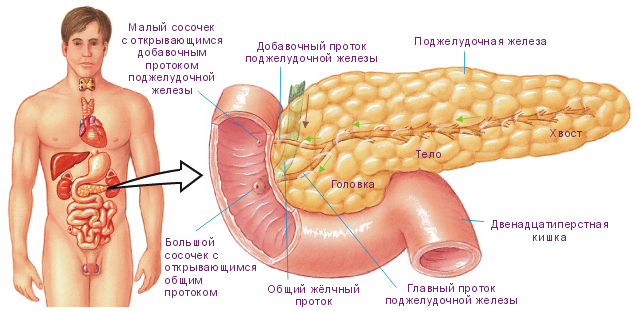
The pancreas is one of the main and unique organs of the digestive system.
It consists of glandular cells, performing the functions of internal and external secretion. Some cells of the organ are connected to ducts that excrete enzymes.
Others produce hormones that enter the bloodstream. Under the influence of pathologies, infections and external stimuli, glandular cells can degenerate into tumor neoplasms.
Some of them become benign, while others are reborn into malignant ones. In this case, an operation on the pancreas is required.
How the surgical intervention is carried out, what methods exist and the possible consequences - about this in more detail.

Content:
- 1 Indications for surgery
-
2 Surgery classification
- 2.1 Organ-preserving surgery
- 2.2 Removal of organ parenchyma
-
3 Technique
- 3.1 Bloodless surgery
- 3.2 Minimally invasive surgery
- 3.3 Open surgery
- 4 Organ transplant
- 5 Periods before and after surgery
- 6 Medications
- 7 Diet
- 8 Life after surgery
- 9 Useful video
Indications for surgery
There are several methods of therapy. Conservative methods with the use of medicines are distinguished, sometimes alternative methods of treatment are used.
With the ineffectiveness of all methods of therapy, in advanced stages of pathological processes or in situations when the patient has a threat to life, an operative surgical intervention.
The pancreas is an important organ in the gastrointestinal tract. It produces extremely important enzymes that are actively involved in the digestion of food.
The organ itself is very capricious, has a delicate structure. The organ also has many blood vessels, nerves, and excretory pathways.
The area of localization of the gland is located near the large vessels - the aorta and the inferior vena cava.
For these reasons, surgery is a serious step and should only be performed by a professional, as serious complications can develop.
The most common indications for surgery are the following pathologies:
- An acute form of pancreatitis with increasing swelling of the organ in case of ineffectiveness of conservative treatment methods.
- Complicated form of pancreatitis. We are talking about hemorrhagic pancreatitis, pancreatonecrosis, gland abscess.
- A chronic form of pancreatitis, where there is severe atrophy, fibrosis of the gland, narrowing or deformation of the ducts.
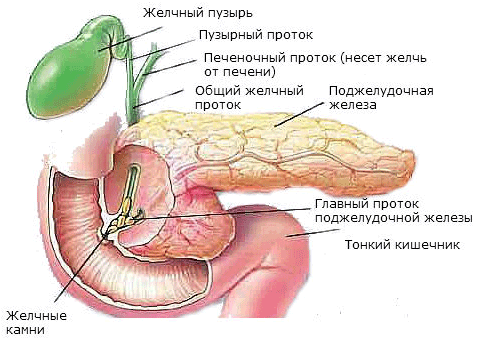
- The presence of stones in the ducts of the organ.
- The formation of cysts and other benign neoplasms.
- Cancer neoplasms.
- The presence of fistulas in the organ.
If, after a diagnostic study, a diagnosis was made, the solution of which is only surgery, one should not drag out the time and refuse to carry it out.
Such actions of the patient can lead to serious complications and unpleasant consequences for health.
Surgery classification
Operational interventions are usually subdivided into types, depending on the method of carrying out and the amount of work.
For example, the entire organ may be removed, or there may be an organ-preserving amount of work.
Organ-preserving surgery
With this technique of surgery, it is possible to preserve the organ without removing it completely.
For these purposes, a method is used in which a cavity is opened with drainage of an abscess or hematoma.
In case of an edematous state of the organ, the capsule is dissected, the affected tissues of the pancreas are sutured.
In the acute form of pancreatitis, the omental bursa is drained. This measure allows for the outflow of fluid.
Removal of organ parenchyma
There are several ways to remove the pancreatic parenchyma:
- Resection. It means the excision of a separate area of the gland.
- Pancreatectomy. In this case, the organ is completely removed.
The use of resection can be carried out in various parts of the organ, when it comes to cysts, tumor neoplasms, tissue necrosis. The head, tail and the body of the organ itself can be subjected to these manipulations.
Allocate pancreato-duodenal resection. This intervention is the most difficult.
In this case, the head of the pancreas, duodenum, part of the stomach with the gallbladder are to be removed.
Such a procedure is prescribed for malignant neoplasms, when it is necessary to remove not only the tumor itself, but also nearby organs.
This is a difficult operation with great trauma and a high risk of death. Complications often arise.
For these purposes, Frey's surgical intervention is used. It is performed on the organ itself, preserving the duodenum.
This method is not so traumatic, it is prescribed in cases where a modification of the head is observed. The reasons can be pancreatitis, obstruction of the pancreatic pathways.
A fragment of the head is removed, then the duct is dissected along. Then they are sewn to the loop of the small intestine.
This measure will provide free access of pancreatic juice into the intestinal cavity.
Total pancreatic necrosis, characterized by complete death of organ tissues, is assigned to complete removal of the organ. NS
The procedure is called pancreatectomy. This method is applicable for severe injuries and injuries with complete destruction of tissues, multiple lesions of cysts, and extensive oncological neoplasms.
Technique
There are several types of operations, which differ in the technological way of carrying out. Which ones:
- Bloodless.
- Minimally invasive.
- Open.
Each operative manipulation is assigned after a detailed diagnosis by specialists.
Bloodless surgery
This technology is applicable for the removal of tumor neoplasms in the gland. How this method of intervention is performed:
- The use of radiosurgery. Removal of neoplasms is performed using a cyber knife. It is a directional powerful feed.
- Cryosurgery is used. Tumors are frozen.
Removal by focusing ultrasound (ultrasound excision), the use of special laser equipment (laser surgery) is also used.
Radiosurgery does not require direct contact between the knives and the body. Other removal methods are performed using probing. The instrument is inserted into the duodenal cavity.
Minimally invasive surgery
This method of surgery includes laparoscopy. This innovative technology allows the operation to be performed with the least degree of trauma.
The procedure does not require large incisions in the abdominal cavity, which greatly simplifies the rehabilitation process.
This is due to the absence of postoperative sutures, which are implied in the open method of surgery.
The procedure consists in making several punctures in the abdominal cavity, introducing special instruments into them, among which there is a video probe-laparoscope.
With its help, all stages of the intervention can be observed on the monitor. In addition to quick rehabilitation, this method allows you to shorten the patient's stay in the hospital after surgery.
Open surgery
This method of performing the operation is classic. It provides for the implementation of a large incision in the abdominal cavity, the operation itself and the stitching of the epithelial tissue.
The advantage of this method is open access to organs and injuries, the ability to personally observe the process of the intervention.
But such surgery is the most traumatic, postoperative sutures heal for a long time, there is a long stay in the hospital after surgery due to a long period of rehabilitation.
For these reasons, modern medicine tends to conduct more gentle methods of surgery.
Organ transplant
Pancreatic transplantation is prescribed in severe forms of diseases, for example, diabetes mellitus in a severe stage.
This surgical intervention is rather complicated, it consists in the transplantation of the tail, the implantation of insular beta cells is performed.
It is extremely rare that a whole organ transplant is performed. An indication for this operation may be a congenital pathology or complete removal of an organ.
In other cases, all the advantages and disadvantages of performing such an intervention are evaluated, since the absence of an organ can be replaced by medicines containing enzymes.
Periods before and after surgery
Before the procedure of surgical intervention, it is required to carry out preparatory measures.
They are very similar to preparation before other operations. The peculiarities of the operation on the pancreas are that it is performed only as a last resort, when its absence threatens the development of serious consequences and can be fatal the patient.
There are also contraindications to such manipulations, one of which is the poor condition of the patient himself.
Before prescribing surgery to a patient, the doctor examines in detail his condition, studies the clinical a picture of the disease, prescribes instrumental diagnostics and the delivery of all necessary laboratory analyzes.
Only after establishing an accurate diagnosis and the impossibility of using traditional conservative therapy, surgery is prescribed.
This method is also used when drug therapy is ineffective and when there is a risk to the patient's life.
When the method of carrying out the operation is established, having received all the results of a detailed examination, the patient is sent to the office of the surgeon and anesthesiologist.
Specialists carefully study the results, discuss in detail the operation.
In surgical intervention on the pancreas, general anesthesia is always used. Doctors should discuss with the patient his individual characteristics of the body.
In the presence of allergic reactions to any groups of medications, the patient must be sure to inform the attending physician and anesthesiologist about this.
After surgery, the patient needs a special diet called parenteral.
It consists in the introduction of special nutrient solutions into the veins through the circulatory system.
Also, an intestinal probe can be installed during surgery. Further nutrition can be carried out with its help, when all nutrient mixtures will be introduced directly through a tube into the intestinal cavity.
After three days, you can give the patient a drink, then a semi-liquid mashed food is introduced without adding salt or sugar.
With complete or partial removal of the organ, the patient is prescribed medication with enzymes, which are taken with food.
Medications
Doctors recommend taking medications containing enzymes with food. Some of them can contribute to their development.
They ensure the establishment of the functional abilities of the organs of the gastrointestinal tract, arrest the development of possible complications or reduce the likelihood of their development.
In the absence of taking such medications, the risk of developing the following manifestations increases:
- Gas formation may increase.
- The patient often has a distended abdomen.
- Stool is disturbed in the form of diarrhea, heartburn is manifested.
When carrying out organ transplantation, the attending physician prescribes medications to the patient, the action of which is aimed at suppressing the body's immune defenses. This measure is necessary to reduce the risk of rejection of the new gland.
Diet
After surgical intervention, a special therapeutic diet is always prescribed, developed by the attending physician.
For the first few days, complete therapeutic fasting is provided. Only on the third day is it allowed to give the patient water.
Next, a sparing diet is allowed, which includes light dietary meals, ground into a homogeneous and liquid state.
7 days after surgery, it is allowed to gradually introduce new dishes. They should all be steamed.
The next step will be the introduction of cooked dishes. After 10 days, you can slightly diversify the patient's boring menu by adding lean varieties of fish or meat to it.
The amount of such food should be small so as not to overload the gastrointestinal tract.
Be sure to give up fried and fatty foods. In no case should the patient be given spicy, sour, overly salty and smoked foods.
At this stage, all food consumed should not irritate the mucous membranes of the digestive system.
Foods that cause gas, bloating and flatulence should also be prohibited.
Life after surgery
Subject to proper nutrition, following all recommendations and taking all necessary medications drugs prescribed by the attending physician, a person's life after removal of an organ or a separate part of it may be long.
The role of the pancreas is very important in the digestive system, since the organ itself is responsible for the production of important enzymes and hormones.
They take an active part in the process of digestion and assimilation of nutrients, participate in the processes of carbohydrate metabolism.
With a properly selected replacement therapy, hormonal and enzymatic functions can be compensated.
With complete or partial removal of the organ during resection, the patient must follow a lifelong special diet.
It consists in a fractional meal, which includes frequent meals, and the portions in them should be small.
Be sure to observe the drinking regime. Due to the high risks of developing diabetes, in addition to taking enzymes, it is necessary to constantly monitor blood sugar levels.
The further state of a person will depend only on his disciplinarity. Subject to the fulfillment of all the instructions and recommendations of the doctor, he can lead a normal life.