How the pancreas hurts: symptoms in men and signs
The pancreas is an important organ located in the abdominal cavity under the stomach.
The importance of the organ lies in the fact that it participates in many processes and refers to two systems at once.
It is digestive and endocrine. On the one hand, it produces enzymes that are involved in the digestion of food. On the other hand, it is insulin activation.
Any problems affect these processes and cause a lot of discomfort, both to the person himself in the form of symptoms, and to the whole body.
The most common diseases that can undermine the health of the pancreas are: pancreatitis, diabetes mellitus, benign or malignant neoplasms.

Content:
- 1 Pancreatitis in men
- 2 General characteristics of pancreatitis
- 3 Signs of pancreatitis
- 4 Diabetes mellitus - as a sign of pancreatic pathologies
- 5 Cancers in the pancreas
- 6 Pseudocysts and abscesses
- 7 Diagnosis of pancreatitis
- 8 Treatment
- 9 Useful video
Pancreatitis in men
Most often, this category of people is faced with the disease after 30 years. This is influenced by factors such as:
- Genetics.
- Alcohol.
- Wrong food.
- ZhKB.
- Infectious and autoimmune pathologies.
- Surgery.
- Mechanical injury to the organ.
- Endoscopy.
- Taking certain medications.
- Endocrine system pathologies.
- Consumption of low-quality food with a high content of preservatives, GMOs and other harmful additives.
- Food or chemical poisoning.
General characteristics of pancreatitis
If there is an inflammation of the pancreas, then most likely, after diagnostic measures, the diagnosis will be made - pancreatitis. There are only 2 forms of the disease. It is acute and chronic.
Initially, a person may encounter precisely the first form of pathology. And only if the treatment was not carried out properly, the pathology develops into the second.
In acute pancreatitis, there is a strong inflammation of the organ, its enlargement, and edema. Gradually, with pancreatitis, replacement by connective tissue is noted. Thus, cell decay and necrosis occurs.
This is a good environment for the entry and reproduction of pathogenic bacteria that cause infectious pathologies.
With such a course, the working capacity of the pancreas is sharply reduced. The body stops producing both digestive enzymes and insulin. Subsequently, diabetes mellitus develops.
Complications - the formation of ulcers, erosions and bleeding in the abdominal cavity.
Classification of acute pancreatitis:
- Hemorrhagic.
- Hydropic.
- Purulent.
- Cholecystopancretitis.
- Pancreatic necrosis.
Very often, pancreatitis takes on a different form - chronic. In this case, the patient is faced with a period of exacerbation and the onset of remission.
The inflammatory process in chronic pancreatitis causes disruption of endocrine and exocrine function.
Pathological changes affect the cells of the pancreas. They disrupt blood supply and metabolic processes.
During the examination, experts note that there is a replacement with connective tissue.
This completely rebuilds the organ. As a result, the pancreas is not able to work at the same pace.
Signs of pancreatitis
How does the pancreas hurt? The initial stage of pathology may not manifest itself in any way at first.
If an exacerbation occurs, you should immediately seek help from a specialist.
If the symptoms are too severe and the person cannot visit the hospital on their own, they call an ambulance.
Symptoms of pancreatic disease in men and women with pancreatitis are not particularly different.
Some manifestations are associated with the individual characteristics of the organism. The acute and chronic form can differ in a number of ways. Each species has its own characteristics.
In order to notice the development of pancreatitis in time, each person must understand how to recognize it.
Signs of pancreatic disease in men with chronic pancreatitis:
- Pain syndrome. The place of localization is the right part under the ribs. Sometimes the pain spreads to the entire abdominal cavity or radiates towards the lower back. In this case, the patient is misled into thinking that the problem is related to the kidneys.
- Stomach discomfort, indigestion.
- Dyspeptic symptoms.
It must be understood that chronic pancreatitis has mild symptoms.
The further, the more the signs become brighter, and the list expands. Symptoms of pancreatic disease in men with acute pancreatitis:
- Stool disorder. Diarrhea can be replaced by constipation and vice versa. The presence of mucus is often noted in the stool.
- Nausea, vomiting.
- Frequent urge to defecate.
- Feverish condition. Pain shock may occur.
- Bloating and flatulence.
- Dramatic weight loss.
- Heart palpitations.
- Dehydration.
- General malaise in the body and weakness.
Diabetes mellitus - as a sign of pancreatic pathologies
This is a disease that cannot be completely cured. In this case, the endocrine system is affected.
Since, precisely, the pancreas is responsible for the production of insulin, then any changes and disruptions in work, are able to cause the appearance of diabetes mellitus, which means that the symptoms of pancreatic disease in men will expanded.
When glucose levels are high, destruction of all body systems begins. It also affects metabolism. The development of pancreatitis very often affects the appearance of diabetes mellitus.
Symptoms of type 1 diabetes mellitus in men and women:
- A sharp drop in vision.
- Frequent urge to urinate.
- Headache.
- Slimming.
- Dry mouth and constant thirst.
- Lethargy, malaise, weakness, decreased performance.
- Constant hunger.
- Sleep disturbance.
- Pain in the chest and lower extremities.
When the second stage of development of diabetes mellitus has already begun, a decrease in insulin sensitivity is noted. Even with sufficient production, the receptors stop responding to it.
The second type of pathology is much calmer. The body is no longer actively reporting the problem. It is noted:
- Weight gain.
- Numbness and tingling in the fingers.
- Frequent outbreaks of viral infections.
- Convulsions occur periodically.
- Any damage to the skin takes a very long time to heal.
If we talk about the strong side of humanity, then in men there is a decrease in libido and the development of potency. This is because nerve endings and small blood vessels are damaged.
The further, the greater the risk of cell death, due to which the production of insulin occurred.
The signs of diabetes mellitus can be so vague that the patient turns up after a few years.
Cancers in the pancreas
The long course of pancreatitis, as well as the lack of proper treatment, provokes the degeneration of cells into a cancerous tumor.
Neoplasms arise from cells that have participated in the formation of enzymes for digestion.
A hormonally active tumor is also noted. It arises from cells that make hormones.
In order to detect in time such a progressive course of the inflammatory process in the pancreas, you need to periodically undergo examinations.
Those who have pancreatitis should do this as often as possible. Patients with such a diagnosis should be closely monitored by specialists.
Pancreatic ultrasound and laboratory tests will help to identify such complications in a timely manner.
Pseudocysts and abscesses
Such serious illnesses can be caused by acute pancreatitis. An abscess develops at about 6 weeks. Signs of abscesses and pseudocysts:
- Bitterness in the mouth.
- Feverish condition, chills.
- Increased body temperature.
- Signs of inflammation in the organ.
- Nausea, vomiting.
- Pain in the lumbar region.
- False sensations of improved well-being.
- Tense peritoneal region.
Diagnosis of pancreatitis
The initial stage of pathology has vague symptoms, therefore it is very rarely diagnosed precisely at an early stage of development.
The emerging symptoms of pancreatic disease in men often raise suspicions of other problems.
Pancreatic disease can only be diagnosed using laboratory tests and instrumental methods.
If there are no signs of pancreatitis or there are minor digestive disorders, then the prescribed examination methods completely randomly determine the pathology.
When observing any changes, even periodic discomfort, it is worth visiting a therapist who will prescribe preventive measures for examination.
Pancreatitis is an inflammation of the pancreas in which the organ begins to digest itself.
If a person is tormented by severe, persistent pain, then this indicates a severe or acute stage.
In this case, the man should no longer hesitate, but at an accelerated pace to seek help from a doctor.
Initially, at the reception, the specialist begins an examination and palpation of the abdominal region.
When pressing on the left side under the ribs or above the navel, the man should feel a sharp pain.
When examining the surface of the tongue, a white bloom is observed. The patient may complain that he has lost the sensation of taste from food. This means that the taste buds atrophy.
An equally important part of the examination is laboratory analysis. For this purpose, a blood test is performed.
The indicator of the number of leukocytes and amylase is considered important. Based on such data, a conclusion is drawn not only about the presence of pancreatitis, but also about the degree of its development.
Amylase is an important organ enzyme. It is responsible for the production of starch and glycogen. Its amount in the blood should not exceed 65 units.
If there is a 2-fold increase in amylase in men, then we can safely talk about the presence of pancreatitis.
It is considered the most dangerous if the amount of the enzyme exceeds 1000 units. Such a critical condition of the patient requires immediate intervention. Most likely, the patient needs to prepare for the operation.
Leukocytes indicate directly the presence of an inflammatory process in the body. The higher the level, the more serious the lesion is.
In addition to these main indicators, blood is also examined for the presence of:
- Glucose.
- ESR.
- Hematocrit.
- Pancreatic enzymes.
- Trypsin.
- Lipases.
In addition to laboratory examination, diagnostics must necessarily include instrumental diagnostics.
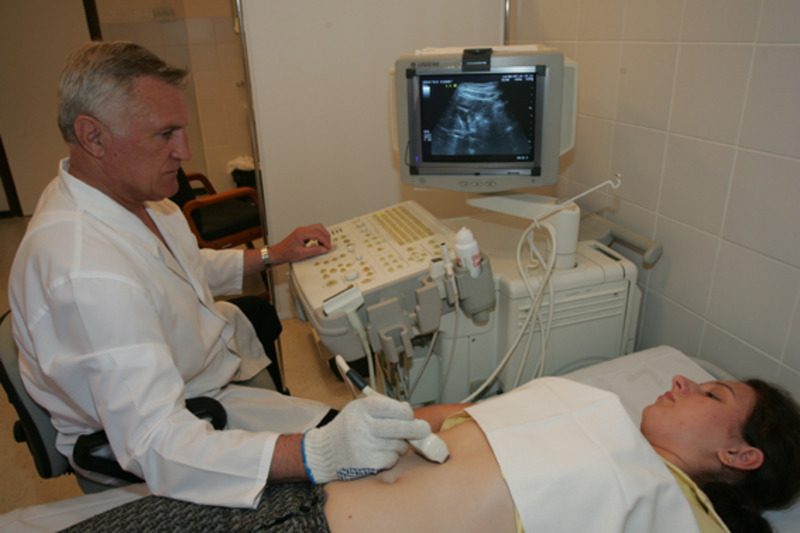
First of all, an ultrasound of the abdominal cavity is done. It is also necessary to check the organ for the presence of malignant tumors, it is necessary to take a biopsy for examination.
To do this, a puncture is made in the abdominal part above the pancreas and the material is taken.
Treatment
Pancreatitis is treated in the same way in men as in women. If the chronic form assumes home conditions, then the acute one is eliminated only within the hospital.
The basis of all therapy is, of course, adherence to a strict diet. Proper nutrition is necessary both at the peak of the exacerbation itself, and in the future to maintain remission.
It is forbidden to eat:
- Any semi-finished and instant food products.
- Salted and donated food.
- Smoked products.
Exclude from drinks:
- Strong black tea.
- Coffee.
- Energy.
- Alcohol.
Useful in such periods, mineral and normal peeled. If you drink more clean water, then inflammation will noticeably decrease, and the general condition will improve.
In chronic pancreatitis, the following are prescribed:
- Enzyme preparations - Mezim, Pancreatin.
- Pain relievers like Ibuprofen or No-shpa.
The complex gives good results based on herbs and other natural ingredients.
The acute form of pancreatitis involves a hospital stay. In the early days, you must adhere to fasting.
It is only allowed to use rosehip broth. Constant observation in the hospital will allow you to detect complications in time and, if necessary, carry out an operation.
After fasting, the specialist prescribes a strict diet. The list of products is rather small.
In addition to drugs that are prescribed for the chronic form, antibiotics can also be used. It happens that it is necessary to take them when there are infectious foci in the organ.
Taking antacids and antioxidants will be mandatory. They normalize the acidity level in soft tissues. To control the secretory function, Atropine is prescribed.
If conservative methods do not give the desired result, the only option remains - surgery.
The dead tissues of the organ are removed. This is necessary to save healthy cells and prevent the spread of the necrosis focus.
You need to understand that any form of pancreatitis is fatal. Only timely medical intervention can reduce the risk of subsequent complications and consequences.
Even after treatment, the patient should be registered at the hospital and periodically examined.
Especially in the early years, it is necessary to donate blood every month and an ultrasound of the abdominal region every six months.