Allergy to drugs: symptoms in adults, what to do if you are allergic to drugs
Content
- What is a drug allergy?
- Causes of drug allergies
- How does drug allergy manifest (symptoms and signs)?
- What to do if symptoms appear?
- How does a doctor make a diagnosis?
- What are the treatment options?
- What to do to avoid drug allergies?
What is a drug allergy?
Allergy to medicines - This is an unexpected and harmful reaction of the body that occurs when taking medications prescribed by a doctor.
This reaction is completely different from adverse reactions (side effects), which are predictable and often occur after the use of drugs of certain groups (for example, skin changes or cough after certain antihypertensive drugs) or after an overdose drug.
Allergy to the drug can occur both when using the drug in tablets and injections, and when applying the drug to the skin and conjunctiva (eye drops). Each patient can react with an allergic reaction to a drug that was well tolerated before.
An allergic reaction caused by a drug is characterized by regression of symptoms when stopping the drug (although some symptoms may persist for many days after stopping treatment).
In susceptible patients, each drug can cause an allergic reaction, but most often it is:
- antibiotics;
- analgesics and anti-inflammatory drugs;
- some antiepileptic drugs;
- contrast agents used in X-ray examinations.
Allergy to the drug occurs in about 5-10% of adults.
Causes of drug allergies
There is little knowledge about the causes of drug sensitization (sensitivity). However, it is known that many factors can provoke it:
- patient susceptibility (genetically determined);
- the frequency and duration of the use of drugs from one group (the longer and more often the drug is administered, the higher the likelihood of sensitization);
- other diseases arising in the patient (more often people with chronic diseases, for example, AIDS, cystic fibrosis);
- gender and age (adults are more often sensitized, mostly women);
- current state of health (sensitization occurs more often in acute infectious diseases).
Not all drug reactions are allergic - in medical parlance, such reactions are commonly referred to as drug hypersensitivity. If the patient's immune system is involved in the development of hypersensitivity to the drug, this hypersensitivity is called allergic, if not, non-allergic.
The role of the immune system is to produce various antibodies (IgE, IgG, IgM), as well as the so-called allergic cells of the immune system.
Read also:Allergy in the eyes
Antibodies generated during sensitization attach to various cells in the body. Re-administration of a drug to an already sensitized person (that is, with antibodies on his cells) causes various adverse reactions from the body.
Thus, antibiotics are most often provoked by allergies, both because of their specific sensitizing properties, and because they are very often used. Sensitization to oral drugs, the so-called semi-synthetic penicillins (ampicillin and amoxicillin, also in combination with clavulanic acid), is especially widespread. With penicillin injections, allergic patients can develop severe and severe reactions.
What immune mechanisms are involved in allergic reactions in a particular patient can be judged by the course of the reaction to the drug and by additional (immunological) research.
Cause of non-allergic drug reactions there can be metabolic disturbances of important compounds that are part of our body. The most common form of this type of hypersensitivity is hypersensitivity to acetylsalicylic acid and other drugs of the group non-steroidal anti-inflammatory drugs.
These patients cannot take most of the popular antipyretic drugs and pain relievers because it can cause them hives and skin swelling or shortness of breath (shortness of breath). It is usually harmless for such patients to take therapeutic doses of paracetamol.
How does drug allergy manifest (symptoms and signs)?
In the vast majority of cases, signs of drug allergy are mild to moderate. Most often they appear in the form of skin lesions, although they can affect all organs and systems of a person, and the most severe of them (anaphylactic reactions) can occur with loss of consciousness or even death, which, however, is very rarely.
 Hives
Hives Hives
Hives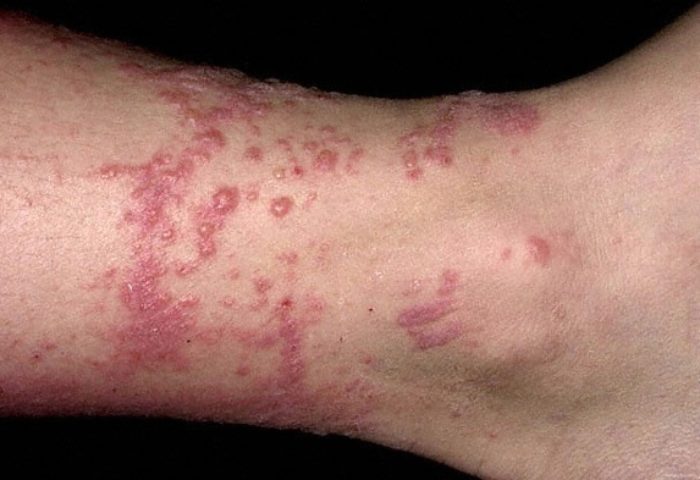 Dermatitis
 eczema
 eczema
A reaction to the drug can occur at any time - a few minutes, an hour or even a week after the start of treatment.
Read also:Hay fever: what it is and how to define it
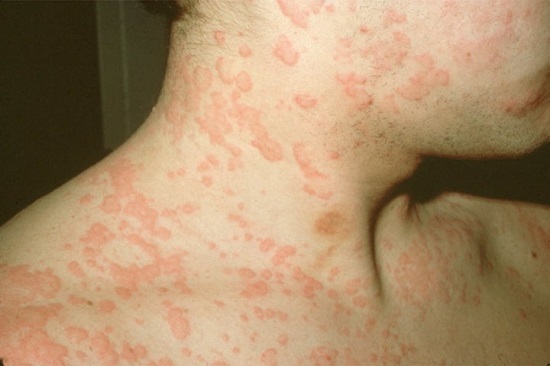
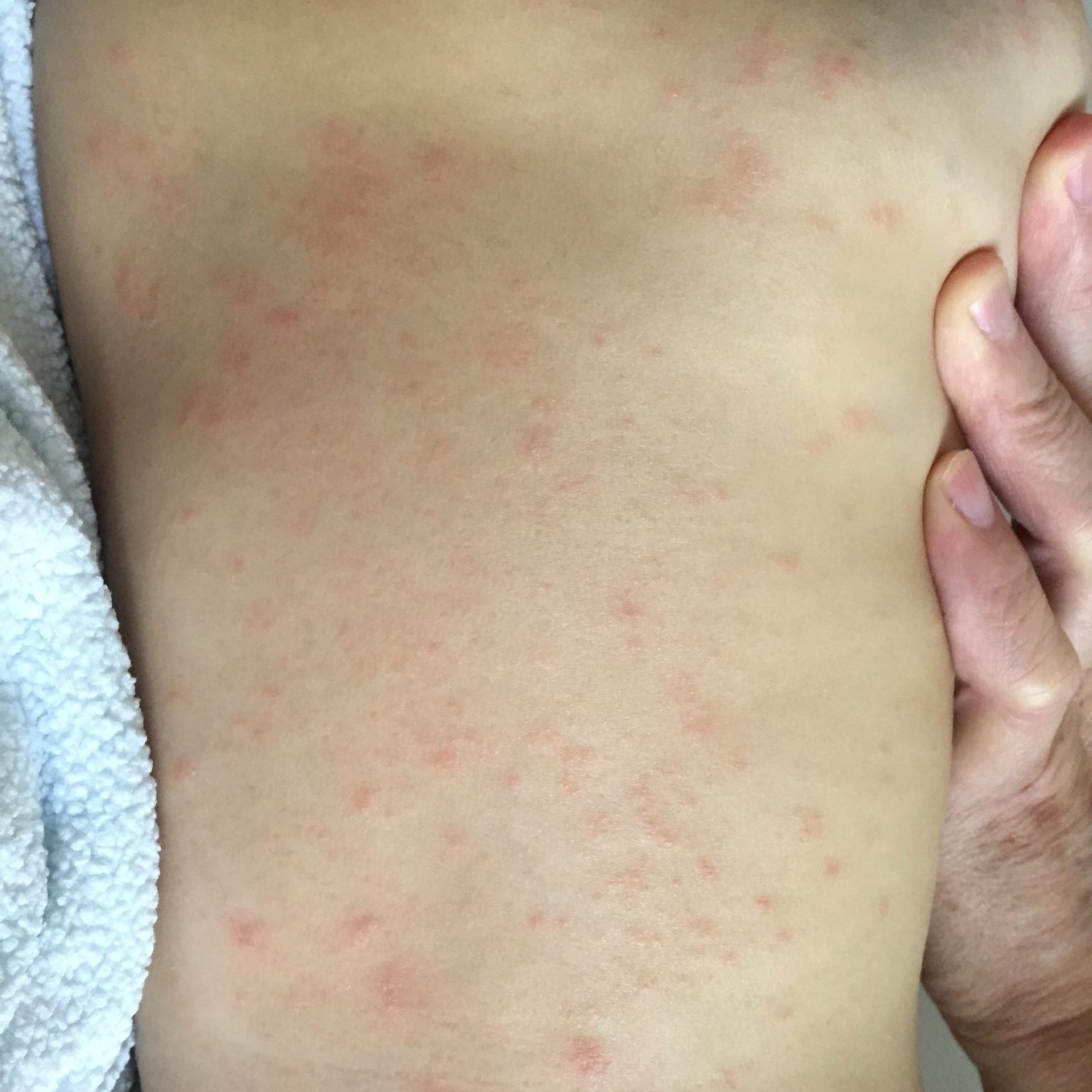
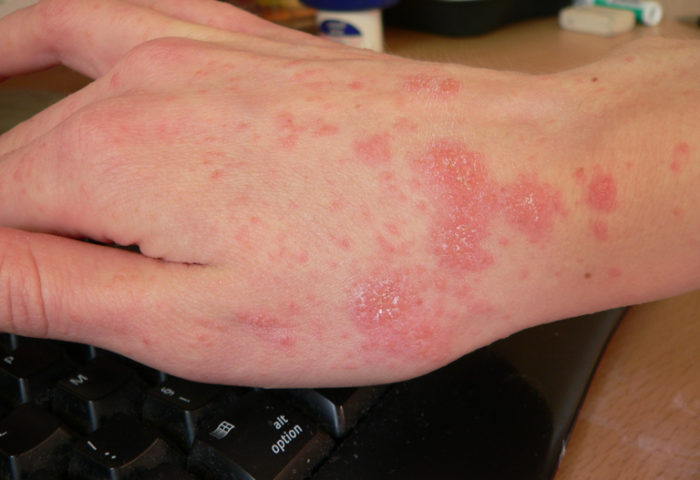
Among the skin signs associated with the use of drugs, the most common so-called drug lesions resembling hives (cm. photo above), erythematous rash, eczema, vesicles and other symptoms, sometimes resembling infectious diseases.
Symptoms in adults usually appear several or about a dozen hours after starting treatment (if taking medications for a long time) or for several days (if this is the first contact with the drug). After stopping treatment, skin manifestations disappear quickly - spontaneously or after taking antiallergic drugs.
The most common skin reaction is urticaria, often associated with soft tissue swelling. The swelling usually appears on the face (around the eyes or lips). Sometimes, in more serious cases, there is swelling of the throat and tongue with impaired swallowing, speech (hoarseness, noiselessness) or lack of air due to tightness in the throat.
In this condition, you must immediately call an ambulance.
A drug allergy can also present with one of the following symptoms:
- fever (high temperature);
- muscle and joint pain;
- swollen lymph nodes;
- dyspnea;
- vomiting, nausea, or diarrhea.
What to do if symptoms appear?
If you suspect that you are feeling unwell due to medication, stop taking the medication and see your doctor as soon as possible.
If the case is severe (choking, urticaria, edema, shortness of breath and especially nausea, diarrhea, vomiting and fainting), urgently call an ambulance or take the patient to the nearest hospital.
Patients who have had allergic reactions to drugs in the past should be referred to an allergist for consultation.
The doctor is obliged to provide the patient with written information about sensitization and recommend on this antiallergenic drugs (the following drugs are prescribed: the so-called antihistamines preparations (Tavegil, Suprastin, Fenkarol) for mild reactions and glucocorticosteroids for more severe, and in the case of the so-called anaphylactic shock you should purchase an autoinjector with adrenaline).
Read also:Quincke's edema: symptoms and treatment
Patients who have had an allergic reaction to drugs should carry the medication prescribed by their doctor, especially when traveling to locations far from healthcare facilities.
Remember to always show your written drug sensitivity information to doctors, including during inpatient treatment.
How does a doctor make a diagnosis?
Diagnosing drug allergies is not an easy task, based primarily on a skillful physical examination. It should be emphasized that there are no safe tests (for example, blood tests) that would confirm or rule out an allergy to any medications.
Only a small amount of drugs can be diagnosed to identify and confirm allergies.
Sometimes, in the case of indications for the use of drugs, it is necessary to carry out tests (for example, skin tests), allergy tests with very low doses of medication.
What are the treatment options?
It is impossible to treat drug allergies, the most important thing is to consistently avoid drugs that once caused you symptoms, as well as other drugs of a similar structure that can cause allergic reaction.
If a reaction does occur, proceed as described above.
What to do to avoid drug allergies?
A person who is not suffering from a serious chronic illness can prevent hypersensitivity reactions when taking medications (including those available without a prescription) only when necessary and only for a specific period time. Therefore, it is important that patients with a predisposition to drug allergies avoid the use of unnecessary pills, also advertised in pharmacies.
It is important to use as few medications as possible at the same time. Avoid frequent treatment with the same medications, such as antibiotics.