Cataract: what is it, symptoms, signs, causes, treatment
Content
- What is a cataract?
- Types and stages
- Causes of cataracts
- Risk factors
- Cataract symptoms
- Diagnostics
- Cataract treatment
- Eye drops
- Surgical intervention
- Possible complications
- Prevention and recommendations
- Gymnastics for the eyes
What is a cataract?
Cataract is an eye condition in which the lens of the eye becomes partially or completely cloudy and loses its elasticity.
Acting as a natural lens, the crystalline lens is able to refract light rays and transmit them further to the retina. The loss of transparency leads to the fact that the lens ceases to transmit light.
Vision regresses (deteriorates) over time to the point that complete vision loss can occur.
Among ophthalmic diseases, cataracts are considered one of the most common.
It is diagnosed more in older people, but it also occurs among adults and young people.
Types and stages
Ophthalmologists distinguish several types of cataracts:
- Nuclear cataract: with this form, the central part of the lens darkens, its opacity is observed. The disease develops extremely slowly, for the most part affecting the vision of objects far from the patient. The visual acuity of close objects is often not lost and remains at a fairly good level.
- Cortical cataract: the most common species. Development occurs gradually, passing alternately from the first stage to the last. The lens becomes cloudy, taking the form of wedges. Gradually, vision begins to decline, this happens over several years. The severity of the vision of the surrounding world changes evenly.
- Subcapsular cataract: early, rather active drop in vision is characteristic. The subcapsular view complicates vision, vision in bright light; in the dark period of the day, flashes may occur around sources of illumination, light. This type of disease is characterized by the formation of subcapsular vacuoles, called water gaps and other signs of hydration of the eye lens. At first, vacuoles appear with punctate opacities near the posterior capsule, then appear near the anterior capsule. Because of this manifestation, the lens takes on a reticular appearance. The subsequent propagation of turbidity occurs radially and in accordance with the direction to the equator.
According to the progression, cataracts can be divided into 3 stages:
- Initial: lens opacity occurs in a streak-like or cloud-like form, going from the periphery to the center. The size of the lens is moderately enlarged.
- Ripening (immature): opacity covers almost the entire cortex of the lens, and the increase in the lens also progresses in proportion to the increase in edema.
- Mature (final stage): there is a complete clouding of the stroma or lens capsule.
Causes of cataracts
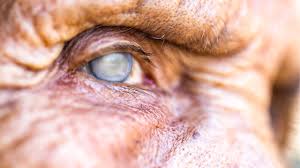
Cataracts affect the lens of the eye. The lens is responsible for focusing light and producing crisp, clear images. The lens is a transparent structure composed mainly of water and protein fibers.
The entire lens is in the lens capsule. As the eye ages, proteins and dead cells accumulate in the lens capsule, forming cataracts and causing lens opacity. At the very beginning, a cataract may be a small opaque spot. Over time, it can grow in size and obscure most of the lens, making it difficult to see.
In cataracts, the light that is usually focused by the lens is scattered around due to cloudiness, so vision is no longer clear and sharp.
Most older adults develop some degree of lens opacity, which is a normal part of aging. However, if left untreated, cataracts can ultimately lead to complete blindness.
Risk factors
In addition to the main cause of cataracts (aging), there are factors that can aggravate the situation:
- a variety of eye injuries;
- hereditary tendency;
- the presence of other ophthalmic diseases;
- harmful effects of ultraviolet, radiation and microwave radiation;
- Long-term use of certain pharmaceutical drugs, such as steroids and statins (a type of drug that lowers cholesterol)
- bad ecology;
- addictions (tobacco smoking, alcohol abuse).
Read also:Anisocoria: what is it, causes, symptoms, treatment
Among other things, endocrine disorders contribute to the onset of the disease:
- impaired metabolism,
- diabetes.
Also, if the immune system begins to lose its protective functions, then this pushes to the development of the disease.
The lens has no vessels and nerve endings, such is its natural structure. For this reason, the course of inflammatory processes in it is not typical. The eyeball consists of almost equal proportions of water and protein tissue.
Under the influence of sunlight, some chemical processes take place in the lens, due to which toxic substances are released.
When toxic substances react with the proteinaceous tissue of the eye, the process of clouding is triggered.
Such a process in the eye goes on almost constantly, but the protective functions of the organism itself may well cope with the harmful effects of these toxins.
Cataract symptoms
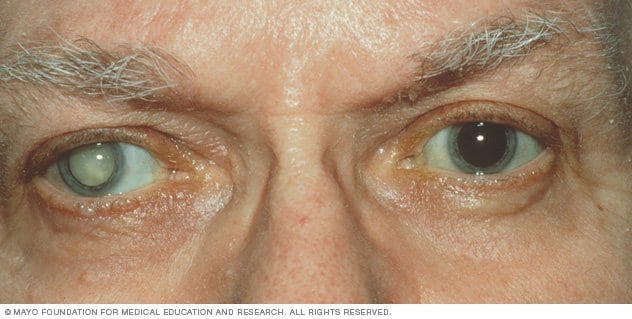
Cataracts can develop in one or both eyes. They are painless and do not cause any changes in the appearance of the eyes. Vision is usually not affected in the early stages of the disease, when cataracts are minor. Cataracts usually get worse over time and can lead to a gradual deterioration in vision.
The most common symptoms of cataracts include:
- blurred vision;
- photophobia (painful sensitivity of the eye to light);
- the appearance of "flies" and iridescent circles before the eyes;
- violation of night vision;
- changes in color vision;
- double vision (diplopia);
- altered depth perception
Often, vision changes are gradual and you may need to change your glasses frequently. This could be a sign that you are developing cataracts.
Eye cataract is considered one of the most unpleasant ophthalmic diseases, but nowadays medicine offers a large number of effective ways to combat it.
Diagnostics
To diagnose cataracts, an ophthalmologist may perform a series of vision tests and detailed eye examinations.
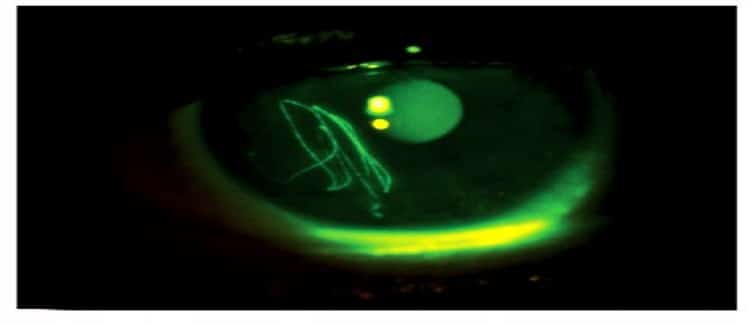
A doctor can usually detect a cataract by examining the eye with an ophthalmoscope (a device for visually examining the transparency of the middle of the eye and examining the fundus).
The doctor can also determine the exact location of the cataract and the extent to which it blocks light by using an instrument called a slit lamp (an instrument that allows a doctor to examine the eye when there is a large increase). The slit lamp allows for more detailed examination of the lens and other parts of the eye.
Cataract treatment
Cataracts that are small and have little effect on vision usually do not require treatment. Wearing stronger corrective glasses, using artificial tears, eye drops, tinted eyeglass lenses to reduce glare, and wearing sunglasses can help with many symptoms. However, if there is significant vision loss due to extensive cataracts, you may opt for cataract surgery.
Read also:Conjunctivitis
Surgery is the only cure for cataracts. Cataract surgery involves removing the cloudy lens and possibly replacing it with an artificial lens implant. Surgery is usually done on one eye at a time. This is done to minimize potential complications. Cataract surgery is usually done on an outpatient basis and the patient is expected to return home the same day the surgery is performed.
Eye drops
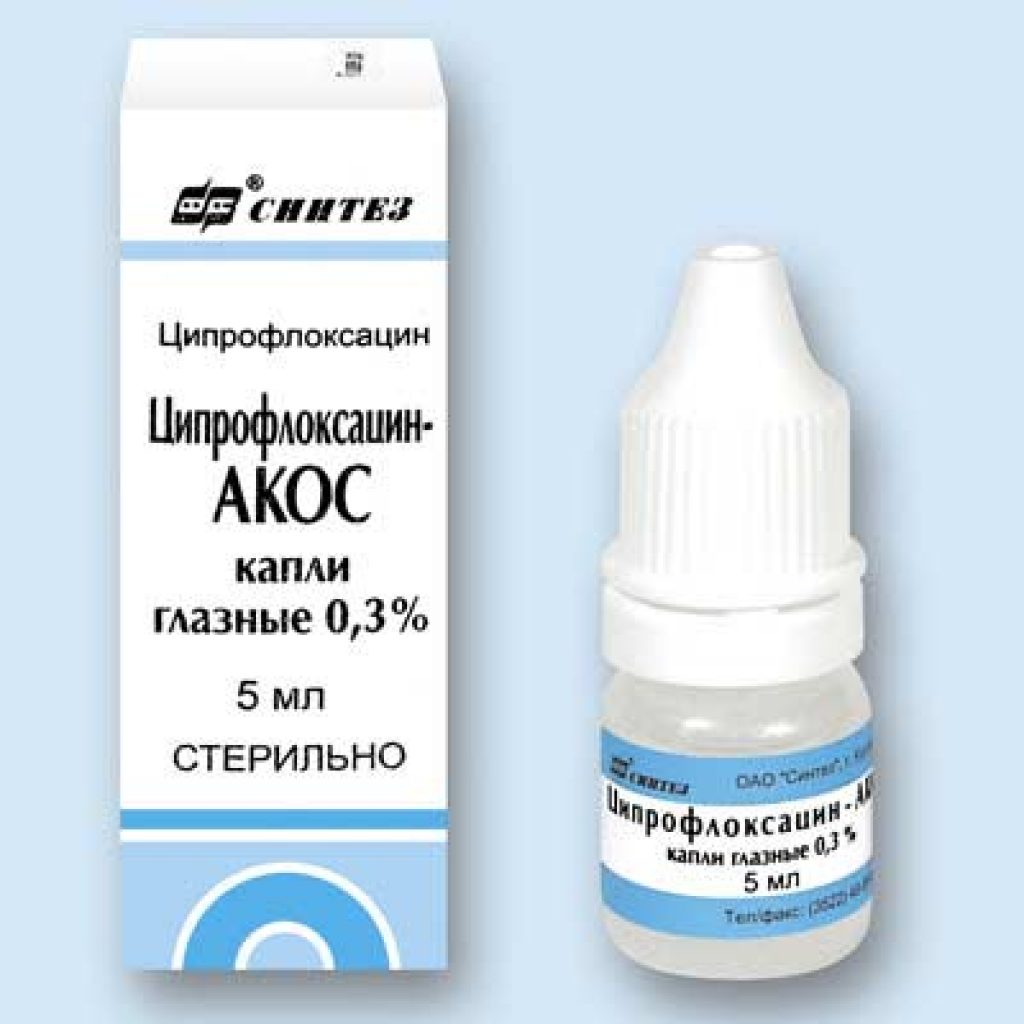
The most common cataract eye drops are:
- Vitafacol;
- Vitayodurol;
- Taufon;
- Oftan Katochrom;
- Smirnov drops;
- Vicein.
Surgical intervention
Surgery as a method of getting rid of the disease is the most reliable and effective method.
Surgical intervention is relevant if there is a sharp drop in vision, acuity is lost, pain appears.
In order to make life easier for the patient, a local operation is performed, during which the source of the disease is removed and its development stops.
Modern medicine uses 4 types of operations:
- Laser surgery;
- Extracapsular extraction;
- Ultrasonic phacoemulsification;
- Intracapsular extraction.
Before surgery, you must undergo a thorough examination and be monitored continuously by a doctor.
The correct solution for the disease is the implantation of an artificial lens instead of the deteriorated lens.
However, just before introducing a foreign body, it is necessary to consult a doctor, establish the stage of cataract, probable threats, complications in the future.
The purpose of surgical intervention in case of illness is to remove the damaged lens and then replace it with a lens of artificial origin.
Despite the complexity of the work, such an operation is considered one of the safest in the field of ophthalmology. Difficulties during the operation are extremely rare. Most often, the patient expects a complete restoration of vision.
During the operation, the doctor uses a large number of microscopic instruments.
When replacing the lens of the eye, laser equipment is used, which has high accuracy and allows you to make small cuts on the retina.
Such an incision is quite enough for further implantation of an artificial lens, and the incisions are overgrown quite quickly, so the patient's postoperative recovery will not take much time.
During the operation, the surgeon will need concentration, very high precision and almost jewelry skill.
Modern equipment makes it possible to simplify the doctor's work, insure and reduce the risk of an undesirable outcome of the operation.
Possible complications
Cataract surgery is a safe procedure with very few complications. However, as with any operation, problems can arise.
Complications to watch out for:
- Infection: an infection immediately after cataract surgery can be very serious and considered urgent. If you have pain or redness, contact your doctor immediately.
- Inflammation: some inflammation is expected after cataract surgery. Inflammation can cause sensitivity to light, pain in the eyes.
- Edema: edema may occur in the back of the retina. Although this requires a doctor's attention, it usually resolves within a month or so.
- Retinal detachment: If you see spots, floating objects, or flashes of light, see your doctor.
- Posterior capsular turbidity: the capsule behind a new lens implant can thicken and fog up in 20-40 percent of cases after surgery. This can make vision blurry. A laser procedure known as YAG laser capsulotomy can remove this cloudy capsule.
Read also:Rupture of eye capillaries
Prevention and recommendations
Prevention includes a small list of rules, the conscientious observance of which will help protect the eyes from harmful external influences.
- Sunglasses should be worn on sunny days to reduce UV exposure. Eyes in these glasses are under reliable protection, and the correct choice of frames will also add style and beauty to your look.
- Give up bad habits, preferably from smoking in the first place.
- For postmenopausal women, hormone replacement therapy is recommended.
- You should introduce foods that are rich in antioxidants into your diet. These are vegetables, herbs and fruits. They are able to slightly slow down the natural aging processes of the body. Also will not be superfluous B vitamins, E, A, and zinc. When used correctly, a storehouse of nutrients contains blueberries. This delicious product is one of the best for preventing many eye diseases. Frozen blueberries lose most of their beneficial properties during the freezing process. For this reason, it is worth including fresh berries in your diet.
If there is no opportunity to eat the necessary healthy foods in the right amount, then it is permissible replenish your diet with any supplement available to you, a vitamin complex containing the necessary substances.
As a rule, such supplements and vitamins are specialized, their purpose is reflected in the name.
Such an example is the Bilberry Forte vitamin complex.
Gymnastics for the eyes
Do not neglect massage and gymnastics for the eyes. This is an excellent preventive method against the occurrence of this disease and, if performed correctly, gymnastics will help the eyes to rest and relax.
Massaging the eyes will improve blood circulation, which is extremely useful in preventing most eye diseases.
- First you need to do a light warm-up.
- Fingers move along the lower eyelid, heading towards the nose.
- In turn, the fingers move along the upper eyelid, heading to the temples.
- It is not worth pressing with force, light movements will be enough.
A simple massage procedure will help relieve tension in the eyes and give them rest. After all, excessive eye strain is the source of most diseases.
It is important not to forget that vision is a priority way of a person's perception of the surrounding world, through which a huge amount of information is collected. Therefore, it plays a very important role in human life and requires monitoring and timely treatment.