
Laryngitis in a child: symptoms and treatment
If a child suddenly has a barking cough and shortness of breath in the middle of the night, it is laryngitis. Especially infants and children get sick under the age of 6.
For a year, a baby can get sick with laryngitis 2-3 times, and with varying degrees of severity of symptoms.
Content
- What is laryngitis?
- Causes of laryngitis in children
- Signs of laryngitis in children
- Photo of the larynx with laryngitis in children
- Diagnostics
- What is laryngoscopy?
- Table: Changes in the vocal folds
- Complications
- Drug treatment
- Are antibiotics required, and if so, which ones?
- Non-drug therapy at home
- Inhalation
- Mustard plasters
- Prevention and recommendations
What is laryngitis?
Laryngitis is an inflammation of the mucous membranes of the larynx due to viral, rarely, bacterial infections.
Exist two types of disease: acute and chronic. Acute laryngitis in a child often associated with colds and usually goes away after 3 weeks.
Chronic laryngitis in children rarely occurs as a result of prolonged inflammatory processes in the pharynx or sinuses (sinuses).
Laryngitis occurs especially in babies under 6 years of age, as their airways are still very narrow and small. During the cold season, i.e. in late autumn and winter, the disease is more common. Even older children get sick.
Causes of laryngitis in children
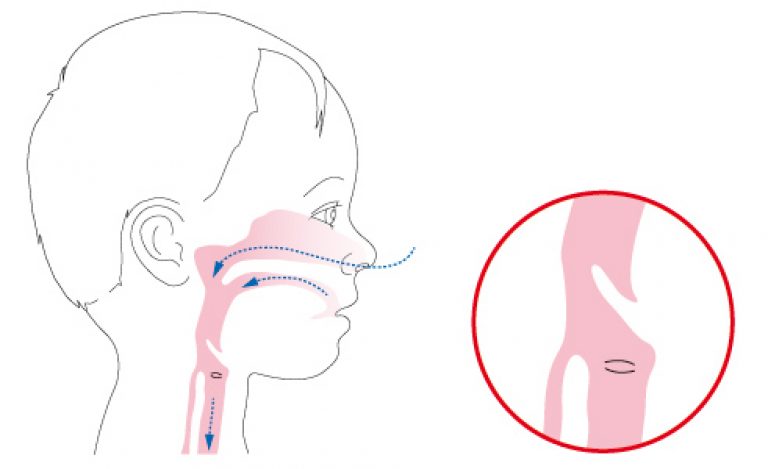
There are many prerequisites for the occurrence of inflammation of the larynx. But above all it is viral and bacterial infections. They can occur as a result of a cold, ARVI.
A trauma to the larynx in a child can also trigger the development of laryngitis.
Common Causes acute form laryngitis:
- complications after a cold, flu;
- effects rubella, scarlet fever or measles;
- the development of fungal microflora due to weakened immunity.
- stress, injury to the vocal cords.
Pathological changes in laryngitis appear in the form of a weakening of the protective function of the mucous membrane. It becomes too thin and proteolytic substances that fight infections cease to be produced, as a result of the thickening of the vocal cords.
Chronic form arises mostly in adults after a heavy load on the larynx, improper lifestyle (smoking, alcohol abuse). This is due to the fact that the protein of the mucous membrane begins to coagulate too actively, as a result of which the larynx becomes vulnerable and dry.
Also, the disease can develop due to inhalation of chemicals. And against the background of chronic diseases of the upper respiratory tract, improper inhalation through the nose occurs, which provokes the development of inflammation. When the larynx becomes inflamed, the vocal cords and mucous membranes become inflamed and swollen.
Read also:Patau syndrome: what is it, symptoms, methods of diagnosis and treatment, prognosis
Signs of laryngitis in children
Typical signs are whistling sounds when inhaling and hoarseness of the voice. Often, the whistling sound is aggravated by shortness of breath. If stridor breathing does not disappear, it is necessary immediate treatment.
When the disease is observed common symptoms of colds: fever, runny nose and dry cough.
The main signs are:
- the mucous membrane of the larynx turns red;
- violent barking cough;
- general malaise;
- discomfort when swallowing;
- swelling of the vocal cords;
- labored breathing;
- dry and sore throat.
The acute form of laryngitis in children usually proceeds without complications, and lasts no more than 2-3 weeks. However, the disease progresses rapidly, so it is important to treat it promptly.
Photo of the larynx with laryngitis in children
To familiarize yourself with the external signs, take a look at the photo below. This should trigger a visit to the pediatrician.
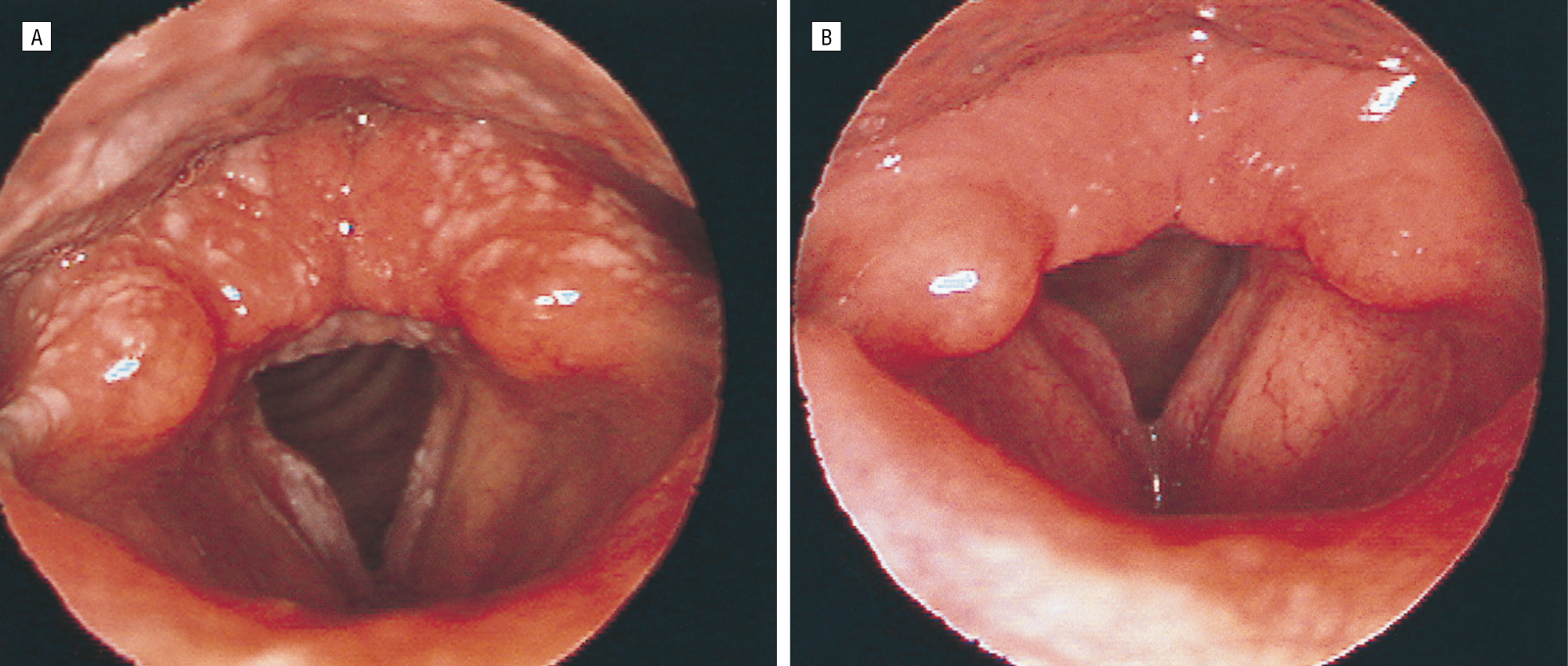
In a situation with young children, laryngitis is easy confuse with diphtheria. However, in the case of diphtheria, plaque is present on the tonsils and surrounding tissues, swollen lymph nodes, suffocation and high fever are observed.
Diagnostics
As a rule, a thorough examination of a small patient with an endoscope (laryngoscopy) is sufficient to make a diagnosis. Wherein pronounced redness of the larynx. In some cases, punctate hemorrhages are found, sometimes viscous mucus is present.
What is laryngoscopy?
There are two types of laryngoscopy: indirect and direct.
At indirect laryngoscopy the doctor gently brings the endoscope up to the baby's uvula to view the larynx from above.
Direct laryngoscopy performed under general anesthesia. The doctor directs an endoscope towards the larynx to also see the lining of the larynx.
Using laryngoscopy, the doctor can determine if and how the laryngeal and vocal folds have changed. In addition, acute laryngitis usually differs markedly from chronic (see table below).
Table: Changes in the vocal folds
| Acute laryngitis | Chronic laryngitis |
|---|---|
| Severely reddened, swollen mucous membrane plaque from fibrin (a protein formed during blood clotting) is possible. |
Pale reddish, thickened and hardened mucous membrane, dry and uneven surface, plaque formation in the mucous membrane. |
If the doctor detects an acute form of inflammation of the larynx, further examination the child is usually not required.
In some situations, a bacteriological study is done to identify pathogenic bacteria.
Read also:Sudden Infant Death Syndrome: what is this disease, causes, symptoms, how to prevent
Complications
With inflammation of the larynx, people may suffer shortness of breath. This rarely happens in adults. In children, this risk is more likely. Therefore, in such cases, monitoring in the hospital is necessary until the swelling subsides and the baby can breathe freely again.
If chronic laryngitis persists for a long time, the cells mucous membranes may degenerate in precancerous.
Drug treatment
When choosing medications, you need to take into account the cause of the inflammation. In the case of ARVI, they may additionally be prescribed antiviral drugs.
Aerosol preparations show good results:
- Ingalipt;
- Eucabal.
Also needed expectorant drugs. Fit Mucaltin, it perfectly liquefies phlegm, promotes its removal from the body. Another advantage of this drug is to enhance the activity of the ciliated epithelium. Dosage: the drug should be taken either 1.5 tablets 4 times a day, or 2, but 3 times a day.
Children with excessive laryngeal edema require antihistamines. Among the frequently used Loratadin. It is used for various forms of edema. Contraindications include individual sensitivity to certain components. The drug is not used for children under 2 years of age. Children from 3 to 12 years old, 5 mg per day.
The exact dosage is determined by the doctor, since the drug affects the kidneys and liver.
Are antibiotics required, and if so, which ones?
Antibiotic therapy is necessary if the inflammatory process has a bacterial etiology. In addition, an analysis of the reaction when taking antibiotics is required. The following antibacterial drugs will help with this disease:
- Amoxicillin;
- Flemoxin Solutab.
These antibacterial drugs are suitable for treating babies up to a year and older. However, if the disease is due to allergies, then the use of antibiotics is contraindicated.
Important: If a child has laryngitis, it is undesirable to treat him on his own, you should consult a pediatrician for advice. Treatment of inflammation of the larynx in children depends on the severity of the disease, the age of the baby.
Non-drug therapy at home
Treatment for acute laryngitis depends on the age of the child. It can include:
- compliance with bed rest;
- limiting voice load (during the week it is better for the baby to speak as little as possible);
- maintaining the optimal temperature (+ 18… + 20 ° C) and air humidity (50–70%) in the room where the sick baby is located;
- plentiful fortified drink (the liquid should be warm and unsweetened);
- adherence to a hypoallergenic diet - in the presence of symptoms of laryngitis, the child is strongly discouraged from giving sour, spicy, too hot or cold food, carbonated drinks.
Read also:Hydrocephalus (dropsy) of the brain in children: causes, consequences and methods of treatment
When treating inflammation of the larynx, children are allowed to apply warm wet and dry compresses, make gargle warm decoction of calamus or sage, if recommended by the pediatrician.
In order to relieve irritation from the throat, you need drink warm drinks. Fit milk with honey or sage tea.
Inhalation
Inhalation with laryngitis soothes the mucous membrane well, stimulates the excretion of sputum and eliminates coughing. At home, you can use it as nebulizersand any cookware with steam.
The medicinal composition is selected by the attending physician, but it could be: aromatic oil, herbal decoctions or soda solution.
In this case, the patient must be covered with dense fabrics so that steam does not escape. These procedures must be carried out 3 to 6 times a day.
Use a nebulizer much more convenient, since it is safer, and all medicinal vapors enter the respiratory system more easily.
What are the contraindications:
- heat;
- problems with the cardiovascular system;
- labored breathing.
Mustard plasters
Mustard plasters are needed to improve blood circulation and stabilize metabolic processes in the body. They also reduce soreness and help with dry coughs. But at high temperatures, you should postpone their use.
Prevention and recommendations
In case of infectious diseases, it is worth visiting a pediatrician on time.
Drinking plenty of fluids and inhaling saline - if an electric inhaler is available and the child is old enough - will help with coughing.
Walk regularly with your child in the fresh air, ventilate the house, observe the correct daily routine and monitor the correct diet. In the room where the child sleeps and spends time, create a cool, humid microclimate with a temperature of 18 degrees.
If the disease has not turned into a chronic form, then you can get rid of the problem in a few days. But if the treatment is delayed, or the disease recurs more than 3 times a year, it is necessary to contact a pediatrician with this problem. This disease has different specific forms, therefore, the treatment must be approached individually.


